Music learners travelling by coach
If you listen to sections of a song repeatedly to distinguish between chord changes, you’ll want a sound you can understand and a level of isolation that suits you.


When traffic noise masks quieter instruments, a well-fitting pair of closed-back headphones with ANC is a sensible place to start. Keep the volume moderate and check the recording itself: ANC does not mean you’ll be better at identifying chords. Closed-back wired headphones are worth considering if you want to listen without Bluetooth or a headphone battery, and your playback device has a compatible connection. If you’re travelling light, in-ears could be a good fit, as long as they’re comfortable and their battery life suits your needs.
If you listen to sections of a song repeatedly to distinguish between chord changes, you’ll want a sound you can understand and a level of isolation that suits you.
If you want to hear the detail without turning the volume up to compete with background noise, check the fit and noise cancelling first.
If you listen for long periods, look for a comfortable fit and make sure the playback connection and charging options suit your device and journey.
A good choice if: Coach noise and conversations make it difficult to listen repeatedly.
Consider: Fit, battery life and the option to switch to ambient mode are still important.
A good choice if: You want to listen without Bluetooth or a headphone battery.
Consider: The connection or adapter must be compatible; the cable and weight can be awkward in a coach seat.
A good choice if: Saving space in your luggage matters more than choosing a larger style.
Consider: Make sure they fit comfortably in your ears and offer enough battery life for you and your journey.
| Priority | What to check when buying | Who is it especially relevant to? |
|---|---|---|
| Following chord changes | Listen to a familiar section of a song at a consistent volume, and check whether you can adjust the EQ or sound mode. | If I want to pick out chord changes in a recording by listening repeatedly, I look for the key instruments to remain distinct to me. Around 36% of consumers say sound quality and repeat listening are their main priorities. |
| Blocking out traffic noise | Assess the fit and ANC at a moderate volume, and check how easily you can switch on ambient mode. | If traffic noise drowns out quieter passages, I don’t want to compensate by simply turning up the volume. Around 29% of consumers prioritise noise isolation when traffic noise is disruptive. The WHO recommends well-fitting headphones with noise cancelling to reduce the need to turn up the volume in noisy surroundings. |
| Listening comfortably for longer | Check for pressure points, including when wearing glasses. For wireless models, compare battery life with ANC switched on. | If I want to listen repeatedly for a long time, I need a comfortable fit and a battery that lasts in the mode I’ve chosen. Around 21% of consumers prioritise long-term comfort and battery life. |
| Connections and portability | Check that your device’s output matches the plug or USB-C connection; for in-ears, check the fit and battery life per charge. | If I’m short on luggage space or need a particular playback connection, a compact design or compatible connection matters to me. Around 14% of consumers say connection or portability is their main priority. |
Noise cancelling can reduce distracting background noise, but it doesn’t prove that chords will be easier to identify in a complex recording.
Try listening to a familiar passage several times with the same settings and at a moderate volume.
Maximum battery life can vary depending on whether ANC is switched on or off. For example, Sony gives different maximum figures for the WH-1000XM6 in these two modes.
Compare battery life in the mode you’ll actually use on your journey, and charge your headphones before you set off.
The plug, device output and supported playback method all need to work together.
Check the connection on your playback device and whether you need an adapter, rather than relying on product images alone.
The WH-1000XM6 is a pair of closed-back ANC over-ear headphones with ambient mode, and both active and passive wired listening.
The second-generation QuietComfort Ultra Headphones are an ANC over-ear option supplied with an audio cable.
The MOMENTUM 4 Wireless combines adaptive ANC, transparency mode and an adjustable EQ.
The DT 700 PRO X is a closed-back wired option for use with a compatible analogue playback connection.
The Tour One M3 is an ANC over-ear option.
This selection includes closed-back over-ear headphones with ANC, as well as wired in-ears for listening on the go.
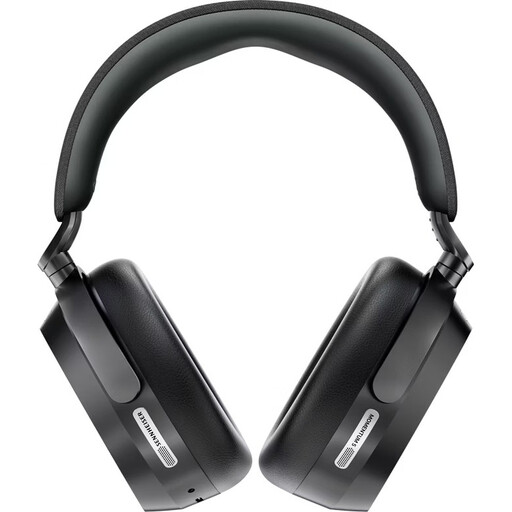 No image available
A good option if you’re looking for closed-back over-ear headphones with ANC to help block out traffic noise.
Closed-back design and ANC; transparency mode and rotating ear cups are listed.
Up to 57 hours of battery life with ANC, according to the product listing; wired use is also listed.
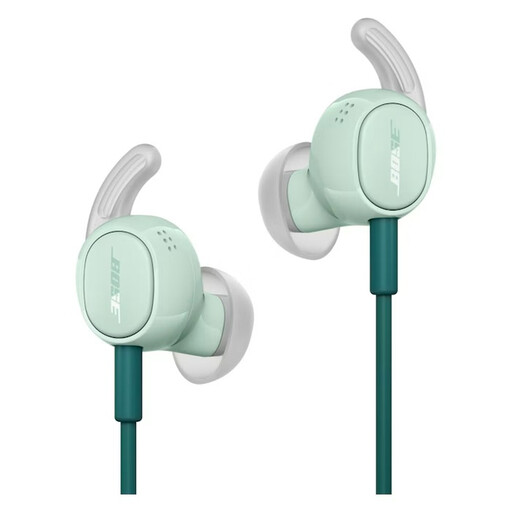 No image available
A compact wired option if you want to listen without a Bluetooth connection or headphone battery.
Noise cancelling and Aware modes, as well as several ear tip sizes, are listed.
Only compatible with USB-C devices; check the connection on your playback device.
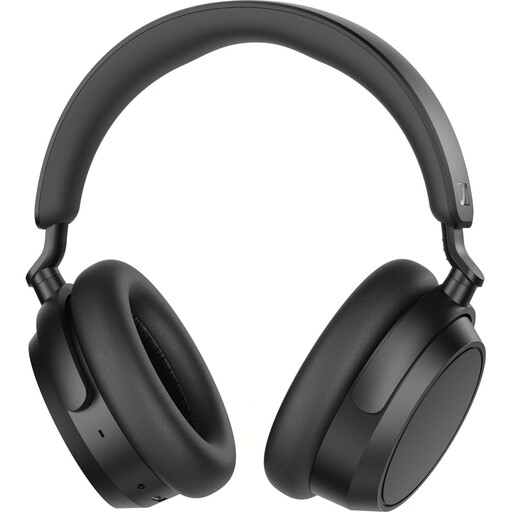 No image available
A good option if you’re looking for closed-back over-ear headphones with ANC and the choice of wireless or wired playback.
Detachable cable, Bluetooth and ANC are listed.
Up to 50 hours of battery life according to the product listing; no specific ANC mode is stated for this figure.
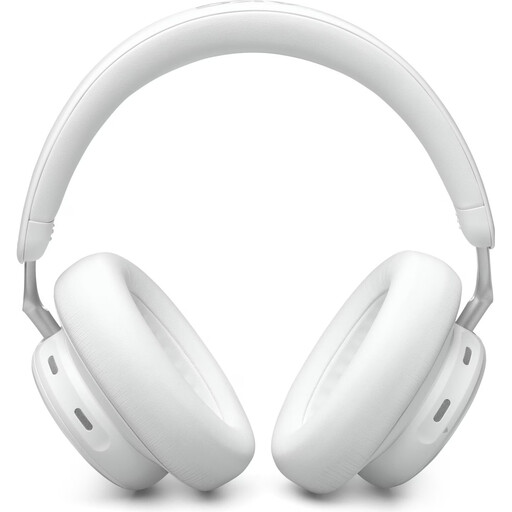 No image available
A good option if you’re looking for closed-back over-ear headphones with ANC and both wireless and wired playback.
Bluetooth, ANC and a 3.5 mm cable connection are listed.
Up to 55 hours of battery life according to the product listing; check which connection is compatible with your device beforehand.
 No image available
A good option if you’re looking for closed-back over-ear headphones with ANC and adjustable sound settings.
An app-based equaliser and a bass or treble control are listed.
The stated weight is 283 g; replaceable ear cushions are also mentioned.
None of the headphones described here are listed as offering automatic chord recognition. Their stated features relate to playback, noise isolation and connections. Listen to the section in question repeatedly on your own playback device.
The WHO recommends well-fitting headphones, with noise cancelling if needed, so you don’t have to drown out background noise with a high volume. It advises keeping the volume at no more than 60% of the device’s maximum setting and, if you can monitor the sound level, aiming for an average below 80 dB. These are WHO recommendations, not product-specific measurements or limits under German law.
Check that your playback device’s output matches the plug you need, and whether an adapter is required. Sony lists an analogue input and passive wired playback for the WH-1000XM6; beyerdynamic lists a 3.5 mm plug and a 6.35 mm adapter for the DT 700 PRO X. For wireless models, also compare battery life in the mode you want to use.
For a typical distance purchase of goods, the EU consumer portal explains that you generally have 14 days from delivery to withdraw from the contract; exceptions and possible return costs should be taken into account. For faulty goods, the EU sets out a minimum two-year legal guarantee. This is separate from any voluntary manufacturer’s warranty.
Section 23(1) of the German Road Traffic Regulations (StVO) requires people driving a vehicle not to let devices impair their hearing. This does not create an equivalent obligation for you as a passenger; the relevant operator’s travel conditions may apply to passenger conduct on the coach.