Beachcombers who love the details
You want to capture the fine details of small finds while out for a walk. OM SYSTEM states that the TG-7 can focus from 1 cm, as can the PENTAX WG-90 from Ricoh Imaging.


If you want to photograph tiny details close to sand and sea spray, first check the close-up mode and the protection offered by the specific model. OM SYSTEM and Ricoh Imaging each state that the TG-7 and WG-90 can focus from 1 cm, and provide water-protection ratings. If you’ll mostly be shooting in dry conditions, a compact camera or a camera system with a suitable macro lens could also be a good option. With a system camera, you’ll need to factor in the lens and any extra equipment.
You want to capture the fine details of small finds while out for a walk. OM SYSTEM states that the TG-7 can focus from 1 cm, as can the PENTAX WG-90 from Ricoh Imaging.
If sand or splashes are part of the picture, protection and aftercare should be your priorities. OM SYSTEM rates the TG-7 for water protection down to 15 m; Ricoh Imaging rates the WG-90 for up to 14 m, for a maximum of two hours.
You want to photograph more than just small subjects, and are weighing up a handy compact camera against an expandable system. Canon gives the PowerShot G7 X Mark III a focus distance of around 5 cm at the wide-angle end and 40 cm at the telephoto end; Nikon offers the Z MC 50mm f/2.8 as a separate macro lens for Z cameras.
First, decide how large you want fine details to appear in the image. Then consider the likely exposure to coastal conditions, how easy the camera is to carry and whether you want a system you can expand.
| Priority | What to check before buying | Who it matters most to |
|---|---|---|
| Capturing small details at a large enough size | Distinguish between close-up mode and magnification, and consider the lighting on your subject. OM SYSTEM states that the TG-7 can shoot from 1 cm, as can the WG-90 from Ricoh Imaging; Nikon gives the Z MC 50mm f/2.8 a 1:1 reproduction ratio. | If I want to bring out the fine details of a beetle’s shell, I’ll check the reproduction ratio and lighting as well as the minimum focus distance. Around 36% of consumers put small details first. |
| Sand and splashes | Compare the protection ratings, seals and care instructions for the specific model. KODAK PIXPRO recommends checking the WPZ2’s battery compartment seal and rinsing the camera with clean water after contact with salt water. | In wind, sea spray or sand, I want to know how the camera is protected and how to care for it afterwards. Around 29% of consumers prioritise protection in coastal conditions. |
| Portability and other subjects | Consider the focus distance at the zoom setting you want to use, along with the weight. Canon gives the PowerShot G7 X Mark III a focus distance of around 5 cm at the wide-angle end and 40 cm at the telephoto end, and a weight of around 304 g including the battery and memory card. | If I want to take the camera on a walk and photograph other subjects too, weight and zoom range matter. Around 21% of consumers put portability and a variety of subjects to photograph on walks first. |
| Expanding a macro system | Check the lens mount and what’s included: the NIKKOR Z MC 50mm f/2.8 is a Z-mount lens with a 1:1 reproduction ratio; the Nikon Z50II is a separate camera body. | If you want to use a macro lens for other photography projects, plan for the camera body and lens as a combination. Around 14% of consumers prioritise expanding a camera system. |
Macro mode alone doesn’t tell you how large a small beetle shell will appear in the final image. For the KODAK PIXPRO WPZ2, the manufacturer describes a macro mode that isn’t available in every setting.
Check the minimum focus distance, the size of the area captured and the shooting modes available on the specific model.
According to KODAK PIXPRO, sand on the WPZ2’s battery compartment seal can affect its protection.
Check the closures and seals, and follow your model’s care instructions after exposure to coastal conditions. For the WPZ2, KODAK PIXPRO recommends rinsing it with clean water after contact with salt water, then drying it.
Nikon’s 1:1 reproduction ratio applies to the NIKKOR Z MC 50mm f/2.8, not to the Z50II on its own.
Check the lens mount and see whether the macro lens is included with the combination you’re considering.
The Tough TG-7 is a rugged compact camera with a microscope mode for subjects at very close range.
The WG-90, offered by Ricoh Imaging, combines a protected compact body with a digital microscope function.
The PowerShot G7 X Mark III is a handy compact camera for close-ups and other subjects, provided you handle it with care.
The Z50II and a separately available NIKKOR Z macro lens offer an expandable camera system.
The WPZ2 is a protected camera with a macro mode for simple close-ups on the go.
The selection below covers cameras for taking on coastal outings. Check the suitability of each model for close-ups of small beetle shells separately.
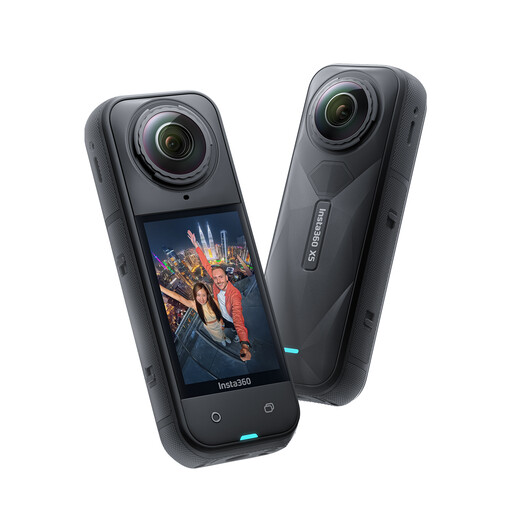 No image available
As a waterproof action camera, it’s worth considering for days out. Before buying, check whether its close-up capabilities are suitable for small beetle shells.
The product name specifies 8K and 360°.
No, focus distance alone isn’t enough to make a comparison. Also check the size of the area captured or the reproduction ratio, and the lighting: Nikon specifies a 1:1 ratio for the Z MC 50mm f/2.8, while Canon gives different minimum focus distances at the wide-angle and telephoto ends for the PowerShot G7 X Mark III.
Follow the instructions for your specific camera model. For the WPZ2, KODAK PIXPRO recommends checking that the battery compartment is closed and its seal is in place, rinsing the camera with clean water after contact with salt water or sand, then drying it. Don’t assume these instructions apply to other models without checking.
For purchases in Germany, your statutory consumer rights are against the seller and are separate from any voluntary manufacturer’s or retailer’s guarantee. According to the Verbraucherzentrale, the first step when a product is faulty is for the seller to put things right by repairing it or providing a replacement. The requirements depend on the circumstances.
There’s no blanket permission. Under § 23 BNatSchG, activities that could damage, alter or cause lasting disturbance to a nature reserve are prohibited, subject to the applicable detailed rules; § 44 sets out additional restrictions relating to specially protected species. Whether you can walk on a particular path or pick up something you find depends, among other things, on the local conservation rules and the species involved. Take photos without disturbing anything, and follow the rules in the area.