
Lieferung heute & morgen

Qualitätsgarantie

Willkommens-Angebote freischalten: KOSTENLOSE Lieferung | Bis zu 80 % RABATT | Kostenlose 30-Tage-JoyPlus-Testphase
App herunterladen
A cluttered entryway, jackets draped over chairs, and nowhere to put your handbag—a lack of storage is an everyday problem. Coat hooks seem like a simple fix, but the market is flooded with products whose weaknesses only become apparent after purchase. False promises and low-quality materials quickly lead to frustration and wasted money.
As your Joybuy Product Recommendation Officer, I'm here to help you spot the common pitfalls. This guide will show you what to look for to find a durable and functional solution that truly fits your home.
Many products look great at first glance but prove impractical in daily use. Watch out for these three common issues to avoid making a bad purchase:
To make the right choice, you should focus on objective features rather than trusting marketing promises. The following three parameters are crucial for the functionality and longevity of your new hooks.
The material determines not only the look but also the stability and durability.
Also, look for rounded edges and a smooth finish to protect your clothing.
The choice of mounting method depends on your wall's condition, the desired load capacity, and your living situation.
Consider what you plan to hang. A single coat hook needs to bear more weight than a key holder.
Here are some product recommendations tailored to specific needs and living situations.
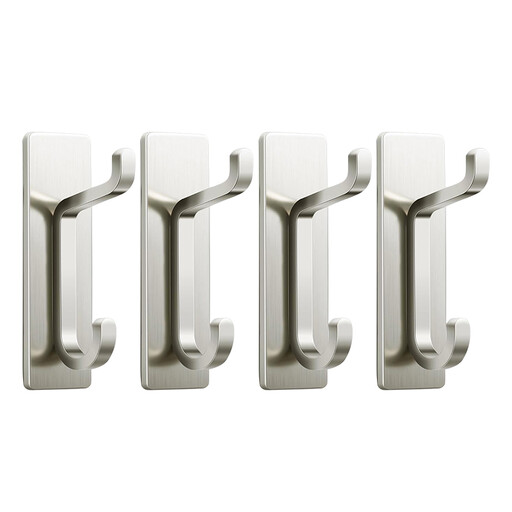
Why It's a Great Fit: Ideal for rental properties where drilling is not allowed or desired. These hooks offer a quick and clean solution for lighter items like towels in the bathroom, dishcloths in the kitchen, or accessories in the hallway.
Avoids the "unsuitable mounting" pitfall, as it causes no permanent damage to walls. The adhesive is designed for smooth surfaces like tile or metal, where it provides a reliable hold.
The hooks are made of stainless steel, making them suitable for use in damp rooms. Installation is tool-free and quick.
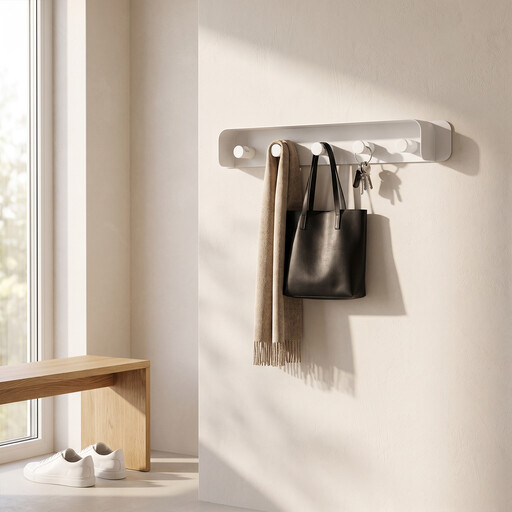
Why It's a Great Fit: For anyone seeking a modern, stylish, and highly functional solution. This modern wall-mounted coat rack combines a clean aesthetic with practical utility, enhancing any entryway.
Made of high-quality aluminium, it bypasses the "inferior materials" pitfall. The stated load capacity of up to 25 kg (according to the manufacturer) addresses the problem of "underestimated load capacity."
The integrated shelf offers additional space for small items. According to the manufacturer, the design was honoured with the German Design Award 2022.

Why It's a Great Fit: For anyone who needs extra storage quickly and easily. This over-the-door hook utilises the often-overlooked space on the inside of a door in the bedroom, bathroom, or utility room.
Completely solves the "complex installation" problem, as no tools, drilling, or adhesives are required. The rail is simply hung over the door and is ready to use immediately.
Made of sturdy steel, the rail offers plenty of space with 5 hooks and a stated load capacity of up to 10 kg. It is a flexible solution that can easily be moved to another door if needed.
We have compiled a complete, up-to-date list of products that meet these strict selection criteria and safety requirements.
1. How much weight can a no-drill coat hook hold? The load capacity of self-adhesive hooks varies greatly depending on the manufacturer, adhesive, and surface. Smaller hooks are often rated for 1-2 kg, while special power adhesive strips can hold up to 5 kg. It is crucial that the surface is perfectly clean, dry, and smooth (e.g., tiles). Always follow the manufacturer's instructions and avoid applying them to wallpaper.
2. What is the best material for hooks in the bathroom? For the bathroom, materials with high corrosion resistance are essential. Stainless steel (especially grades like 304) and powder-coated aluminium are excellent choices. They do not rust and maintain their appearance and stability even in high humidity. Avoid uncoated steel or low-quality alloys.
3. Can I mount a hook rail on a drywall wall? Yes, this is possible, but it requires the correct mounting hardware. Standard wall plugs often don't provide sufficient grip in drywall. Instead, use special hollow-wall anchors (e.g., toggle bolts or metal expansion anchors). These anchor themselves behind the drywall panel, allowing for a much higher and more secure load capacity that is sufficient even for a fully laden coat rail.