
Lieferung heute & morgen

Qualitätsgarantie

Willkommens-Angebote freischalten: KOSTENLOSE Lieferung | Bis zu 80 % RABATT | Kostenlose 30-Tage-JoyPlus-Testphase
App herunterladen
Coat hooks bring order without the need for a full wardrobe. In the hallway, they keep jackets and bags within easy reach; in the bathroom, they serve as hooks for clothes and towels. For rented flats, door hooks or self-adhesive hooks are worth considering, while families often need a sturdy wall-mounted coat rack or a rail with several hooks.
The choice may seem straightforward at first. In practice, however, incorrect installation, unclear weight ratings or unsuitable materials can quickly lead to disappointment. The following guide will help you compare coat hooks objectively by location, load capacity and fixing method.
A rail with many wall hooks certainly offers more hanging options. What really matters, though, is how much weight the whole structure can bear, both overall and per hook. Winter coats, full rucksacks and shopping bags put far more strain on a coat rail than scarves or hats.
So look for specific details such as maximum total load and load capacity per hook. If this information is missing, don't plan to use the rail for heavy items.
Self-adhesive hooks can be practical in rented flats. According to product specifications, however, certain models only work on smooth, dry and clean surfaces such as glass, tiles, metal or smooth emulsion paint. Wallpaper, textured wallpaper, rough walls, flaky paintwork and uneven surfaces are often unsuitable.
The stated weight capacity also only applies under the intended conditions. Heavy coats or valuable items should not be hung on a sticky hook if falling could cause damage or injury.
Over-door coat racks use the top door rebate and need enough clearance between the door leaf and the frame. If the gap is too narrow, the door may not close fully. Glass doors, unstable doors or doors with a very narrow rebate are not generally suitable for door hooks.
Before buying, you should check the door thickness, the available gap and the intended hook depth. An over-door rack should sit fully on the top edge of the door and must not slip.
Metal hooks made from steel or aluminium are a good choice for hallways, bedrooms and bathrooms. Powder-coated or chrome-plated finishes can make cleaning easier. In damp rooms, look for rust-resistant materials and follow the appropriate care instructions.
Wooden coat hooks or rails made from FSC-certified wood combine a warm look with practical storage. A lacquer or varnish coating can protect against moisture, according to product specifications. Even so, prolonged exposure to splashing water should be avoided.
Plastic hooks with adhesive strips are lightweight and versatile. They are only suitable for heavy jackets or bags if the stated load capacity and the surface are clearly compatible.
Measure the available wall or door width before buying. In a hallway, the coat rail should not protrude into walkways. Enough space between the hooks prevents thick jackets from overlapping.
For a freestanding coat rack, you also need to consider height, base diameter and tip resistance. According to product specifications, the Clothy model measures 170 cm in height, has a base diameter of 43 cm and a maximum total load of 15 kg. No more than 2 kg should be hung on each hook. The load should be distributed evenly.

Why it fits: According to the product description, this over-door rack requires no tools and offers five hooks for the hallway, bedroom or bathroom.
The stated maximum load of 10 kg and the hook depth of 4.5 cm make it easier to check suitability before buying.
Steel construction, five hooks and space-saving installation over the door.
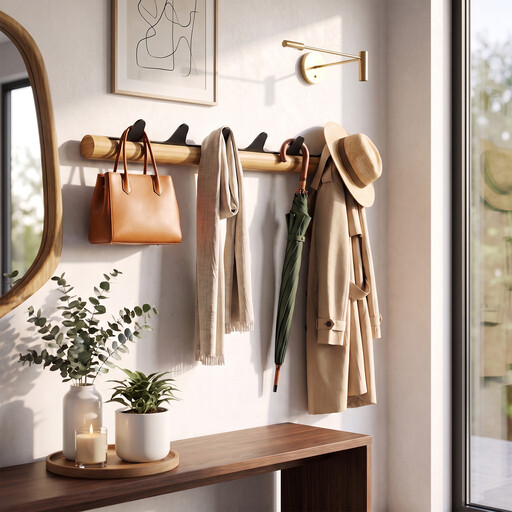
Why it fits: The combination of FSC-certified rubberwood and aluminium hooks makes it suitable for the hallway, bedroom or bathroom.
Wall mounting with wall plugs and screws is more reliable than an unclear adhesive solution; the substrate still needs to be checked.
Six hooks, rounded edges and, according to product specifications, a maximum load of 30 kg.
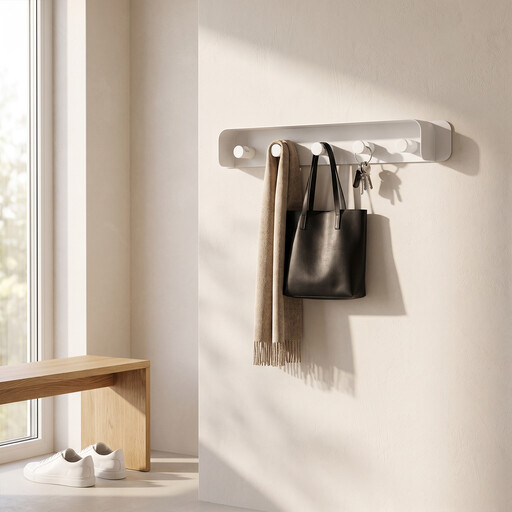
Why it fits: A combination of five hooks and a shelf provides extra space for keys, small accessories or decoration.
The stated load capacity of 25 kg and the note about suitable wall anchors make installation planning more concrete.
Aluminium construction, rubber pads to protect the wall and hook grooves to help prevent slipping.
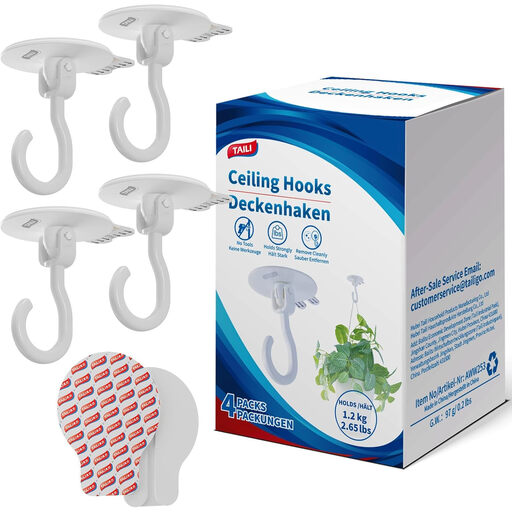
Why it fits: The tool-free fixing can be useful for keys, lightweight towels, hats or accessories on suitable smooth surfaces.
According to product specifications, rough, cracked, textured or wallpapered surfaces are not suitable. Each hook has a capacity of 2.6 lb, which is around 1.18 kg.
Four hooks, no drill holes and a removable adhesive fixing designed for smooth surfaces.
In the full selection you will find coat hooks, wall hooks, door hooks and hook rails for different rooms and fixing methods.
For a wall-mounted coat rack, you should first consider any pipes and suitable drilling points. Use wall plugs that match the wall material and the intended load. After installation, all screws must be tight; for family households, regular checks are recommended.
Door hooks should sit fully over the top edge of the door. Distribute jackets, bags and towels evenly so that the over-door rack is not loaded on one side. Self-adhesive hooks need a clean, dry surface and should be left to bond according to the installation instructions before applying the final load.
For care, a soft, dry or slightly damp cloth is usually sufficient. Harsh cleaners and abrasive products can damage paint, wood surfaces or coatings.
Door hooks and self-adhesive hooks often avoid drill holes. Over-door models are a flexible solution if the door rebate is sufficient. Sticky hooks are mainly suitable for light items and smooth, load-bearing surfaces. For heavy coats, a screwed-on rail is often more reliable, provided your tenancy agreement and the substrate allow it.
That depends on the number of people and the storage location. For a family, five to eight coat hooks in the entrance area are often more practical than a short single-hook rail. What matters is not just the number, but also the spacing between the hooks and the total load capacity.
The lifespan depends on the material, load, moisture, installation and usage. Screwed-in metal or wooden hooks can last a long time if installed correctly. For sticky hooks, the surface, temperature and weight all affect adhesion. Check the fixing regularly and replace hooks if adhesive strips come loose, material shows cracks or screws no longer hold securely.