
Lieferung heute & morgen

Qualitätsgarantie

Willkommens-Angebote freischalten: KOSTENLOSE Lieferung | Bis zu 80 % RABATT | Kostenlose 30-Tage-JoyPlus-Testphase
App herunterladen
A tidy entryway is the calling card of any home. A coat rack with a bench promises to organize jackets, shoes, and accessories with a small footprint. However, not every model lives up to its promise. Before you make a decision, it's crucial to understand the typical weaknesses that can quickly turn a supposed organizational helper into a source of frustration.
Many buyers focus on design and overlook critical functional flaws. The results are wobbly frames, surfaces that rust quickly, or impractical dimensions that get in the way of daily life. This guide will show you what to look for to find a durable and functional solution for your hallway.
To avoid a bad purchase, you should focus on three objective criteria. These determine the longevity and practical utility of your new freestanding hall tree.
The choice of material is decisive for stability and durability. Look for a frame made of steel instead of thin aluminium sheet. A high-quality powder coating or an electrolytic paint finish will reliably protect a black metal coat rack from corrosion and wear. For the wooden components, a melamine-coated particleboard or MDF board is more resistant to scratches and moisture than a simple paper foil.
Check the load capacity limits specified by the manufacturer. Relevant figures are the load capacity per hook (typically 3–5 kg) and the total weight capacity of the bench (often around 100 kg). A solid construction is characterized by screwed connections and sufficient material thickness. Adjustable feet are a useful detail to ensure stability even on uneven floors and prevent tipping.
Measure your entryway carefully before making a decision. Consider not only the width and depth but also the height. A well-designed coat rack with a shoe rack and bench provides enough clearance between the hooks and the seat, allowing even long garments to hang freely. The number of hooks and the size of the shoe shelves should match your household's needs. A coat stand with a seating area is particularly practical for comfortably putting on or taking off shoes.
Instead of making a one-size-fits-all recommendation, we have selected products for different needs and space constraints.
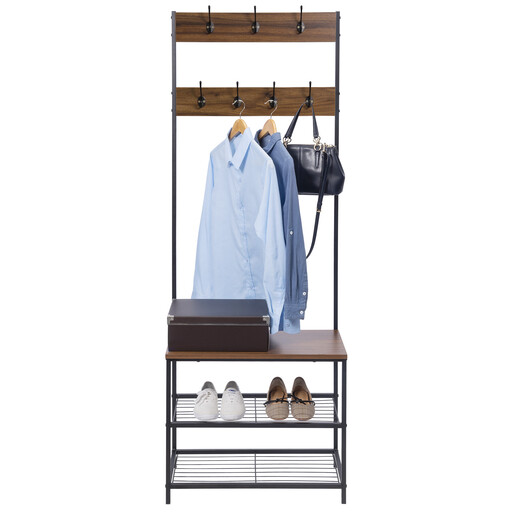
Why it's a great fit: This is an ideal all-in-one solution for small apartments and families. It combines hooks, a bench, and a shoe rack in a compact footprint, and its vintage design fits well in many modern entryways.
The alloy steel frame with an electrolytic paint finish counteracts the problems of instability and rust. The dimensions are designed for typical hallways, offering a practical height for jackets and coats.
Combines three functions (hanging, sitting, storing) in one piece of furniture. The load capacity of 5 kg per hook and 20 kg per shelf is designed for everyday use.
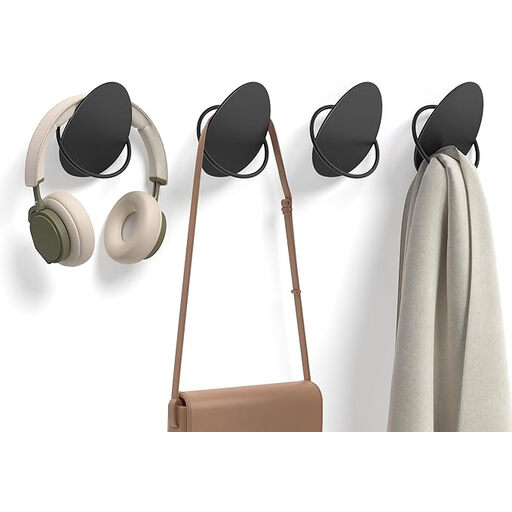
Why it's a great fit: When there is absolutely no room for a freestanding unit, this set offers a minimalist and elegant alternative. The hooks can be flexibly mounted on the wall to make optimal use of the available space without taking up any floor area.
The powder-coated steel construction prevents the problem of poor-quality surfaces. Since the hooks are firmly anchored to the wall, stability is guaranteed with correct installation.
Maximum layout flexibility and zero floor footprint. The rounded edges are gentle on clothing and prevent snagging.
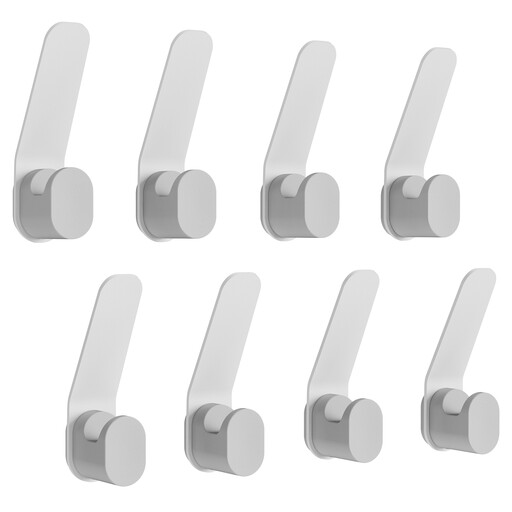
Why it's a great fit: This set is designed for users who need a robust, customizable storage solution. The double hooks double the hanging capacity and are also suitable for heavier items like bags or bathrobes.
Made from sturdy aluminium, these hooks are water- and rust-resistant. The specified load capacity of up to 5 kg (11 lbs) per hook provides reliable stability that many basic hooks lack.
The double-hook design maximizes storage space in a small area. Winning the German Design Award 2022 underscores its thoughtful design.
While hall trees are versatile, sometimes a custom wall-mounted solution is the better choice. If you want to explore more specialized hook options, we've compiled a selection of products that meet strict criteria.
The load capacity varies greatly depending on the model and manufacturer. Pay close attention to the manufacturer's specific details. As a rule, the weight capacity of the bench is between 80 and 120 kg, while individual hooks are usually designed for 3 to 5 kg. Do not exceed these limits to ensure stability and safety.
Most freestanding models, especially those with a wider base and adjustable feet, are designed to be stable without being anchored to the wall. However, an additional anti-tip kit, which is often included, is recommended for households with children or when placing the unit on very smooth floors.
Care is generally straightforward. Metal surfaces should be wiped with a soft, dry, or slightly damp cloth. Avoid aggressive cleaning agents that could damage the powder coating. Wood or composite wood surfaces can also be cleaned with a slightly damp cloth. Ensure that wet jackets or umbrellas do not have direct contact with the surfaces for extended periods.