
Lieferung heute & morgen

Qualitätsgarantie

Willkommens-Angebote freischalten: KOSTENLOSE Lieferung | Bis zu 80 % RABATT | Kostenlose 30-Tage-JoyPlus-Testphase
App herunterladen
A high-quality coated induction frying pan is a cornerstone of many kitchens. However, the search for the right model can quickly become overwhelming. Promises of durability and perfect non-stick performance often clash with the reality of a coating that fails after just a few months or a pan that doesn't work correctly on an induction hob.
As a Joybuy Product Recommendation Officer, I analyse product information daily to help you separate the wheat from the chaff. In this guide, I'll show you the most common pitfalls when buying a pan and which crucial features you should look for.
Many buyers are disappointed when their new pan doesn't live up to its promises. This is often due to overlooked details that are rarely mentioned in product advertising.
To avoid these pitfalls, you should focus on three core technical features. These determine the pan's longevity, safety, and cooking performance.
The non-stick pan has evolved. While traditional coatings are often based on PTFE, modern alternatives rely on other materials:
Look for: Detailed manufacturer information on the coating's composition. Terms like "Diamond-Titanium Ceramic" or "Swiss ILAG Ceramic" indicate a specific, often more robust technology.
For optimal performance on an induction hob, a ferromagnetic base is essential. The quality of the base determines the efficiency of heat transfer.
Modern pans can do more than just fry. Additional features significantly increase their everyday utility.
Based on these criteria, we have identified several products that offer a suitable solution for specific needs and households.
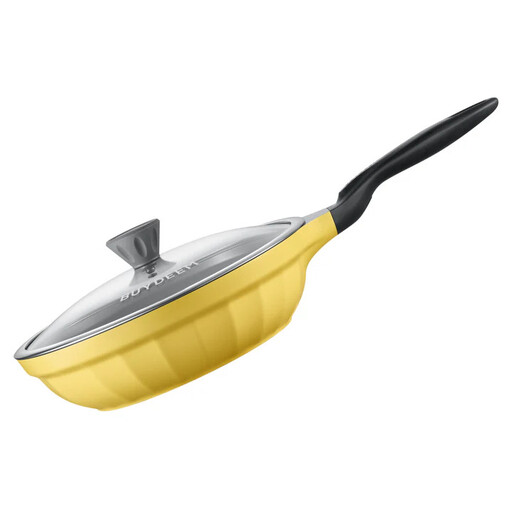
Why it's a great fit: Perfect for preparing daily healthy meals for 3–4 people. The Swiss ILAG ceramic coating, explicitly declared free of PFAS, PFOS, and PFOA, offers transparency and safety.
The solid, 5.5 mm thick base prevents warping and ensures even heat distribution on induction hobs. The specific mention of a branded coating (ILAG) is more trustworthy than vague "healthy" advertising claims.
Robust construction with a thick base for durability and a certified, PFAS-free ceramic coating.
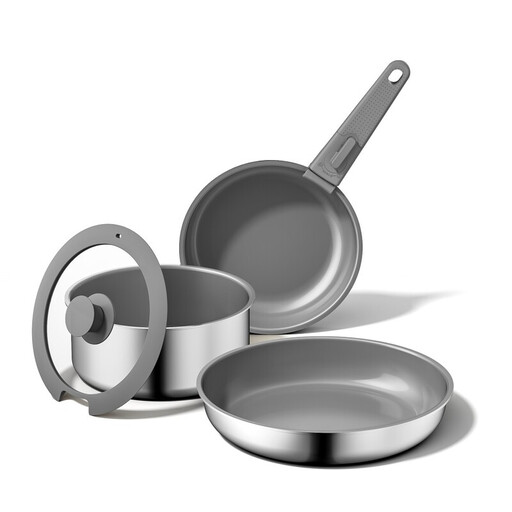
Why it's a great fit: The solution for small kitchens, RVs, or anyone who values an organised space. The detachable handle allows the cookware to be stacked, saving up to 70% more space according to the manufacturer.
This induction pan set solves the problem of bulky handles. The Diamond-Titanium ceramic coating is designed for longevity, countering the issue of short-lived coatings.
Maximum space-saving thanks to the detachable handle and high versatility, as the entire set is oven-safe (up to 250°C) and dishwasher-safe.
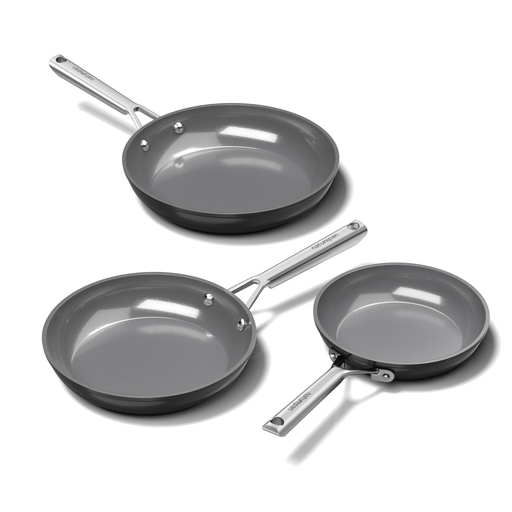
Why it's a great fit: This cookware set with three common sizes (20, 24, and 28 cm) covers all needs—from a fried egg to a family meal. The high oven-safe temperature of up to 260°C offers maximum flexibility.
The ceramic coating, reinforced with diamond and titanium particles, offers increased resistance to scratches and wear, directly addressing the weakness of short-lived coatings.
A complete set for any cooking situation, featuring a robust coating and exceptionally high heat resistance for use in the oven.
We have compiled a complete, up-to-date list of products that fully meet these strict selection criteria and German safety regulations.
To maximise the life of the coating, you should follow a few basic rules:
No. Oven safety depends on the material of the handle and the coating. An oven-safe frying pan is explicitly marked by the manufacturer with a maximum temperature limit (e.g., up to 250°C). Pans with plastic or wooden handles are generally not suitable for the oven unless the handle is detachable.
This is a clear sign of a low-quality pan base. If the base is too thin, warps with heat, or the ferromagnetic material is not integrated across the entire surface, the hob's magnetic field cannot transfer energy evenly. When buying, look for a thick, solid, and flat base to ensure optimal and energy-efficient heat distribution.