Which oven is right for you?

Bakers with a favourite cobbler dish

If you’d like to keep using your existing dish, compare its external dimensions, including the handles, with the oven’s usable internal dimensions. For example, Rommelsbacher lists a usable internal area of 34 × 28 cm for the BG 1805/E.

House shares with limited worktop space

If the oven will sit on a shared worktop, you’ll also need to check that its external dimensions and the required clearances are suitable for the space. The instructions for the specific model are the most important guide.

Households sharing an oven

If you can use an existing oven, check that you’re allowed to use it and that your dish and recipe quantity will fit inside. The Verbraucherzentrale explains that oven energy consumption is stated per standard cycle and heating mode.

What should you consider when choosing an oven?

Freestanding mini oven

A good fit if: you need your own oven and your dish, including its handles, fits inside the usable cooking space.

Bear in mind: The appliance needs space, as well as the clearances specified in its instructions.

Existing or suitable built-in oven

A good fit if: you’re allowed to use the oven in your shared kitchen and your cobbler dish and recipe quantity will fit inside.

Bear in mind: A built-in appliance needs a designated space for installation.

Compact countertop oven

A good fit if: a smaller portion will do and you don’t have room for a larger appliance.

Bear in mind: Capacity alone won’t tell you whether your dish will fit. Measure both the cooking space and the dish.

Consideration What to check before buying Who is it important to?
Dish size Compare the dish’s external dimensions, including the handles, with the usable width, depth and height, as well as the intended shelf position. I want to use my existing dish for the portion I have in mind and know in advance whether it will fit in the oven. Around 33% of consumers focus on whether the dish and portion will fit.
Safe positioning Check the external dimensions, door opening and clearances specified in the instructions for the exact model against the space you plan to use. When the worktop, wall and wall cupboards all share the same space, I want to be sure the appliance can be used there in line with its instructions. Around 27% of consumers prioritise safe positioning.
Heating modes Check whether the fan setting can be selected on its own, which combinations with top and bottom heat are available, and what temperature and timer settings are offered. I want to be able to choose the heating mode for my recipe rather than rely on a feature mentioned in the advertising. Around 20% of consumers focus on control of the heating modes.
Cleaning Look for a removable crumb tray or drawer, an accessible interior and clear cleaning instructions. After baking a cobbler, I want to be able to remove any fruit residue so the oven is clean for the next person. Around 13% of consumers put easy cleaning first.
Energy and purchase costs For labelled ovens, compare consumption figures per standard cycle and heating mode; wattage alone doesn’t tell you how much energy is used. If I’m buying an additional oven, I want to weigh up the potential benefits against using an appliance that’s already available. Around 7% of consumers prioritise this comparison of energy use and costs.

Avoiding mistakes when buying and positioning your oven

  • Assuming the litre capacity guarantees a good fit

    The capacity won’t tell you whether a rectangular dish, including its handles, will fit on the shelf. For the BG 1805/E, Rommelsbacher lists a usable internal area of 34 × 28 cm and recommends using a slightly smaller dish.

    Measure the outside of your dish, including the handles, and check its width, depth and height against the specifications for the exact model.

    If the dish is too large, you may need a smaller one or have to divide the recipe into several batches.

  • Treating a freestanding oven like a built-in appliance

    Walls, wall cupboards and shared worktops can limit where you can position an oven. A compact cooking space doesn’t automatically mean the outside of the appliance is safe to touch. The manufacturer states that the Severin TO 2068 is not a “Safe-Touch” model.

    Check the instructions for the specific model against the space you plan to use, taking the worktop, wall, wall cupboard and door opening into account.

  • Using the wattage to estimate energy consumption

    The power rating in watts isn’t the electricity used during a baking cycle. The Verbraucherzentrale explains that consumption figures for labelled ovens are given per standard cycle and heating mode. Regulation (EU) No 65/2014 excludes portable ovens from its scope; whether an appliance is covered depends on how it is classified.

    Only compare figures measured on the same basis, and consider whether you can use a suitable oven that’s already available.

A guide to relevant brands

Rommelsbacher

Freestanding baking and grilling ovens in a range of sizes to suit different dishes.

  • According to Rommelsbacher, the BG 1805/E accommodates round dishes up to 31.5 cm; its support team lists a usable internal area of 34 × 28 cm. The manufacturer lists round dishes up to 29 cm for the BGE 1580/E.
  • These are model specifications, not independent cobbler baking tests. The BG 1805/E also takes up more space.

CASO Design

The TO 26 SilverStyle is a freestanding 26-litre oven with a fan setting and top and bottom heat.

  • CASO lists internal dimensions of 350 × 200 × 300 mm (W × H × D), dishes up to 30 cm in diameter and a removable crumb drawer.
  • A stated dish diameter doesn’t confirm that a rectangular dish with handles will fit. Performance and baking results are based on the manufacturer’s claims.

Severin

The TO 2068 is a 20-litre baking and toast oven with hot-air circulation and switchable top and bottom heat.

  • According to the manufacturer, it comes with a timer and an interior light.
  • Severin states that this model is not a “Safe-Touch” model. Check the internal dimensions against your dish before buying.

Clatronic

According to the manufacturer, the MBG 3728 is a 30-litre multi-function oven with a fan setting and top and bottom heat.

  • The manufacturer lists a 90-minute timer and a removable crumb tray.
  • The specifications don’t confirm whether a particular cobbler dish will fit.

Steba

The KB 27 U.2 is a documented 20-litre example with a fan setting.

  • Steba lists separately switchable top and bottom heat and internal dimensions of 30 × 22 × 31 cm (W × H × D) for the KB 27 U.2.
  • The requirement to leave a 10 cm gap from the wall comes from the instructions for a different model, the KB 28 ECO, and doesn’t automatically apply to the KB 27 U.2.

Joybuy ovens for cobblers and shared kitchens

The selection includes freestanding countertop ovens in different sizes, as well as a freestanding 60 cm oven. For every model, check the dish dimensions and space needed; the 60 cm model also needs to be installed by a qualified professional.

Woltu BF12sz mini oven, 32 litres, black

Woltu BF12sz mini oven, 32 litres

Suitable for a cobbler if your dish fits inside after you’ve measured it.

32 litres; 1600 W; temperature control from 100 to 250 °C; 60-minute timer and removable crumb tray, according to the product specifications.

The stated appliance dimensions are 52.3 × 36 × 32.2 cm.

View at Joybuy

Woltu mini oven, 10 litres, white

Woltu mini oven, 10 litres

A compact option if a smaller cobbler will do and your dish fits inside.

10 litres; temperature control from 100 to 230 °C; top and bottom heat and a programmable 60-minute timer, according to the product specifications.

The stated dimensions are 37 × 26.5 × 21 cm.

View at Joybuy

Woltu mini fan oven, 28 litres, black

Woltu mini fan oven, 28 litres

Could be suitable for a cobbler if your dish fits inside and the shelf positions suit the way you plan to use it.

28 litres; temperature control from 100 to 230 °C; three heating modes, a mechanical 60-minute timer and three shelf positions, according to the product specifications.

View at Joybuy
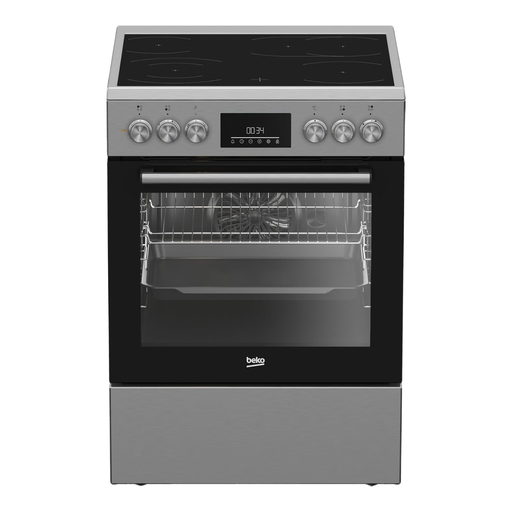
Beko FBM67320XS freestanding cooker, 60 cm

Beko FBM67320XS, freestanding cooker, 60 cm

This could be an option for baking a cobbler once you’ve confirmed the space, connection and professional installation requirements.

72 litres; fan-assisted cooking with a ring heating element and eight heating functions, according to the product specifications.

The product description states that a qualified professional is required for installation and the initial electrical connection.

View at Joybuy

Frequently asked questions about choosing an oven

Is the litre capacity enough to find the right cobbler dish?

No. Measure the outside of the dish, including the handles, and compare its width, depth and height with the usable dimensions and the intended shelf position. For example, Rommelsbacher lists a usable internal area of 34 × 28 cm for the BG 1805/E and recommends using a slightly smaller dish.

Can I use a mini oven under a wall cupboard or as a built-in appliance?

Only if the instructions for that specific appliance allow it in the space you have in mind. The instructions for the Steba KB 28 ECO require a 10 cm gap between the back of the appliance and the kitchen wall, and explicitly state that the model isn’t suitable for built-in installation. These requirements don’t automatically apply to other appliances.

How do I keep a shared oven clean after baking?

Let the appliance cool according to its instructions and use any removable parts provided for cleaning. Rommelsbacher lists a removable crumb tray for the BG 1805/E, while CASO Design lists a removable crumb drawer for the TO 26 SilverStyle. Clean work surfaces and utensils are also part of food hygiene, as explained by the German Federal Institute for Risk Assessment.

Does a portable mini oven in Germany need an EU energy label?

Not simply because it’s an oven: Regulation (EU) No 65/2014 excludes portable ovens from its scope. For an oven that is labelled and not exempt, the label includes, among other things, consumption per standard cycle for fan-assisted and conventional heating.

Who should I contact if my appliance develops a fault after purchase?

As a rule, the seller – not the manufacturer – is responsible for your statutory rights relating to faulty goods. The Verbraucherzentrale states that in Germany the statutory warranty period for goods to be free from defects at the time of delivery is two years; this is separate from any voluntary guarantee.