Regular latte drinkers
You want to make espresso and plant-based milk foam regularly with minimal hands-on steps, and can agree on a shared cleaning routine.


For frequent lattes with minimal hands-on effort, consider a bean-to-cup machine with a milk system. If you want to control the amount of espresso and coconut drink yourself, a portafilter machine may suit you better. For the occasional latte, a capsule machine with a separate frother could work, but you’ll need space for two appliances and compatible capsules. Check how the coconut drink you actually use performs, and before buying, make sure the specific appliance has the required CE marking and clear safety and operating instructions. The European Union and the German Federal Network Agency point out that CE is not an independent quality mark.
You want to make espresso and plant-based milk foam regularly with minimal hands-on steps, and can agree on a shared cleaning routine.
You want to control the amount of espresso and coconut drink yourself, and are happy to clean the steam wand and other parts after use.
You only make a latte now and then, and are weighing up the space needed for a compact capsule machine and separate frother.
A good fit if: Lattes are made frequently in your shared kitchen and mostly automatic preparation matters more to you than hands-on control.
The trade-off: The milk system, coffee grounds container, drip tray and water tank all need a reliable shared cleaning routine. Check the space required and care instructions for the specific model.
A good fit if: You want to control the amount of espresso and coconut drink yourself and froth it by hand. De’Longhi lists the Dedica Style EC685.W EX:4 as 15 cm wide, with an adjustable cappuccino system.
The trade-off: Frothing and cleaning are manual, and you’ll need extra space for a jug, room to operate the machine and, potentially, a coffee grinder.
A good fit if: You only want a latte occasionally and a simple espresso portion matters more than choosing your own beans. Krups describes its Essenza Mini set as offering espresso and lungo, with a separate Aeroccino 3.
The trade-off: The frother needs its own space and cleaning area, and compatible capsules are an ongoing consumable. Check whether the specific coconut drink you use is suitable.
| Priority | What to check when buying | Who might care most |
|---|---|---|
| Foam and control | Manual frothing or an automatic milk system; information about the specific coconut drink and how to clean the parts that come into contact with milk. | If I want to control the amount and foam of my coconut drink, the right frothing method matters; around 36% of consumers prioritise foam and portion control. |
| Cleaning between uses | How easy it is to reach the parts that come into contact with milk, and the cleaning instructions for the exact model. | In a kitchen shared by several people, I want to leave the machine clean for the next person; around 29% of consumers prioritise cleaning between uses. |
| Counter space | Space for the complete preparation set-up, including a jug or separate frother, and access to the water tank. | If shared worktop space is limited, there needs to be room for accessories as well as the machine; around 21% of consumers pay particular attention to counter space. |
| Ongoing costs and maintenance | Consumables for your intended use and the care instructions for the specific model, including any descaling requirements. | If I’m considering ongoing costs and maintenance, I want to know in advance which consumables and tasks will be involved; around 14% of consumers prioritise running costs. |
Information about the machine and the drink’s recipe are two separate considerations. A manufacturer’s claim that a machine can froth plant-based alternatives doesn’t prove it will produce good foam with every coconut drink recipe.
Check the properties of the coconut drink you actually plan to use, and don’t treat the manufacturer’s claims as an independent test of its foaming performance.
Accessories may take up extra space and need cleaning too.
Melitta’s Solo & Milk and Caffeo Solo are different models. A product page for the Caffeo Solo doesn’t confirm that this machine has a milk frother.
Before buying, compare the full model name with the description of its milk function.
If the specific model doesn’t have a suitable frother, you may need to allow for a separate appliance.
With a capsule machine, you’ll need compatible capsules. De’Longhi says how often the Dedica needs descaling depends on water hardness.
Compare consumables based on how you’ll use the machine, and read the care instructions for the exact model variant you’re considering.
The 3300 Series with LatteGo is aimed at buyers who want to combine bean-to-cup coffee with an automatic milk system.
The Dedica Style EC685.W EX:4 is a slim portafilter machine for making espresso and frothing milk by hand.
The Essenza Mini set with Aeroccino 3 combines a capsule machine with a separate milk frother.
The Solo & Milk is a bean-to-cup machine with a manually operated milk frother.
The Barista Express BES870 is aimed at buyers who want to combine grinding, portafilter espresso and manual frothing in one machine.
The following options include portafilter machines and machines with an integrated milk system or separate frother. For every specific mains-powered appliance, check that it has the required CE marking and clear safety and operating instructions. CE is not an independent quality mark.
 No image available
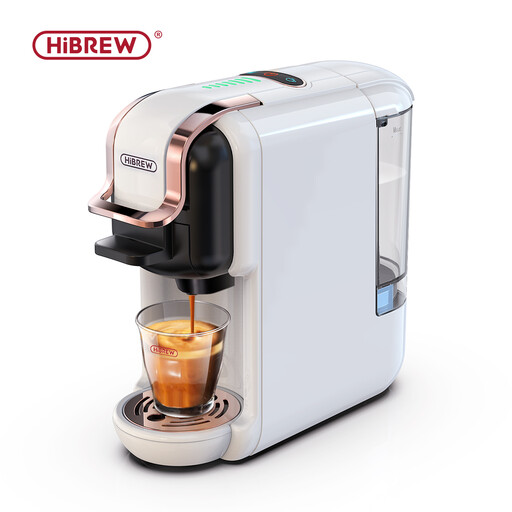
For espresso made with ground coffee, with manual frothing using the steam wand.
The product title also lists compatibility with Nespresso capsules, DG capsules and ESE pods. According to the description, the water tank has a capacity of 1.3 litres.
 No image available
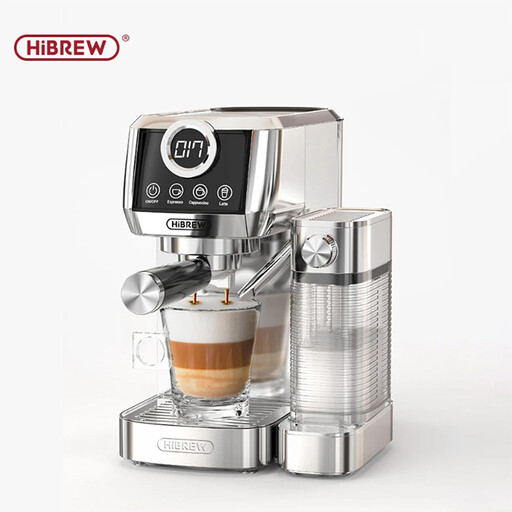
For espresso made with ground coffee and automatic milk frothing, if you’d rather not froth the milk yourself with a steam wand.
The description lists six coffee modes, three temperature settings and a removable water tank with a capacity of 1.3 litres.
 No image available
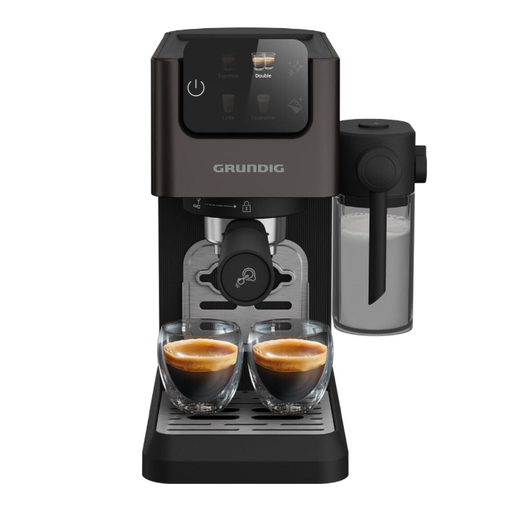
For espresso and automatically prepared milk drinks, with an integrated milk container.
The description lists a power rating of 1,628 W, pump pressure of 20 bar and a removable water tank with a capacity of 1.1 litres. The instructions say to rinse the portafilter and milk container parts after use.
 No image available
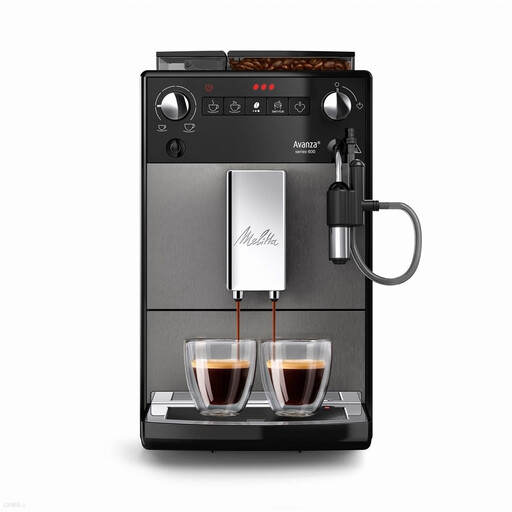
For bean-to-cup coffee and lattes, with an integrated milk system and one-touch preparation.
The description lists a width of 20 cm, automatic cleaning programmes, a removable brewing unit and a removable water tank. The milk tube should be rinsed after each use.
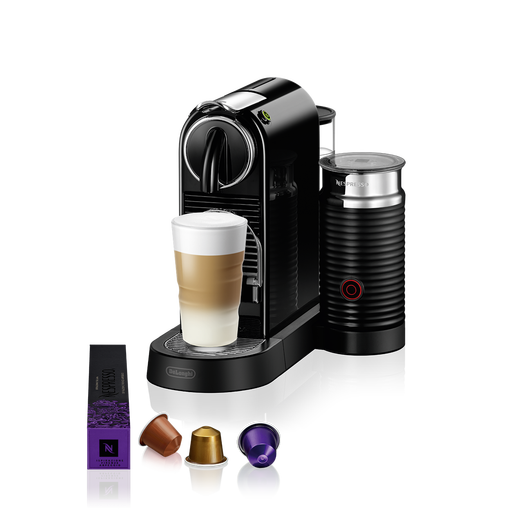 No image available
For espresso and milk drinks, with a capsule machine and integrated Aeroccino frother.
The description lists two programmable cup sizes and a removable water tank. Compatible Nespresso capsules are needed to make your drinks.
That can’t be guaranteed for every coconut drink. Philips promotes the EP3347/90 as being able to froth plant-based alternatives, while drink manufacturer Ecomil describes a specific coconut barista drink as suitable for frothing. Check the drink you actually use, as well as the machine’s care instructions.
Clean the parts that come into contact with the drink you use, following the instructions for the specific model, and agree on who empties the coffee grounds container, capsule bin and drip tray. Melitta says to remove and rinse the cappuccinatore on the SOLO & Perfect Milk; these steps don’t automatically apply to other models.
According to De’Longhi, an indicator light shows when descaling is needed. How often this happens depends on the local water hardness. Always follow the instructions for the specific variant you buy.
Check the specific appliance for the applicable CE marking and clear safety and operating instructions. The European Union describes CE as a manufacturer’s declaration of conformity; the German Federal Network Agency also addresses correct marking as part of its market surveillance. CE is not an independent quality mark.