Low-sugar coconut ice cream experimenters
If you want to reduce the sugar in your coconut recipe, you need to consider both the recipe and the machine: sugar affects the physical properties of ice cream, as Wageningen University & Research explains.


If you want to churn a chilled coconut mixture without pre-freezing the machine’s bowl, a self-cooling compressor model suits the process. For small portions you can plan ahead, consider a model with a freezer bowl or a machine that processes a pre-frozen base. Sugar affects the texture of ice cream, as Wageningen University & Research explains. So check the recipe and the machine’s instructions together, rather than assuming that a particular machine function will guarantee a certain texture or sugar content.
If you want to reduce the sugar in your coconut recipe, you need to consider both the recipe and the machine: sugar affects the physical properties of ice cream, as Wageningen University & Research explains.
If you don’t want to freeze a bowl or prepared recipe base in advance, compare the preparation involved with the space and effort the machine requires.
If you prepare individual portions of coconut ice cream in advance, make sure your freezer space and usable batch size suit your plans.
First decide whether you want to churn a liquid coconut mixture straight away or process a pre-frozen base. This determines how much preparation is needed, how much freezer space you’ll need and which type of machine is right for you.
A good fit if: you want to process a chilled, liquid coconut mixture without pre-freezing the machine’s bowl.
The trade-off: you’ll need space on your worktop for the machine and must observe its maximum fill level.
A good fit if: you plan small portions in advance and have room to pre-freeze the bowl.
The trade-off: the bowl needs to be frozen before churning. For another batch, you may need an extra bowl or to freeze the same one again.
A good fit if: you prepare individual portions of coconut recipes and can freeze each filled container in advance.
The trade-off: the base must be completely frozen before processing, so this isn’t the right method for a freshly mixed batch you want to serve straight away.
| Priority | What to check before buying | Who is it particularly relevant to? |
|---|---|---|
| Texture with less sugar | Check whether the instructions allow for your mixture. Wageningen University & Research describes how sugar affects ice cream texture, but this doesn’t tell you what to expect from a specific coconut recipe. | I want my reduced-sugar coconut base to have the texture I’m after; around 29% of consumers make this a priority. |
| Preparation time | Distinguish between a bowl that needs pre-freezing, a recipe base that needs pre-freezing and a machine that cools its own bowl. IMTEST confirms that the Ninja CREAMi NC300EU processes a pre-frozen base. | If I want to make ice cream at short notice, I need to know what has to be frozen in advance; around 23% of consumers prioritise preparation time. |
| Usable batch size | Compare the stated fill amount per batch, not just the bowl capacity: Rommelsbacher specifies a 1.5-litre bowl and a 500 ml fill amount for the IM 12; WMF specifies a 300 ml freezer bowl for the KÜCHENminis. | If I’m planning for several people or trying out recipes, I want to know how much I can make in one batch; around 18% of consumers pay particular attention to this. |
| Plant-based ingredients and sweetness | Check the ingredients list and recipe process. ‘Vegan’, ‘no added sugar’ and ‘low sugar’ don’t mean the same thing; the Verbraucherzentrale explains the differences between sweeteners and sugar substitutes. | I want to choose the ingredients and sweetness myself without losing sight of texture and preparation; around 18% of consumers prioritise this control. |
| Cleaning and worktop space | Check the dimensions and cleaning instructions for the specific model. Graef states that the removable parts of the IM706 are dishwasher-safe; this doesn’t automatically apply to every part of every machine. | If my worktop space is limited or I often make different versions of a recipe, space and cleaning matter to me; around 12% of consumers focus on these points. |
Sugar affects the texture of ice cream. However, findings about other types of ice cream don’t show what consistency a particular coconut base will have when made in a particular machine.
First choose a process that suits your preparation, then try a recipe that works with the machine’s instructions.
You may need to try additional recipes and ingredients to achieve the texture you want.
According to the manufacturer, the Rommelsbacher IM 12 has a bowl capacity of 1.5 litres but a fill amount of just 500 ml. The larger figure alone therefore doesn’t tell you how much mixture you can process in one batch.
Compare the stated fill amount per batch and plan any extra portions accordingly.
Making several batches may mean extra waiting time or the need for another freezer bowl.
With a freezer-bowl model, you pre-freeze the bowl; with the Ninja CREAMi NC300EU, the filled base must be frozen before processing. According to the manufacturer, a compressor machine doesn’t need a pre-frozen ice cream bowl.
Plan your timings around what needs to freeze and when you want to serve the ice cream.
The IM706 is a self-cooling ice cream maker with adjustable consistency settings and a yoghurt function.
The KÜCHENminis 3-in-1 is a freezer-bowl model for small portions you plan in advance.
The IM 12 ‘Kurt’ churns mixtures in a bowl that needs to be pre-frozen.
The EVA is a self-cooling ice cream maker with a yoghurt function and a 1.5-litre bowl.
The CREAMi NC300EU processes a pre-frozen base rather than cooling a liquid mixture itself.
According to the manufacturer, the EZ 7405 is a self-cooling 2-in-1 ice cream maker with a yoghurt function.
Here you’ll find ice cream makers for different ways of making coconut ice cream, including self-cooling models and machines for prepared recipe portions.
 No image available
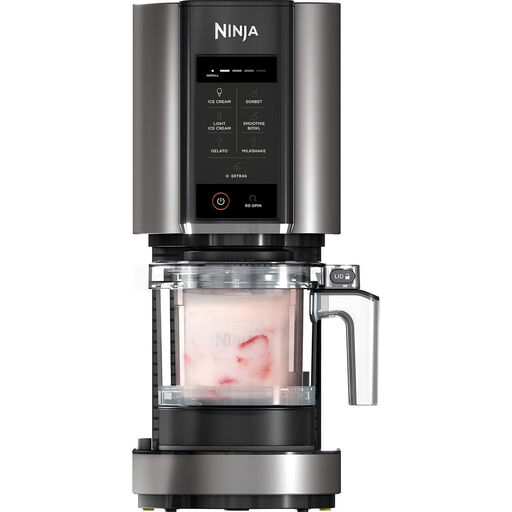
A good fit if you prepare recipe portions in advance and can freeze the base before processing.
7-in-1 functions, 800 W and a 473 ml container. The filled base must be completely frozen before processing; the instructions specify 24 hours. The product description mentions reduced-sugar recipes, but this doesn’t confirm the nutritional value or texture of your recipe.
 No image available
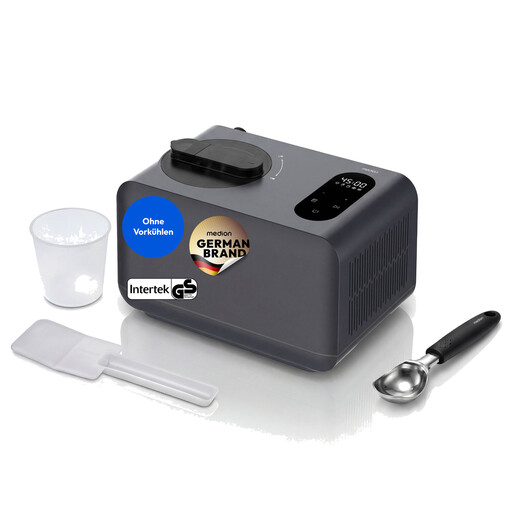
Could suit you if you want to process your own coconut mixture without pre-freezing the machine’s bowl.
The product specifications state a 1.5-litre capacity and 150 W. Yoghurt and slush are also listed as other things you can make.
 No image available
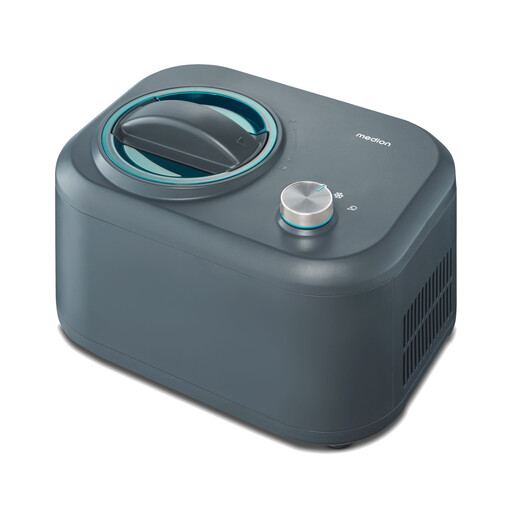
Could suit you if you want to process your own mixture without pre-freezing the machine’s bowl and are planning for a 1-litre capacity.
The product specifications state a 1-litre capacity, 100 W and an aluminium bowl. Frozen yoghurt and sorbet are also listed as other things you can make.
 No image available
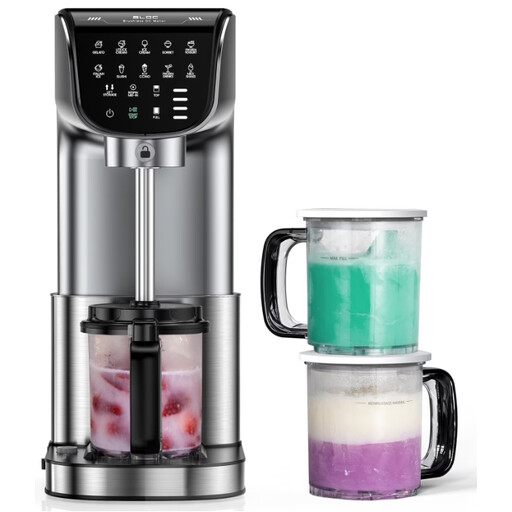
Could be worth considering for different recipe variations you plan in advance, if having several containers would suit your routine.
The product title specifies 568 ml containers, programmes for ice cream, gelato, sorbet and protein ice cream, plus a mix-in function. Dishwasher-safe parts are also listed.
 No image available
Could make your shortlist if you’re looking for a larger stated capacity and several programmes.
The product title specifies a 2.5-litre capacity and six programmes for ice cream, smoothies and milkshakes. The product description says you can use it without pre-freezing the bowl.
No. A programme name describes a machine setting, not the measured nutritional value of your portion. The ingredients determine the sugar content; using less sugar can also change the texture.
It depends on the type of machine: a compressor model cools its own bowl, the bowl in the WMF freezer-bowl model needs to be pre-frozen, and the Ninja CREAMi NC300EU processes a recipe base that has been frozen in advance. Always follow the instructions for your specific machine.
Keep perishable ingredients sufficiently chilled and clean any parts that come into contact with food according to the machine’s instructions. The German Federal Institute for Risk Assessment warns of salmonella risks in ice cream containing egg that hasn’t been thoroughly cooked; coconut ice cream can also be made without egg.
In Germany, consumers can generally assert their statutory warranty rights against the seller for a new machine for up to two years after delivery, as the Verbraucherzentrale explains. A manufacturer’s guarantee is separate. Depending on the circumstances, online purchases may also be covered by a 14-day right to cancel.
Check the labelling and manufacturer’s information for the specific machine: CE marking is a declaration made by the manufacturer, not a blanket guarantee of performance. In Germany, electrical appliances must not be put in household waste; the German Environment Agency advises disposing of them separately at authorised collection points.