
Lieferung heute & morgen

Qualitätsgarantie

Willkommens-Angebote freischalten: KOSTENLOSE Lieferung | Bis zu 80 % RABATT | Kostenlose 30-Tage-JoyPlus-Testphase
App herunterladen
Coconut-flavored sunflower seeds represent a specific niche within the snack food segment. They combine the traditional base of roasted sunflower seeds with a sweet, tropical aroma created by coconut extracts or powder. This product category, particularly widespread in Asia, is also gaining traction in Germany among consumers seeking alternative flavor profiles. This article analyzes the key characteristics of these snacks and presents a selection of products based on their specifications.
When selecting coconut-flavored sunflower seeds, several technical parameters that define the final product should be considered. A rational purchasing decision is based on the analysis of these factors.
The type of coconut ingredient significantly influences the taste experience. Products may use coconut powder, coconut water, or synthetic flavorings.
The roasting process is crucial for the crunchiness of the seeds. Most manufacturers of Chinese sunflower seeds use dry-roasting methods that remove moisture from the kernels, creating a firm but not overly hard texture. The quality of the roast is evident in how easily the shell separates from the kernel.
An objective evaluation includes an analysis of the nutrition facts table. Relevant values per 100 g are:
The net weight (e.g., 150 g vs. 200 g) determines the suitability for various occasions—from individual consumption to sharing in groups. Resealable packaging helps to preserve freshness and texture after opening.
Based on the criteria above, we present two products that represent different approaches within the coconut-flavored sunflower seeds category.
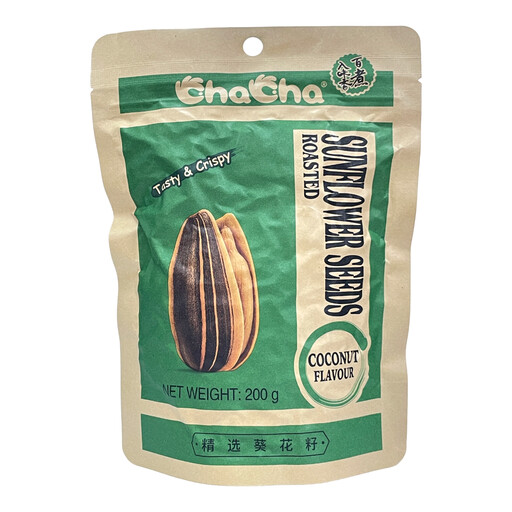
Analysis of Product Characteristics This product from the ChaCha brand uses coconut powder to create a distinctly sweet yet slightly savory flavor profile. The nutritional information shows a sugar content of 9.5 g and a salt content of 0.95 g per 100 g. The 200 g package is designed for sharing. The brand ChaCha Food Co., Ltd. has been established in the Chinese nut and seed market since 2001 and is known for its flavored snack varieties.
Advantages
Who It's For This product is aimed at consumers who prefer an intense, sweet snacking experience and are looking for a coconut-flavored snack to share.
View Product: ChaCha Coconut-Flavored Sunflower Seeds 200g
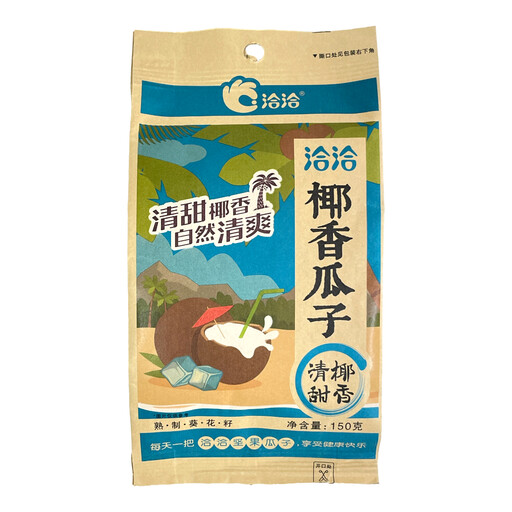
Analysis of Product Characteristics The QiaQia sunflower seeds are distinguished by the use of coconut water in their recipe. This results in a lighter, more subtle coconut flavor. According to the nutrition facts, the product contains 0.0 g of sugar per 100 g, which indicates the use of sweeteners (sodium cyclamate, acesulfame-K, sucralose) with no carbohydrate content. At 2.3 g, the salt content is higher than in the comparison product. The 150 g package is more compact and designed for individual use or smaller gatherings. QiaQia Food, founded in 1999, positions itself with a focus on freshness technologies.
Advantages
Who It's For This product appeals to consumers who prefer a less sweet, more understated flavor experience and value a recipe with no added sugar. The higher salt content creates a primarily savory-aromatic profile.
View Product: QiaQia Coconut-Flavored Sunflower Seeds 150g
| Feature | ChaCha Coconut-Flavored (200g) | QiaQia Coconut-Flavored (150g) | | :--- | :--- | :--- | | Coconut Ingredient | Coconut Powder | Coconut Water | | Flavor Profile | Intensely sweet-savory | Subtly aromatic, savory | | Sugar per 100g | 9.5 g | 0.0 g | | Salt per 100g | 0.95 g | 2.3 g | | Net Weight | 200 g | 150 g | | Sweeteners | Sucralose | Sodium Cyclamate, Acesulfame-K, Sucralose |
The market for Asian snacks offers a wide variety of products based on coconut. Besides sunflower seeds, other snack items exist, such as coconut chips, coconut rolls, or pastries with coconut filling. For those interested in discovering more snacks with this flavor profile, our Chinese coconut category offers a curated selection of related products.
1. How are Chinese sunflower seeds typically eaten? The seeds are usually placed in the mouth with the shell on. The shell is cracked open along the seam with the teeth, the kernel is removed with the tongue, and the shell is then discarded. This requires some practice but is the common method of consumption.
2. What is the primary difference between the sunflower seeds from ChaCha and QiaQia? The main difference lies in the recipe and the resulting flavor profile. ChaCha uses coconut powder and sugar for an intense, sweet coconut taste. QiaQia relies on coconut water and sweeteners, which leads to a more subtle, primarily savory flavor with a light coconut note.
3. Are flavored, roasted sunflower seeds a nutritious snack option? Sunflower seeds are a source of protein (approx. 21-27 g per 100 g) and unsaturated fatty acids. However, the flavored varieties also contain added salt and, depending on the product, sugar or sweeteners. To assess the nutritional composition, it is essential to check the nutrition facts table of the specific product. They can be consumed in moderation as part of a balanced diet.