What matters for coding and documentation?
3:2 for longer text views
A good fit if: you prefer more vertical screen space when reading code or documentation.
The trade-off: This aspect ratio gives you a different layout from a wide 16:9 arrangement of windows.
27-inch QHD widescreen
A good fit if: you want a 16:9 layout for your editor and documentation, and QHD is enough for your preferred font size.
The trade-off: How comfortably both windows can be read depends on their arrangement and your scaling settings.
27-inch 4K widescreen
A good fit if: you’re planning for a higher native resolution for text or extra previews.
The trade-off: Pixel count alone doesn’t tell you how much comfortably readable window space you’ll have at your chosen scaling.
What matters is how your specific editor-and-documentation layout works on the screen, with text set to a comfortably readable size.
| What matters |
What to check when buying |
Who values this? |
| Code and documentation at the same time |
Test window width and readable font size with your own layout. |
If I want to read source code and offline documentation side by side, the right layout matters most to me; around 36% of consumers put viewing windows simultaneously at the top of their list. |
| More lines on screen at once |
Compare the aspect ratio and your preferred font size. |
When reading long functions or documentation pages, I want to keep as many lines in view as possible; around 29% of consumers prioritise vertical space for text. |
| Desk setup |
Check adjustment options, desk space and distracting reflections. |
If my desk or seating position calls for particular settings, I pay close attention to the stand and viewing angle; around 21% of consumers prioritise their setup. |
| Laptop and other devices |
Check USB-C video output, charging power and the connections you need. |
If I want to connect my laptop with as few cables as possible or switch between computers, I check the features of the specific model; around 14% of consumers prioritise connecting their computers. |
Joybuy monitors for coding and documentation
This selection includes 27-inch QHD and 4K models, as well as an extra-wide monitor for coding and documentation. Consider your layout, font size and laptop connections in light of your workspace.
 No image available
INNOCN CB27U1 27-inch 4K UHD monitor
For a 27-inch layout with code and documentation side by side; check readability at your preferred scaling.
3840 × 2160 pixels; IPS; 120 Hz; PIP and PBP; USB-C with 90 W Power Delivery; height-adjustable.
View at Joybuy
 No image available
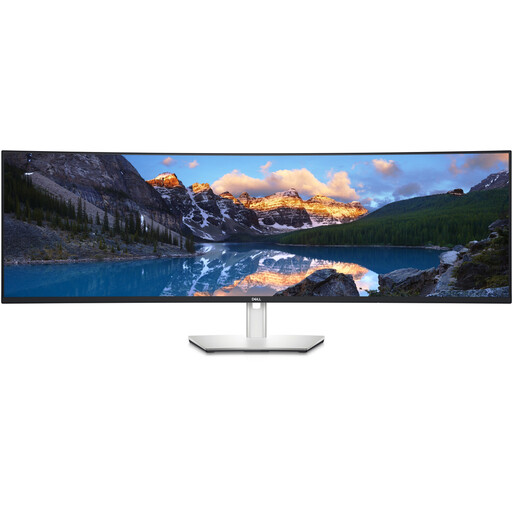
Dell UltraSharp U4924DW
For a wide layout with several work windows side by side; make sure you have enough desk space for the screen.
49 inches; 5120 × 1440 pixels; 5K Dual QHD; 60 Hz; HDMI, DisplayPort and USB-C.
View at Joybuy
 No image available
Philips 276B9 27-inch QHD IPS monitor
For a classic widescreen layout with your editor and local documentation; check whether QHD is enough for your font size.
2560 × 1440 pixels; 75 Hz; USB-C with 65 W Power Delivery; USB hub; height-adjustable.
View at Joybuy
 No image available
MSI PRO MP275QPDGDE 27-inch WQHD docking monitor
For a QHD widescreen layout with laptop connectivity; check that the docking features are compatible with your computer.
IPS; 100 Hz; USB-C with 98 W Power Delivery; daisy chain; KVM; integrated webcam.
View at Joybuy
 No image available
Samsung ViewFinity S7 S70H 27-inch 4K UHD IPS monitor
For coding and documentation at a high native resolution; check that the stand’s adjustment options suit your workspace.
3840 × 2160 pixels; 16:9; IPS.
View at Joybuy
Frequently asked questions
Is offline documentation stored on the monitor itself?
No. The monitor displays the content; you open locally stored files on your computer. Plan how much space you want to give your editor and documentation windows at your preferred font size.
Is one USB-C cable enough for video, charging and a keyboard shared between two computers?
Not necessarily. Lenovo lists specific docking and KVM features for the ThinkVision P27h-30, as does EIZO for the EV2740X. Also check that your laptop supports video output and has the power capacity you need, and that you have the necessary connections for both computers.
How should I set up the screen for longer working sessions?
Adjust the screen position and display to suit where you sit, and avoid distracting reflections. Germany’s ASR A6, issued by the Federal Institute for Occupational Safety and Health, applies to workplaces and teleworking locations within its scope; it does not make a blanket recommendation for home workspaces.
What should I know about power consumption and consumer rights in Germany?
EU energy labelling requirements apply to computer monitors covered by the scheme; the European Commission lists electronic displays as an affected product group. The Verbraucherzentrale distinguishes statutory rights from a voluntary warranty. For goods bought online, you generally have a right to cancel, usually within 14 days; the conditions and when the period starts depend on the specific purchase.


