What should you look for when buying?
First decide which content you want to see at the same time. Then compare the ports and the space available on your desk with your laptop and workspace.
27-inch QHD
A good fit if: You want to arrange your editor and browser on one screen, and the windows are large enough for your text size.
The trade-off: The QHD models mentioned have fewer pixels than the 4K and 3:2 options compared here.
27-inch 4K or 28.2-inch 3:2
A good fit if: You’d prefer more pixels for code, previews and test output, or more vertical screen space with a 3:2 format. ASUS lists 3840 × 2160 pixels for the PA279CRV; BenQ lists 3840 × 2560 pixels in a 3:2 format for the RD280U.
The trade-off: Check readability with your text scaling. These formats address different space requirements and aren’t interchangeable options.
Compact monitor with docking
A good fit if: Desk space is limited and connecting your laptop and peripherals matters more than having several large windows side by side. EIZO lists the EV2490 as a 23.8-inch Full HD monitor with USB-C docking and a KVM switch.
The trade-off: Its 1920 × 1080 pixels offer lower resolution than the QHD and 4K models mentioned.
49-inch UltraWide
A good fit if: You use lots of windows side by side and have room for a device around 121.5 cm wide. LG lists 5120 × 1440 pixels for the 49WQ95X-W.
The trade-off: The vertical resolution is 1440 pixels, and LG marks this specific model as no longer available on its German product page.
The table matches each decision to the main consideration behind it. Check the listed ports and dimensions against the specific monitor and your workspace.
| Priority |
What to check when buying |
Who it matters most to |
| Readable workspace |
Compare the resolution and aspect ratio with your window layout, and check the text size. BenQ lists 3840 × 2560 pixels in a 3:2 format for the RD280U; ASUS lists 3840 × 2160 pixels in a 16:9 format for the PA279CRV. |
If I want to read my editor, recipe preview and test output side by side at my usual font size, I’ll check the format and scaling first. Around 33% of consumers put a readable workspace first. |
| Laptop connection |
Check your laptop’s video output and charging requirements, and distinguish between a USB-C input, USB hub and KVM function. Dell lists 90 W for the P2725DE, ASUS 96 W for the PA279CRV and EIZO up to 70 W at the USB-C upstream port on the EV2490. |
If I switch between my laptop and desk, I want to connect the display, USB devices and power through one setup only if both devices are compatible. Around 25% of consumers prioritise the laptop connection. |
| Positioning and readability |
Measure the space available and the stand’s depth. Check height and tilt adjustment, as well as reflections at your intended setup. Germany’s Federal Institute for Occupational Safety and Health describes screen reflections as a possible source of glare. |
At my desk, I want to position the screen to suit me and account for distracting reflections, rather than relying on a comfort feature alone. Around 25% of consumers put positioning and readability first. |
| Features you need |
Make a list of the ports and features you actually need. Compare energy consumption using product information on a like-for-like basis. |
If I mainly want the right features, I’ll choose them to suit my workspace rather than looking for the longest possible feature list. Around 17% of consumers prioritise the features they need. |
Joybuy products for this use
This selection includes QHD monitors for a single development screen, as well as a 49-inch UltraWide model for several windows arranged side by side.
 No image available
Z-Edge AGEX 27-inch QHD monitor
A QHD option if you want to arrange code and previews on a single 27-inch screen.
QHD, 1440P, 144 Hz, Fast IPS panel.
View at Joybuy
 No image available
TCL 27P2A Pro 27-inch monitor
A 27-inch QHD option if you want to view code and previews on one screen.
QHD, 2560 × 1440 pixels, 320 Hz, HFS IPS panel.
View at Joybuy
 No image available
TCL 27P2A 27-inch monitor
A 27-inch QHD option if you want to view code and previews on one screen.
QHD, 2560 × 1440 pixels, 200 Hz, HFS IPS panel.
View at Joybuy
 No image available
CRUA 49-inch DQHD UltraWide monitor
A wide-format option if you want to view lots of development windows side by side and have enough desk space.
49 inches, 32:9, 5120 × 1440 pixels, 165 Hz, height-adjustable stand.
View at Joybuy
 No image available
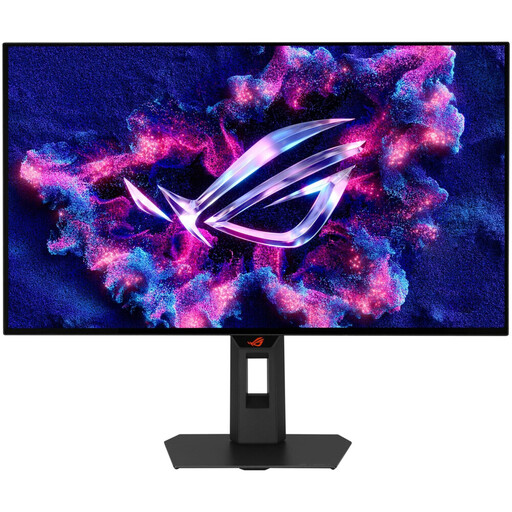
ASUS ROG Strix WOLED XG27AQWMG 27-inch monitor
A 27-inch WQHD option if you’re looking for a single screen for your development windows.
WQHD, 2560 × 1440 pixels, 280 Hz, USB hub, HDMI 2.1.
View at Joybuy
Frequently asked questions
Do I need a special monitor for automated testing?
No. What matters is whether you can read your code, browser and test output at your preferred text size. The monitor displays the content; your development environment runs the tests.
Can I connect my laptop with just one USB-C cable?
Only if your laptop supports the video output you need over USB-C and the monitor’s power delivery meets its requirements. The models mentioned differ in their ports and stated charging power.
How should I position my screen if reflections are distracting?
First check where you plan to put it and what light sources are nearby. Germany’s Federal Institute for Occupational Safety and Health describes screen reflections as a possible source of glare. Adjust the height and tilt if the specific model allows it.
What should consumers in Germany know when buying a monitor online?
For a qualifying distance contract, you generally have 14 days from delivery of the goods to withdraw from the contract; check any exceptions and return costs for your specific case. If goods are faulty, you have a statutory right to a remedy from the seller for at least two years. This is separate from a voluntary manufacturer’s warranty. This information on EU consumer rights is based on guidance from Your Europe.
Does a monitor need an energy label, and do workplace rules apply at home?
EU energy-labelling rules cover electronic displays, including monitors. Germany’s ASR A6 applies within its scope to screen-based workstations in workplaces and to teleworking workplaces. According to the Federal Institute for Occupational Safety and Health, it does not apply generally to screen use in private settings outside a teleworking workplace.


