Choose a monitor based on your usual window layout and the font size at which you can comfortably read code, references and previews. QHD may be enough for a manageable view, while 4K or a different format can give you more room. If you use a laptop, the monitor and computer need to support compatible USB-C video and charging. Local data storage, on the other hand, is a feature of the software and computer, not the monitor.
Who this monitor comparison is for
Developers who use lots of windows
If you regularly work with an editor, references and an application preview open side by side, check how the windows fit at your preferred font size. BenQ and Philips list suitable display formats and features for their respective models.
Developers using a laptop
If you connect your laptop at your desk, check that the specific monitor’s USB-C features are compatible with your computer’s video and charging capabilities. ASUS, Dell and Philips list different connection and power options, depending on the model.
Developers who spend long hours reading
If you read code and reference data for extended periods, look for a clear display and a monitor position that suits your workspace. Philips lists adjustable settings, while Germany’s Federal Institute for Occupational Safety and Health covers the design of display-screen workstations in ASR A6.
What to look for when choosing a monitor
Start by considering how much space code, sources and previews need at your actual font size, then check the connections and setup.
| What matters to you |
What to check before buying |
Who it matters most to |
| Room for windows side by side |
Check your window layout and font size on the format you want; consider resolution and screen size together. |
If I want to see my editor, sources and preview at the same time, I need enough screen space without making the text too small. Around 33% of consumers prioritise readable space for windows side by side. |
| Readable, detailed text |
View code and reference data at your preferred font size and scaling, taking your personal reading preferences into account. |
If small characters in code and bibliographic details need to remain easy to read, what matters is how they actually look on screen, not just the pixel count. Around 25% of consumers put readability for detailed text first. |
| Laptop connectivity |
Check video output, USB-C features, the charging power you need and the cable against your specific laptop. |
If I want to connect my laptop at my desk for video and, where supported, power, the two devices need to be compatible. Around 25% of consumers prioritise laptop connectivity that works for them. |
| Positioning at your desk |
Compare height adjustment, swivel and stand footprint with your desk and seating position; consider mounting options if needed. |
If the screen needs to suit my seating position and the space available, adjustability on the specific model is key. Around 17% of consumers prioritise a setup that works for them. |
Common misconceptions when buying a monitor
-
A ‘coding mode’ proves you’ll be more productive
BenQ promotes dedicated coding modes, but that doesn’t amount to independent proof that they’ll help you work more productively.
Start by weighing up the format, readable text, connections and setup. Treat claims about productivity or eye comfort as manufacturer statements.
-
USB-C automatically gives you a complete one-cable setup
Your monitor and laptop both need to support the video connection and charging power you require.
Before buying, check the ports, power specifications and recommended cable for both devices.
Depending on your laptop, you may also need a separate power adapter or another type of connection.
-
4K alone means more windows will be comfortable to read
The window layout you can use also depends on font size and scaling. A higher resolution doesn’t guarantee that you’ll be able to read more content comfortably.
Check your usual view of code, sources and previews at a font size you can read comfortably.
Monitor brands at a glance
ASUS
The ProArt PA279CRV is a 27-inch 4K option with USB-C and an adjustable stand.
- ASUS lists a resolution of 3840 × 2160 pixels and 96 W USB-C Power Delivery.
- Colour features aren’t automatically a deciding extra for coding alone. ASUS notes that specifications may vary by country.
BenQ
The RD range offers different formats: the RD280UA in 3:2 and the larger RD320UA as a 4K monitor.
- BenQ lists a resolution of 3840 × 2560 pixels for the RD280UA and a 32-inch 4K format for the RD320UA. The product pages also list flexible positioning options and coding modes.
- Claims about productivity, focus and eye comfort are manufacturer statements. Check the format and space requirements of each model rather than relying on the series name alone.
Dell
The P2725QE is a 27-inch 4K USB-C hub monitor, designed for a desk setup with a compatible laptop.
- Dell lists a resolution of 3840 × 2160 pixels, a USB-C hub and 90 W power delivery.
- Whether your laptop and monitor can transfer video and provide enough charging power depends on the specific devices. These specifications don’t apply to every Dell monitor.
Philips
The 276B9/00 is a 27-inch QHD option with USB-C and an adjustable stand.
- Philips lists a resolution of 2560 × 1440 pixels and SmartErgo adjustments.
- QHD has fewer pixels than the 4K models mentioned here. Claims about eye comfort are manufacturer statements, not the result of independent testing.
LG
The UltraFine 27UP850K-W is a 27-inch 4K option with USB-C and an adjustable stand.
- LG lists a 4K IPS display, with height, tilt and swivel adjustments.
- HDR and colour features aren’t automatically deciding factors for text-heavy work. Check that the USB-C connection is compatible with your laptop.
Joybuy monitors for code and sources
The Joybuy options below include desktop monitors for 4K and QHD workspaces, as well as portable second screens. The right choice depends on how much room you need for code, sources and previews, and whether you want to use the screen on the move.
 No image available
INNOCN CB27U1, 27-inch, 4K UHD
For a 27-inch workspace where you want to arrange code, references and previews side by side.
3840 × 2160 pixels, IPS; USB-C with 90 W Power Delivery, plus HDMI and DisplayPort. The stand is height-adjustable, tilts, swivels and pivots.
Joybuy
 No image available
MSI PRO MP275QPDGDE, 27-inch, WQHD
For a manageable window layout on a 27-inch QHD display with laptop connectivity.
2560 × 1440 pixels; USB-C docking with 98 W Power Delivery, KVM, daisy chaining and a USB hub. The stand is height-adjustable and tilts, swivels and pivots.
Joybuy
 No image available
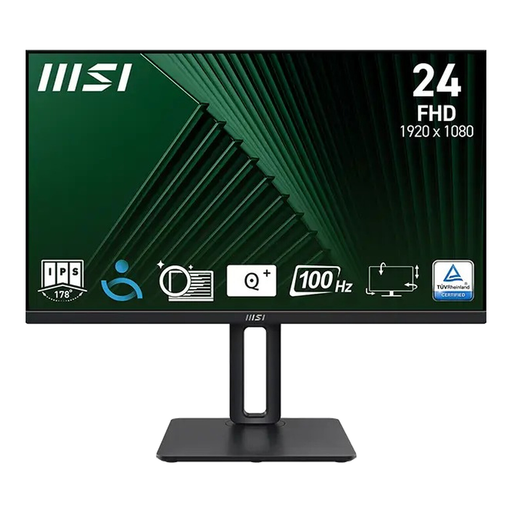
MSI PRO MP245PG, 23.8-inch, Full HD
A more compact desk option for working with code and sources on a height-adjustable screen.
IPS panel, HDMI and DisplayPort; the stand has 120 mm of height adjustment and tilts, swivels and pivots. The 23.8-inch Full HD screen offers less space and fewer pixels for windows side by side than larger QHD or 4K formats.
Joybuy
 No image available
Arzopa Z1RC, 16-inch, 2560 × 1600
For using as a portable second screen with a laptop when you want code and sources on an additional display.
16:10 IPS display with 2560 × 1600 pixels, plus USB-C and HDMI connections. Its 16-inch diagonal gives you less physical space for windows side by side than a larger desktop monitor.
Joybuy
 No image available
UFYQL M156F04, 15.6-inch, Full HD, black
For a portable second screen when working on a laptop and you need an extra display for code or sources on the move.
FHD IPS display with USB-C and HDMI. The product title also mentions a smart cover stand and VESA mounting option. The 15.6-inch Full HD screen offers less room for windows side by side than a larger desktop monitor.
Joybuy
Frequently asked questions
Does a monitor store my reference data locally?
No. Storing a reference database isn’t a feature of the monitor. Check the local storage options in your software and on the computer you use.
Is USB-C enough for video and charging with one cable?
Only if both your laptop and monitor support the features you need. ASUS lists 96 W USB-C Power Delivery for the PA279CRV, while Dell lists 90 W power delivery for the P2725QE. Check the video output, power requirements and cable against your laptop.
What rules apply to monitor setup in Germany?
ASR A6 from Germany’s Federal Institute for Occupational Safety and Health sets out requirements for display-screen workstations in workplaces and home-working environments. It doesn’t apply across the board to all private screen use outside a home-working environment, so it doesn’t create a single purchasing requirement for private monitors.
How can I check a monitor’s energy consumption?
For electronic displays such as computer monitors, the European Commission explains the EU energy label scale from A to G and model information in EPREL. Compare the details for the specific device rather than assuming it has a particular efficiency rating.
What are my rights if a monitor bought online is faulty?
For new faulty goods, consumers can generally claim their statutory rights against the seller within two years of delivery, as explained by the Verbraucherzentrale. This is separate from a voluntary guarantee. Many online purchases also generally come with a 14-day right to cancel.


