People with coeliac disease
You want to be able to identify a ‘gluten-free’ statement on a packaged snack bar, rather than infer that it is suitable from the product name or a claim about sugar.


If you have coeliac disease, first look for an explicit ‘gluten-free’ statement on the current packaging – don’t rely on ‘Free’, ‘vegan’ or claims about sugar. Then check the ingredients and other allergens. Whether an oat, nut or protein bar meets your other preferences is a separate consideration.
You want to be able to identify a ‘gluten-free’ statement on a packaged snack bar, rather than infer that it is suitable from the product name or a claim about sugar.
As well as checking the gluten-free statement, you need to read the ingredients list, highlighted allergens and any precautionary ‘may contain’ information on the specific packaging.
Once you have checked for gluten and allergens, you can compare oat and fruit bars, crunchy bars and protein bars based on their ingredients, portion sizes and packaging information.
When choosing a packaged snack bar for someone with coeliac disease, start by checking for a gluten-free statement. Only then can you decide which ingredients and type of bar meet your other requirements.
| Criterion | What to check when buying | Who it matters to |
|---|---|---|
| Gluten-free statement | Look for ‘gluten-free’ on the current packaging. Under Implementing Regulation (EU) No 828/2014, this statement is subject to a maximum gluten content of 20 mg/kg. Oats sold as gluten-free must also meet additional requirements to prevent contamination with wheat, rye or barley. | I don’t want to rely on a name such as ‘Free’ when choosing a snack bar for coeliac disease. For around 50% of consumers, a clear gluten-free statement would be the main purchasing consideration. |
| Other allergens | Read the ingredients list and check the highlighted allergens. Distinguish between ingredients that are present and voluntary warnings about possible traces. | If I also need to avoid certain nuts or sesame, ‘gluten-free’ on its own isn’t enough. Around 30% of consumers would put checking for other allergens first. |
| Type of bar and shopping | Compare the ingredients, portion size and nutritional information on the packaging. If you have a particular variety in mind, check whether your local shop stocks it too. | For a snack on the go, I look for a bar with ingredients and a portion size that suit my preferences, and that I can buy as part of my planned shop. This would be the most important additional selection criterion for around 20% of consumers. |
A product name may refer to something other than gluten. Schwartau Professional, for example, lists barley and wheat among the ingredients in CORNY free Schoko.
When choosing a snack bar for coeliac disease, look for an explicit gluten-free statement on the current packaging.
A gluten-free bar may still contain sesame, peanuts or almonds. A precautionary ‘may contain’ warning is also not the same as a declared ingredient.
If you have additional allergies, check the ingredients and allergen information for each individual variety.
For oats in foods labelled ‘gluten-free’, EU rules require special measures to prevent contamination with wheat, rye or barley.
If you’re considering an oat bar, make sure the specific product is labelled ‘gluten-free’.
EDEKA points out that product information may differ from what’s on the packaging. REWE also notes that ranges can vary between individual shops.
Check the actual packaging when you shop, and find out in advance whether your local shop stocks the variety you want.
REWE sells an oat and fruit bar under this own-label brand, described as gluten-free, vegan and organic.
EDEKA sells organic crunchy bars described as gluten-free, in sesame and mixed nut varieties.
Alongside traditional muesli bars, ALDI SÜD sells a lower-carb protein bar under the ALDI SPORTS brand that is described as gluten-free.
CORNY is included here mainly as an example of why ‘Free’ in a name is no substitute for a gluten-free statement.
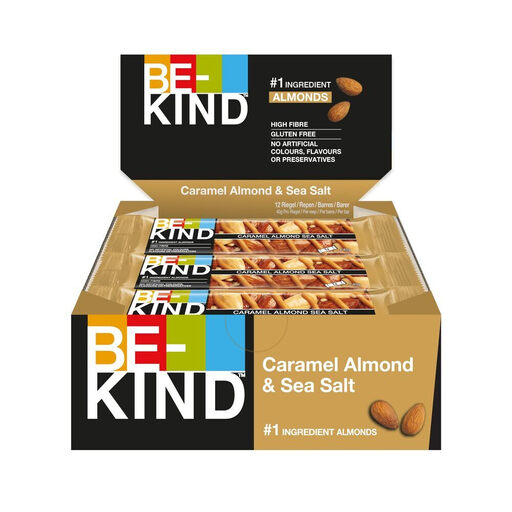
This selection features a nut bar rather than a traditional muesli bar. If you’re considering it and have coeliac disease, first check the current packaging for a ‘gluten-free’ statement, then check the ingredients and allergens.
 No image available
A nut bar option if you’re looking for something with almonds rather than a muesli bar. The product name states that the pack contains 12 bars, each weighing 40 g. Before eating, check the current gluten-free statement and the ingredients and allergen information. This is particularly important if you’re allergic to almonds, milk or soya.
No. These terms are no substitute for a ‘gluten-free’ statement. Despite its name, CORNY free Schoko lists barley and wheat as ingredients, according to Schwartau Professional. So always check the current packaging of the specific bar.
An oat bar may be an option if the specific product is labelled ‘gluten-free’. For oats in foods labelled accordingly, Implementing Regulation (EU) No 828/2014 requires measures to prevent contamination with wheat, rye or barley. The maximum gluten content for a gluten-free statement is 20 mg/kg.
Not necessarily: gluten-free doesn’t tell you whether a bar contains nuts, peanuts or sesame. The crunchy bars described by EDEKA contain sesame or peanuts and almonds, depending on the variety. If you have additional allergies, read the ingredients and allergen information on the specific packaging.
Check the current packaging when you buy the product and before you eat it. EDEKA points out that product information shown online may differ from the packaging, and ranges can also vary between shops.