
Lieferung heute & morgen

Qualitätsgarantie

Willkommens-Angebote freischalten: KOSTENLOSE Lieferung | Bis zu 80 % RABATT | Kostenlose 30-Tage-JoyPlus-Testphase
App herunterladen
A fully automatic coffee machine promises perfect coffee at the touch of a button. However, the final result hinges on choosing the right bean. With countless options on the market, the decision can be overwhelming. Not every roast is compatible with the technology of an automatic machine, and personal taste preferences play an equally important role.
This guide is here to help. We'll outline objective criteria for selecting coffee beans for fully automatic machines and present a curated list of products that are particularly well-suited for these devices due to their specific characteristics.
To make an informed decision, some basic knowledge about coffee beans is helpful. The following three points are especially relevant for owners of fully automatic machines.
The roast level significantly influences the coffee's flavour and acidity. Medium to dark roasts are often recommended for fully automatic machines. The reason is that the brewing process in these machines is very fast and uses high pressure. Darker roasts, often labelled as espresso beans, are less acidic and develop a full-bodied aroma under these conditions.
The bean blend is also crucial, especially for the crema.
A blend of both varieties can therefore offer a balanced ratio of flavour and crema quality.
A critical factor with fully automatic machines is the integrated grinder. Very darkly roasted beans can have an oily surface. Over time, this oily film can clog the grinder and impair its function. It is advisable to choose beans with a matte to slightly silky sheen. Many manufacturers explicitly state on the packaging that their beans are optimised for use in fully automatic coffee machines.
Freshly roasted coffee offers the most intense aroma. Look for the roast date, if provided. Whole beans retain their aroma much longer than pre-ground coffee. Packaging with a one-way valve is beneficial, as it allows gases to escape from the beans without letting oxygen in.
For daily use, 1kg whole bean packages are often an economical choice. After opening, the beans should be stored in an airtight, dry, and dark place to preserve freshness. Those who value sustainable cultivation can look for certifications, such as those found on organic coffee beans.
Based on the criteria above, we have compiled a selection of products that cater to different flavour profiles and requirements.

Why they stand out These beans are specifically designed for use in fully automatic machines, offering a full-bodied flavour experience with a smooth crema. A key feature is their organic certification (DE-?KO-003), which confirms cultivation according to ecological standards.
Advantages
Who it's for This product is aimed at budget-conscious coffee drinkers who don't want to compromise on organic quality. It's a great choice for a daily espresso or as a base for milk-based coffee specialities.
View Product: Jeden Tag Espresso Cremoso
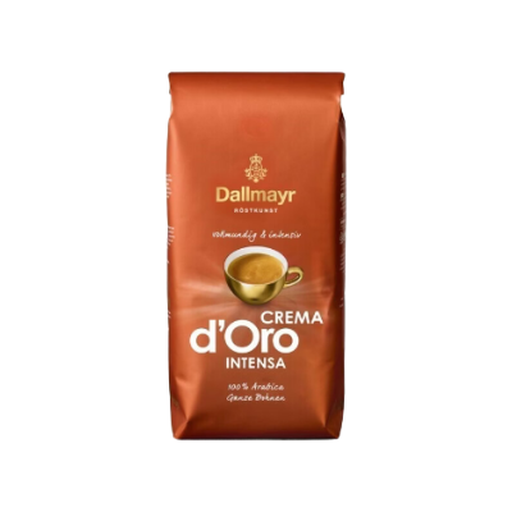
Why they stand out Dallmayr Crema d'Oro Intensa is a composition of exquisite highland beans, refined in the brand's traditional style. The roast is slightly more intense than the classic Crema d'Oro, aiming for a flavour experience with an Italian character.
Advantages
Who it's for Ideal for lovers of strong coffee with an Italian touch. If you frequently use your automatic machine to prepare milk specialities like cappuccinos, this is a fitting bean whose aroma stands up well to the milk.
View Product: Dallmayr Crema d'Oro Intensa
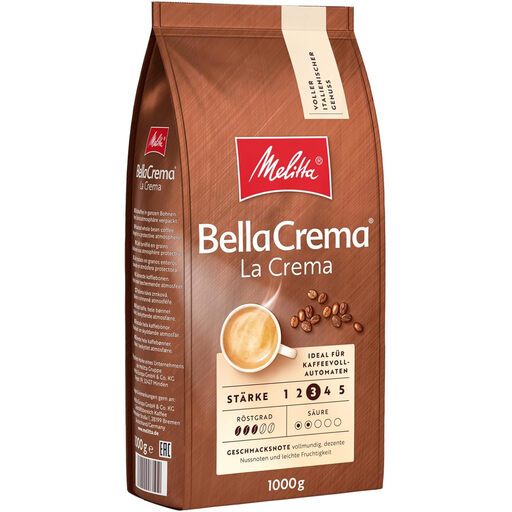
Why they stand out These beans from Melitta are classified as a medium roast (intensity 3 out of 5) and offer a particularly balanced, mild flavour profile. The beans come from 4C-compliant cultivation, reflecting a commitment to more sustainable farming practices in the coffee sector.
Advantages
Who it's for This variety is an excellent choice for anyone who prefers a straightforward and harmonious everyday coffee. The medium roast makes it a safe option for a wide range of fully automatic machines and taste preferences.
View Product: Melitta BellaCrema La Crema
The perfect coffee bean is a very personal choice. If our selection didn't include the right one for your taste, it's worth exploring the wider range. Every fully automatic machine and every palate has its own preferences. Compare other roasts and brands to find your personal favourite.
Discover our selection of whole bean coffee
For a thick and stable crema, blends with a certain percentage of Robusta are often advantageous. Robusta beans tend to form a better crema than pure Arabica blends. Look for product names like 'Crema', 'Barista', or 'Espresso', as these often indicate suitability.
Yes, that's perfectly fine and a matter of personal preference. Espresso beans are typically roasted darker, resulting in a more intense and robust flavour with less acidity. A classic caffè crema is often prepared with medium roasts, which have a slightly milder and more balanced aroma.
Look for official certifications on the packaging. The most well-known is the EU organic logo (a stylised leaf made of white stars on a green background). This seal guarantees that the beans were grown and processed according to the strict guidelines of organic farming. Many producers who offer organic coffee beans declare this prominently on the front of the product.