
Lieferung heute & morgen

Qualitätsgarantie

Willkommens-Angebote freischalten: KOSTENLOSE Lieferung | Bis zu 80 % RABATT | Kostenlose 30-Tage-JoyPlus-Testphase
App herunterladen
A coffee machine should suit your daily routine, the space you have available and the drinks you enjoy. Bean-to-cup machines, espresso machines, capsule machines, pod machines and filter coffee machines all differ significantly in how they work, their ongoing costs and how much cleaning they require. That’s why a high wattage or bar rating alone tells you little about whether a machine is right for your home.
Figures such as 15 bar or 20 bar may look impressive at first glance. For an espresso machine, however, this usually refers to the maximum possible pump pressure, not necessarily the pressure applied to the coffee grounds throughout extraction. Grind size, dose, water temperature and brewing method also matter.
A coffee machine with a grinder, for example, may offer plenty of settings, but it also needs enough space and regular cleaning. With a bean-to-cup machine, the brew group, milk system and water hardness are important factors too.
If you’re buying a capsule or pod machine, check carefully which systems it supports. The Nespresso Essenza Mini, for example, is designed for Nespresso Original capsules. A Vertuo machine uses a different capsule system. ESE pods, ground coffee, Dolce Gusto capsules and K-Cup formats aren’t automatically interchangeable either.
If you want as much flexibility as possible, you could choose a machine with several adapters. Check, though, whether all the systems you want to use are actually included in the box.
An integrated milk frother lets you make a cappuccino or latte macchiato at the touch of a button. However, milk residue needs to be removed from tubes, containers or nozzles after every use. Automatic rinsing programmes reduce the effort, but don’t replace regular deep cleaning and descaling.
Measure the space available, allowing room for the water tank, bean hopper and any lids or panels when open. The De'Longhi Magnifica S ECAM21.116.SB, for example, measures 23,8 × 34,0 × 43,0 cm and has a 1,8-litre water tank and a 250-g bean hopper. For a small kitchen, a capsule machine that’s just 11 cm wide may be more practical.
A larger tank means less frequent refilling, but often makes the machine bigger. A tank of between 0,6 and 1,0 litres is often enough for one person. Households with several coffee drinkers may prefer a capacity of 1,7 to 1,8 litres.
Look for:
In Germany, water hardness affects how often you need to descale your machine. Testing your water and setting the machine accordingly is therefore more useful than relying on general time-based recommendations. Electrical appliances should also be designed for 220–240 volts and supplied with clear German-language instructions and the required safety markings.
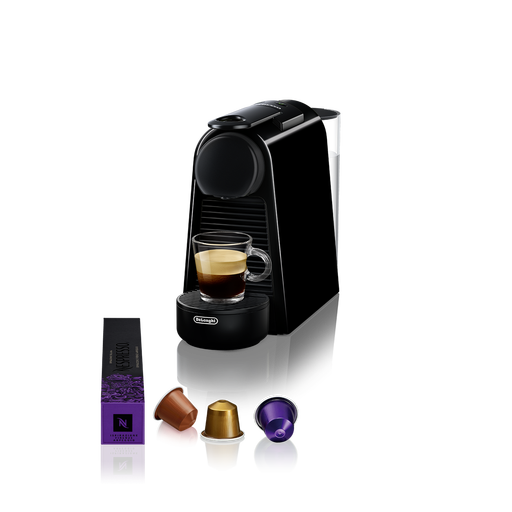
Why it suits this type of buyer: This compact model measures 11 × 20,5 × 32,5 cm, heats up in 25 seconds according to the product information and offers two programmable cup sizes for espresso and lungo.
The clearly specified Nespresso Original system avoids confusion with Vertuo capsules. The 0,6-litre tank is better suited to occasional use than to a large household with several coffee drinkers.
Compact design, automatic shut-off, two programmable cup sizes and a container that holds up to six used capsules.
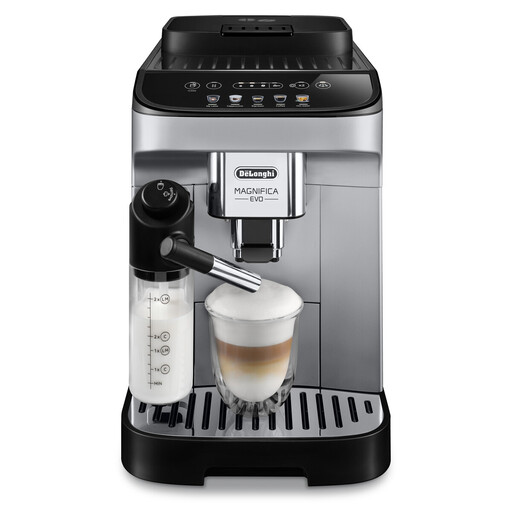
Why it suits this type of buyer: This bean-to-cup machine combines seven one-touch recipes, a conical burr grinder with 13 grind settings and a LatteCrema milk system for a range of hot drinks.
The drinks menu and settings are clearly specified. Removable, dishwasher-safe parts make regular cleaning easier.
1,8-litre water tank, 250-g bean hopper, two-cup function and automatic cleaning of the milk system.
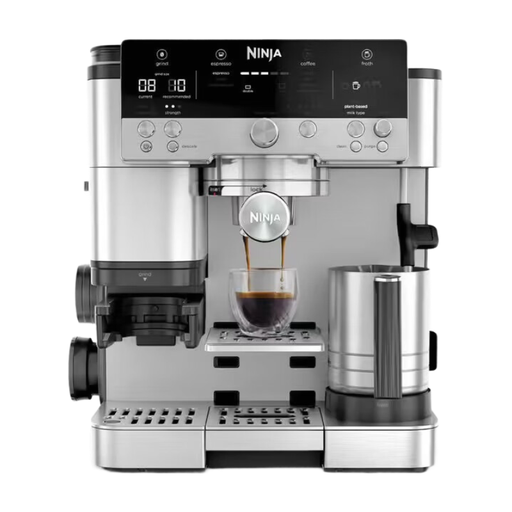
Why it suits this type of buyer: This machine combines espresso, filter coffee and cold brew with an integrated grinder and a milk frother for hot and cold froth.
The different brewing methods are clearly listed. With 25 grind settings and four froth programmes, it’s easy to see what adjustments are available.
1,5-litre capacity, integrated scales, 25 grind settings and programmes for espresso, cold brew and filter coffee.
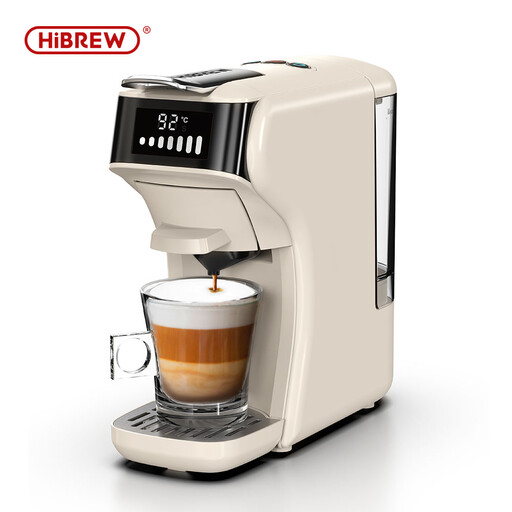
Why it suits this type of buyer: According to the product information, this compact machine supports several capsule types, ESE pods and ground coffee, and has a 600-ml water tank.
The supported formats are listed, so you can check that your capsules are compatible before buying. The 20-bar rating isn’t treated as proof of quality on its own.
Several coffee formats in one machine, a 20-bar pump according to the manufacturer, compact dimensions and 1.450 watts of power.
We’ve put together a comprehensive, regularly updated list of products that meet these strict selection criteria and fully comply with the safety regulations in force in the EU.
As well as the purchase price, you’ll need to budget for beans, capsules or pods, water filters, descaler and cleaning products. Capsules are convenient, but can cost more per cup than beans or ground coffee. A bean-to-cup machine also needs regular cleaning products and, in some cases, a water filter. So compare the cost per cup based on how much coffee you actually drink each day.
There’s no reliable way to guarantee a set lifespan. It depends on how often you use the machine, water hardness, cleaning, descaling and the availability of spare parts. Regularly rinsing the milk system, emptying the drip tray and following the manufacturer’s care instructions can help keep the machine in good condition. Stop using it if you notice unusual noises, leaks or damaged cables.
Slim capsule or pod machines are often easier to fit into a small space. The Nespresso Essenza Mini is 11 cm wide. If you’d still prefer freshly ground beans and milk drinks, measure the space needed for a compact bean-to-cup machine, including room for open maintenance panels. Width isn’t the only thing to consider: make sure you can also reach the water tank and brew group.