
Lieferung heute & morgen

Qualitätsgarantie

Willkommens-Angebote freischalten: KOSTENLOSE Lieferung | Bis zu 80 % RABATT | Kostenlose 30-Tage-JoyPlus-Testphase
App herunterladen
A coffee cup set should suit your daily breakfast, office routine or gifting needs. Yet product images and brief marketing descriptions often lead to disappointing purchases: a cup looks larger than it really is, the stated quantity refers only to the packaging or important care instructions are missing. Checking a few technical details before buying makes it easier to assess both your options and the overall cost.
Espresso requires considerably less volume than filter coffee, café au lait or a large cup of tea. An espresso cup set with a capacity of 8 to 10 cl is designed for small servings. For classic office coffee, around 240 to 340 ml is often more practical. Be sure to distinguish between the stated “fill volume” and any possible “maximum capacity”.
Ceramic, stoneware, porcelain and glass each have different characteristics. Porcelain cups generally feel lighter and are often well suited to a formal table setting. Stoneware and ceramic cups are usually heavier and designed for everyday use. Glass cups showcase colour and crema, but may be more sensitive to knocks and sudden changes in temperature.
So do not rely solely on terms such as “robust” or “durable”. Look for specific information on dishwasher and microwave suitability.
Gold rims, textured glazes or metal holders can enhance a set’s visual appeal. They also affect how it should be cleaned and used. For example, the Wedgwood “Kit Kemp Sailor’s Farewell” set features 22-carat gold accents and is listed as dishwasher-safe, but not microwave-safe. When a set includes decorative details, it is therefore worth checking the care instructions before making it part of your daily routine.
Base your decision on how the cups will actually be used:
A 4-piece cup set is suitable for couples, smaller households or the office. A 6-piece cup set provides more capacity when guests regularly visit. Cafés and larger households should also check whether individual replacements are available and how many pieces are included in the packaging.
Porcelain cups are a good choice for lightweight, formal sets. Ceramic cups and stoneware offer a wider range of colours, shapes and finishes. With reactive glazes, individual pieces may vary slightly in appearance. This is a decorative characteristic, not an indication of a uniform colour finish.
Glass cups suit modern kitchens and the presentation of espresso. Double-walled versions such as the Bodum PAVINA PARIS are described as being made from mouth-blown borosilicate glass and dishwasher-safe. With glass, always check whether use in the microwave or oven, as well as sudden temperature changes, is prohibited.
For households with little time, dishwasher-safe cups are highly practical. Clearly stated microwave suitability is important if coffee or milk-based drinks are frequently reheated. Gold decoration and metal components often rule out microwave use.
A cup set with a stand saves space and keeps several small cups within easy reach. When assessing the stand, consider its footprint, material and ease of cleaning. The cups should sit securely without knocking against one another.
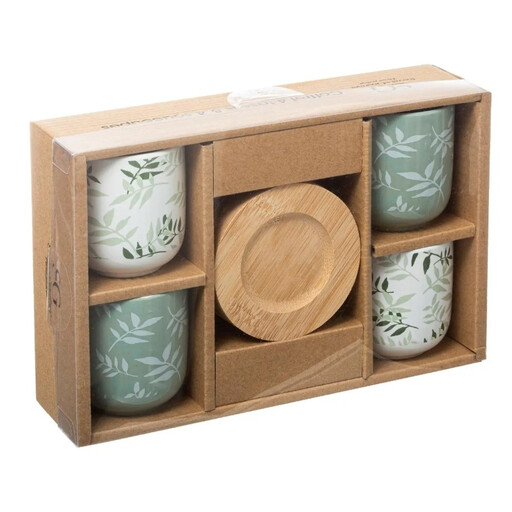
Why does it suit this profile? Four cups with a capacity of 13 cl each provide a manageable set size for smaller households, the breakfast table or anyone starting to build a coordinated tableware collection.
The number of pieces and capacity are clearly specified. This makes it easier to compare the set with your usual drink sizes.
Four stoneware cups; green floral design; listed as suitable for private and commercial use.
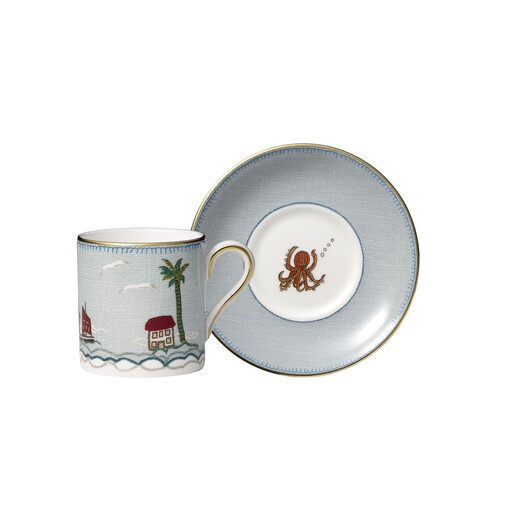
Why does it suit this profile? This set is designed for buyers who appreciate a narrative design and a formal presentation for espresso.
The 100 ml capacity makes it clear that this is an espresso cup rather than a large coffee cup. Microwave use is expressly excluded.
Fine Bone China; saucer included; 22-carat gold accents; listed as dishwasher-safe.
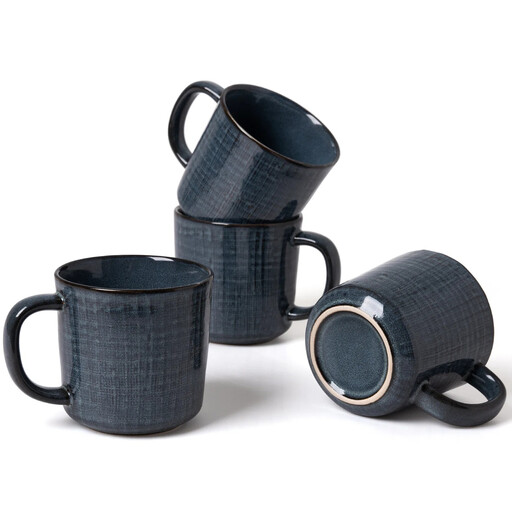
Why does it suit this profile? Four generously sized cups with a capacity of around 400 ml each are ideal for families, offices or anyone who enjoys larger servings of coffee and tea.
The generous capacity is clearly stated. Microwave and dishwasher suitability are also specified, making everyday use easier to plan.
Stoneware with reactive glaze; stackable; listed as dishwasher- and microwave-safe.
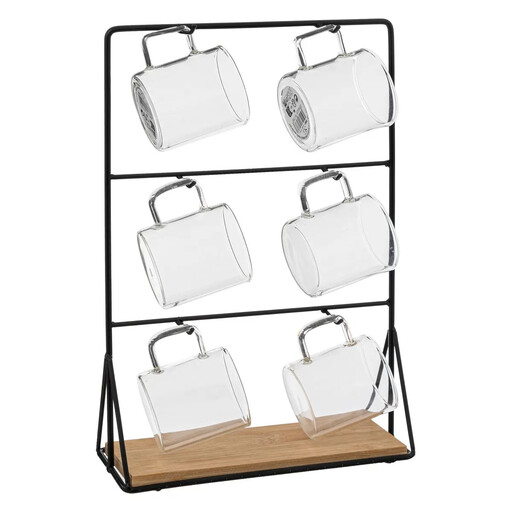
Why does it suit this profile? Six cups with a capacity of 10 cl each and a holder are ideal for households, coffee gatherings and anyone looking for a compact gift set.
The six included cups and their compact capacity are clearly specified. The metal stand does not replace information about microwave or dishwasher suitability.
Six ceramic cups; space-saving metal holder; suitable for espresso, tea and small beverages.
If you are looking for a single everyday cup, the JIWOO Collins model is available as a 245 ml ceramic cup in glossy grey and white or matte dark grey. According to the product description, both versions are microwave- and dishwasher-safe. For larger servings, consider the 340 ml Secret de Gourmet version with metal stand.
Espresso enthusiasts may appreciate the Cléo 8 cl glass cup or the Secret de Gourmet set of three glass and metal cups, each with a capacity of 11 cl. With glass models, sudden temperature changes should be avoided. If you are looking for a gift with a classic presentation, the packaging of the Wedgwood set is also worth considering.
Our selection includes a variety of coffee cup sets for espresso, everyday use, the office and gifting. Before buying, always check the capacity, material and care instructions.
For filter coffee and larger milk-based drinks, around 245 to 340 ml is standard. If you prefer very generous servings, choose a set with around 400 ml per cup. Espresso generally requires just 8 to 10 cl.
No. Suitability depends on the material and decoration. Metal components and gold rims may make microwave use unsuitable. Always check the specific product description. The Wedgwood espresso set, for example, is not designed for microwave use.
There is no reliable way to state a fixed service life. It depends on the material, glaze, frequency of use and how the cups are handled during washing. Avoid sudden temperature changes, inspect cups regularly for cracks or chips, and do not use abrasive cleaning products on delicate surfaces.