
Lieferung heute & morgen

Qualitätsgarantie

Willkommens-Angebote freischalten: KOSTENLOSE Lieferung | Bis zu 80 % RABATT | Kostenlose 30-Tage-JoyPlus-Testphase
App herunterladen
A coffee cup set may seem straightforward at first glance. In practice, however, capacity, material and care instructions determine whether the cups are suitable for everyday use, your coffee machine or occasional entertaining. If you choose based solely on colour and price, you may only discover at home that the cup does not fit beneath the coffee outlet, the saucer is missing or the decoration is not microwave-safe.
A cup with a capacity of 100 or 120 ml is better suited to espresso, small teas or desserts. For filter coffee, café au lait or a large serving of tea, around 240 to 415 ml is more practical. The term “coffee cup” therefore does not automatically indicate a particular size.
The usable filling capacity may also be lower than the stated total volume. A drink should not be poured right up to the rim. So check whether the capacity matches your preferred serving size and the height available beneath your automatic coffee machine’s outlet.
Ceramic is a general term. Porcelain, classic ceramic tableware and stoneware cups differ in factors including weight, wall thickness and appearance. A reactive glaze can create individual colour variations in artisan-finished products. This is a design feature, but it does not guarantee a particular level of everyday practicality.
The specific manufacturer’s information is what matters: is the product listed as dishwasher-safe and microwave-safe? For metal racks, this information generally applies only to the cups, not the rack.
Wide handles, square shapes or textured surfaces can affect how the cups are stored. Stackable coffee cups save space, while cups with a rack are easy to access but require additional room. For a set with saucers, you should also consider the saucers’ diameter and the available cupboard or shelf space.
A 4-piece coffee cup set is often sufficient for small households, offices or everyday essentials. A 6-piece coffee cup set provides more spare cups for guests and can be a sensible choice when creating a coordinated tableware collection.
Porcelain often feels light and formal, while stoneware is generally more substantial and rustic in appearance. Ceramic cups with a reactive glaze may vary slightly from one another within the same set. If you prefer a completely uniform look, search specifically for an even colour finish.
Also look for:
Damaged, cracked or badly chipped cups should not be used. Otherwise, hot drinks may increase the risk of breakage or injury.
“Dishwasher-safe” and “microwave-safe” are practical everyday features, but they should be explicitly stated in the product description. Microwave use may be ruled out for decorations containing gold or metallic elements. This applies, for example, to fine porcelain with a gold rim.
Even if a product is approved for use in the dishwasher, gentle programmes and careful handling can help keep the surface looking good for longer. Some glazed or handmade-style cups are recommended for hand washing to protect the finish and colour details.
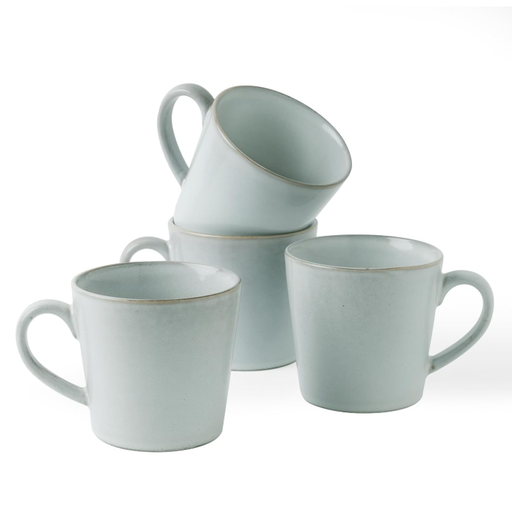
Why this product suits this profile: Four cups, each holding 14 oz or around 414 ml, are ideal for large servings of coffee, tea and hot chocolate. The set is suitable for the home or office and does not require additional saucers.
The stated size is clearly specified, and the product description confirms that the cups are dishwasher-safe and microwave-safe. However, the reactive glaze may create individual colour variations.
Four large stoneware cups with ergonomic handles and stated suitability for the dishwasher and microwave.
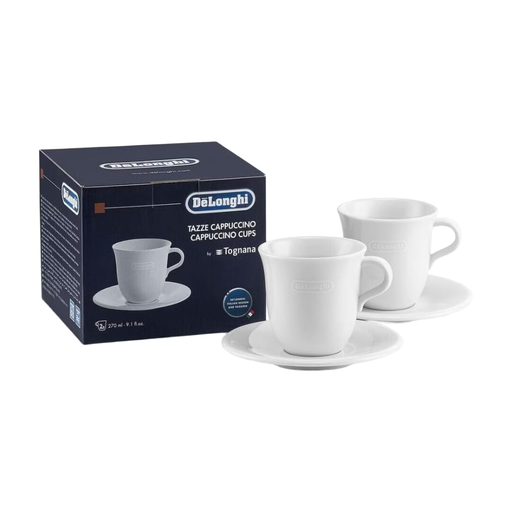
Why this product suits this profile: Two porcelain cups, described as handmade and holding 270 ml each, are supplied with matching saucers. Their proportions are designed for cappuccino and other milk-based coffee drinks.
The set explicitly contains two cups and two saucers. The product information also indicates that they are dishwasher-safe and microwave-safe.
270 ml capacity, 150 mm saucers and white porcelain with a timeless shape.
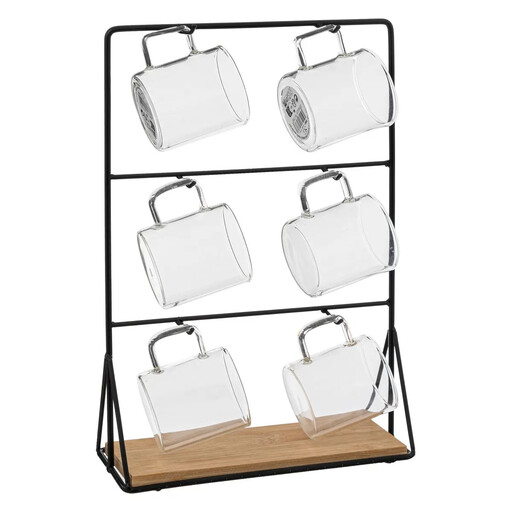
Why this product suits this profile: Six ceramic cups holding 10 cl each are designed for espresso, small teas or desserts. The metal rack keeps the cups close at hand while making use of vertical space.
The small serving size prevents an espresso set from being confused with large coffee mugs. The six individual pieces are arranged on the supplied rack.
Six 10 cl ceramic cups and a metal stand for tidy storage.
We have put together a complete, regularly updated list of products that fully meet these strict selection criteria and the safety regulations applicable in the EU.
Cups and saucers should be cleaned before first use. Check ceramic regularly for cracks and chips. Hot cups should not be exposed to sudden, significant changes in temperature, as this can put stress on the material.
For a coffee cup gift set, safe packaging, a clearly stated number of pieces and suitable additional items are just as important as the design. A set with saucers creates a more formal impression, while a coffee mug set without saucers is often better suited to the office, kitchen or catering environment.
This depends on the drink and the outlet. Espresso cups usually hold around 80 to 120 ml, while cappuccino cups hold approximately 200 to 300 ml. Large mugs with capacities of 340 or 415 ml require more room. Before buying, measure the maximum height available beneath the outlet.
No. These features must be stated in the relevant product information. Glazes containing metal or gold elements are often not suitable for microwave use. Even with dishwasher-safe cups, manufacturers may recommend hand washing to protect the surface.
For one or two people, a 4-piece coffee cup set is often sufficient. Households that regularly have visitors, as well as offices, cafés and restaurants, are more likely to benefit from six or more cups. The key factors are drinking habits, washing-up routine and available storage space.