
Lieferung heute & morgen

Qualitätsgarantie

Willkommens-Angebote freischalten: KOSTENLOSE Lieferung | Bis zu 80 % RABATT | Kostenlose 30-Tage-JoyPlus-Testphase
App herunterladen
When buying coffee cups and drinking glasses, colour and shape are often the first things people consider. For everyday use, however, other details matter too: does the capacity suit your preferred drink size? Is the material suitable for hot or cold drinks? And is the tableware easy to clean and store without taking up too much space?
With particularly low-priced offers, product information may be incomplete. The following criteria can help you avoid common purchasing mistakes.
A cup with a capacity of 300 ml is not automatically intended to be filled to the brim with coffee. With hot drinks, some space is usually left at the top to prevent spills when carrying the cup. For a small espresso, espresso cups holding around 80 to 120 ml are more suitable. If you regularly drink filter coffee, café au lait or tea, you can look for 300 ml cups or larger coffee mugs.
With dishwasher-safe cups, the manufacturer’s information should be stated explicitly. Decorative surfaces can still lose colour intensity through frequent cleaning, strong detergents or abrasive sponges. For coloured ceramic cups, it is therefore worth checking the care instructions. This is particularly important for textured glazes and elaborately printed surfaces.
Not all glass is the same. The product may be explicitly intended only for cold drinks such as water, juice or lemonade. A drinking glass that the manufacturer says is not designed for hot liquids should not be used for tea or hot punch. Microwave suitability must also be stated separately; it cannot be determined from the appearance of the material alone.
A ceramic cup or ceramic mug is suitable in many households for coffee, tea and hot chocolate. Before buying, check whether the cup is specifically described as microwave-safe. For products with a metallic rim, delicate decoration or unclear manufacturer information, microwave use should not be assumed.
Glass drinking glasses are practical and taste-neutral for cold drinks. For children, parties or frequent use, the risk of breakage may also be a consideration. In these situations, you could alternatively browse the selection of colourful plastic cups.
The right size depends on the drink and portion:
Small dessert cups can serve several purposes. For example, they are suitable for pudding, mousse, ice cream, tasting portions or side dishes. If you prefer a coordinated table setting, choose a ceramic cup set or cup set instead of buying individual cups.
Not every cup fits beneath every coffee machine. Before buying, compare the height with the available space beneath the spout. For cups with saucers, the diameter is also important, particularly if you have small shelves or serving trays.
Compact, stackable designs are a practical choice for households with limited storage space. For coloured drinking glasses of the same size, a straightforward shape makes storage easier. Glass is still vulnerable to knocks, however, and should not be subjected to excessive pressure when being put away.
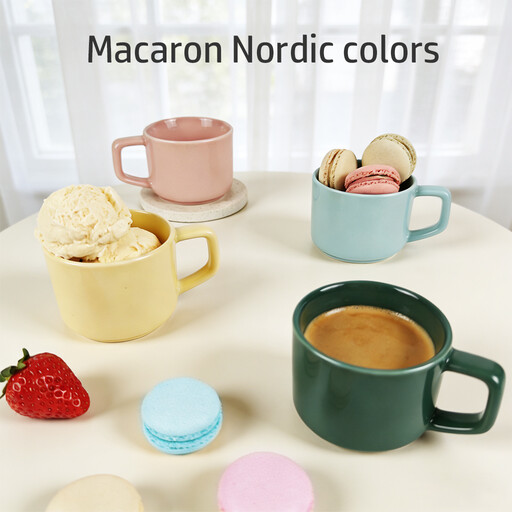
Why this product suits this profile: The set of four includes four colours, with each cup holding 120 ml. This makes it suitable for espresso, small drinks, desserts or sauces, while its compact shape takes up little storage space.
The clear 120 ml capacity prevents you from expecting a large coffee cup. According to the product information, hand washing is recommended.
Four cups, four pastel shades, a compact format and food-safe ceramic material according to the product description.
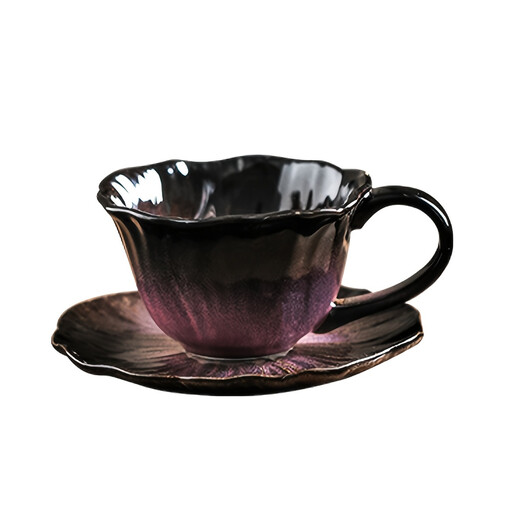
Why this product suits this profile: The 300 ml ceramic cup comes with a saucer. Its embossed floral design and purple gradient glaze are ideal for a carefully laid coffee table or as a gift.
The capacity, cup dimensions and saucer diameter are specified. The product description states that the set is dishwasher- and microwave-safe.
300 ml capacity, matching saucer, glazed ceramic, and stated suitability for microwave and dishwasher use.
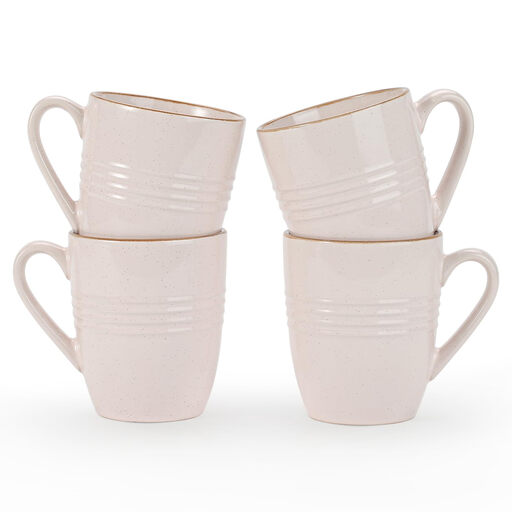
Why this product suits this profile: The set contains four stoneware cups, each holding 400 ml. This size is suitable for larger portions of coffee, tea or hot chocolate in family households.
The set size and individual capacity are clearly stated. According to the product description, the cups are microwave- and dishwasher-safe; sudden temperature changes should be avoided.
Four cups, 400 ml per cup, stoneware construction, stackable design according to the product information, and suitability for hot drinks.
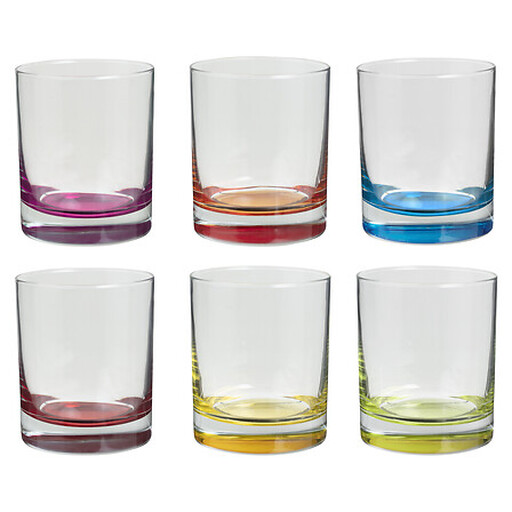
Why this product suits this profile: The set of six contains colourful drinking glasses in purple, orange, blue, red, yellow and green. With a capacity of 30 cl per glass, they are suitable for water, juice and soft drinks at family meals or celebrations.
The product information limits use to cold drinks and excludes microwave use and hot liquids. This helps prevent incorrect use.
Six different colours, a 30 cl capacity, and compact dimensions of approximately 7.9 cm in diameter and 9.3 cm in height.
We have put together a complete, regularly updated list of products that fully meet these strict selection criteria and the safety regulations applicable in the EU.
For filter coffee, tea or café au lait, around 280 to 300 ml is often a suitable range. If you prefer large portions, you can choose a 400 ml coffee mug. For espresso, on the other hand, small espresso cups holding approximately 120 ml are sufficient.
No. These properties must be stated in the relevant product description. Even if a cup is dishwasher-safe, the decoration and glaze may be more sensitive to frequent cleaning. If in doubt, follow the manufacturer’s care instructions.
Four glasses may be enough for a small household. Families and regular hosts often choose a cup set or drinking glass set containing six or more pieces. The key factors are the number of people, the available storage space and how often you entertain guests.