
Lieferung heute & morgen

Qualitätsgarantie

Willkommens-Angebote freischalten: KOSTENLOSE Lieferung | Bis zu 80 % RABATT | Kostenlose 30-Tage-JoyPlus-Testphase
App herunterladen
Whether it is your morning coffee at home, an espresso after a meal or a coffee break at the office: coffee cups and coffee glasses can differ considerably in capacity, material, heat retention and care requirements. Choosing carefully helps prevent an attractive product from becoming impractical in everyday use.
A cup with a capacity of 200 ml cannot automatically be filled with 200 ml of coffee right up to the rim. Manufacturers’ specifications often refer to the maximum volume. For practical use, you should leave some space for milk, milk foam or safe carrying.
As a guide:
Glass may be suitable for hot drinks, but it is not automatically ovenproof or protected against extreme temperature changes. With borosilicate glass cups in particular, you should follow the specific care and safety instructions. Moving directly from very cold to boiling-hot conditions can be problematic even for temperature-resistant glass.
With double-walled models, the benefit lies in the construction: the layer of air between the glass walls reduces heat exchange. As a result, the outer glass can feel more comfortable to hold when filled with hot drinks. Actual use should nevertheless follow the manufacturer’s specifications.
The product information should explicitly state that the cups are dishwasher-safe. With printed, glazed or very delicate surfaces, aggressive detergents and high temperatures can affect their appearance over time.
“Microwave-safe” is also not a general feature of every ceramic or glass cup. Metal components, metallic decoration and certain double-walled constructions must be ruled out. Before buying, it is therefore worth checking the care instructions rather than relying solely on the product image.
The quantity of the drink should match the shape of the cup. For espresso, a small espresso cup set of around 7 to 10 cl is recommended. Cappuccino requires more capacity to accommodate the espresso, milk and milk foam. For tea or longer coffee specialities, tea cup sets or larger drinking vessels with a capacity of 200 ml or more are more practical.
Ceramic coffee cups retain heat comparatively well and are available in a wide range of shapes and designs. A thicker wall can be comfortable for everyday use, but it often increases the weight.
Borosilicate glass cups make the colour and crema clearly visible. Double-walled coffee glasses also create an insulating space between the walls. However, glass remains vulnerable to breakage if it falls onto a hard surface or is knocked against something. Before each use, check for visible cracks or chips.
Before buying, check the following:
Double-walled glasses are not always designed to be stacked. This can be important in a small kitchen cupboard or for larger households.
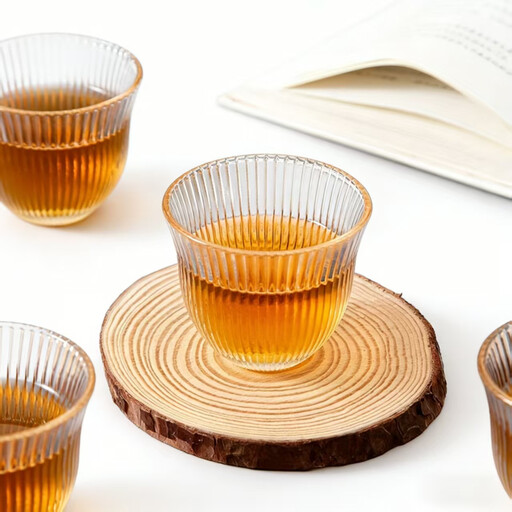
Why this product suits the profile: The set of six is designed for several people and is suitable for small hot drinks, tea or espresso portions. It is a practical option for households that need several matching vessels.
The number of cups included is clearly stated. This makes it easier to assess your needs than when choosing individual items at random.
Six cups in one set; suitable for small drinks and use by several people.
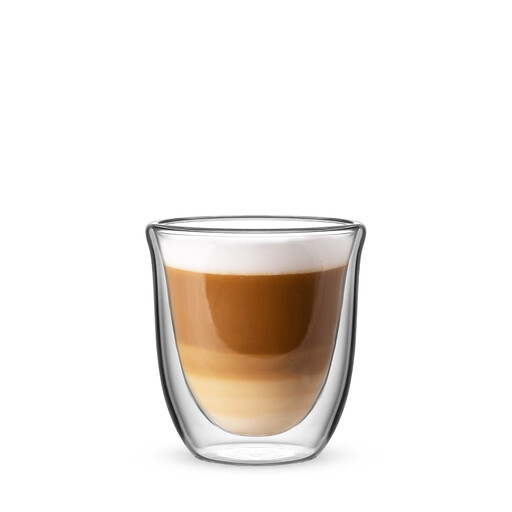
Why this product suits the profile: The set includes two double-walled glasses, each with a capacity of 200 ml. The transparent design is suitable for coffee, cappuccino, tea and other hot drinks.
The 200 ml capacity is clearly specified. The product description also states that the glasses are dishwasher- and microwave-safe; the relevant usage instructions remain decisive.
Double-walled construction; 200 ml capacity; according to the product details, dishwasher- and microwave-safe within the stated limits.
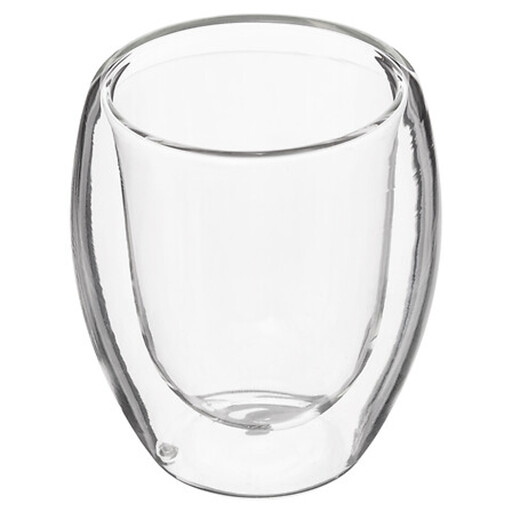
Why this product suits the profile: Two double-walled espresso glasses with a capacity of 7 cl or 80 ml are designed for espresso and ristretto drinkers. The compact shape is ideal for small portions and short serving distances.
The small capacity prevents an espresso cup from being confused with a large coffee mug. The care instructions explicitly rule out use in the oven.
Set of 2; double-walled borosilicate glass; according to the product description, dishwasher- and microwave-safe, but not suitable for the oven.
We have put together a complete, regularly updated list of products that fully meet these strict selection criteria and the safety regulations applicable in the EU.
If you are looking for a single vessel, you can choose from a range of sizes and materials. The SG Secret Gourmet Glass Cup with coloured handle has a capacity of 200 ml and is described as dishwasher-safe according to the product details. For ceramic options, you could consider the KAWASIMAYA Ceramic Coffee Cup and Plate Set with a capacity of 300 ml and saucer, or an individual YumiPLUS Ceramic Coffee Mug.
For space-saving storage, the Secret de Gourmet Mia Ceramic Cup Set with six 10-cl cups and a metal stand is worth considering. If you are looking for transparent drinking glasses for coffee with a little more capacity, the KAWASIMAYA set of two 200-ml glasses is another option. Capacity, care instructions and the number of items required remain the key considerations.
For filter coffee and smaller portions of milky coffee, 200 ml is often sufficient. If you serve larger drinks or plenty of milk foam, it is better to choose 270 to 300 ml. The usable capacity is usually below the maximum volume up to the rim.
This depends on the individual model. Some double-walled coffee glasses made from borosilicate glass are explicitly described as dishwasher-safe. You should still follow the manufacturer’s instructions, as aggressive detergents and high temperatures can affect transparency over time.
Both materials can provide long-lasting use when handled correctly. Ceramic is often less susceptible to minor knocks in everyday use, but it can chip at the edges. Glass makes drinks clearly visible, but can break if dropped or subjected to hard impacts. Material thickness, care and safe storage are key to product longevity.