Households that switch between beans
If you grind decaf in the afternoon but use the same grinder for other beans, single-dose accessories and access to the burrs are important things to consider.


If you often switch between caffeinated and decaffeinated beans, a grinder designed for weighing out individual doses is a sensible choice. However, a blow-out device or the term “Single Dose” does not prove how much coffee is left behind. For the occasional filter coffee, a hand grinder may suit you if you’re happy to turn the handle; for espresso, different brewing methods or more convenient dosing, the settings and features of the specific model matter. This selection is based on the features described for each model, not on an independent comparison of leftover grounds.
If you grind decaf in the afternoon but use the same grinder for other beans, single-dose accessories and access to the burrs are important things to consider.
If you only make one cup in the afternoon, you can weigh up the space it takes up and the effort involved against the convenience of an electric grinder.
If you use different brewing methods for decaf, check that the specific model’s adjustment range suits the way you brew.
First decide what matters most for your afternoon coffee, then look for the features that meet that need.
| Priority | What to check | Who will find this most important? |
|---|---|---|
| Switching beans and leftover grounds | Check the single-dose accessories, access to the burrs and cleaning process. Eureka lists a blow-out device for the Mignon Zero; this does not prove a measured amount of leftover coffee. | If I switch between regular and decaffeinated beans, I want to be able to clean the coffee path thoroughly. Around 36% of consumers prioritise switching beans and potential leftover grounds. |
| Grind size for your brewing method | Check your brewing method against the manufacturer’s specifications. For the German Encore ESP, Baratza assigns settings 1–20 to espresso and 21–40 to filter coffee, French press or cold brew. | If I want to use the same grinder for filter coffee and espresso, I need settings that suit both methods. Around 29% of consumers prioritise suitability for their brewing method. |
| Small doses and ease of use | Compare the dosing process: according to Melitta, the Calibra has a weight-based programme; Comandante lists two containers with a capacity of 40 g each for the C40 Mk4. This is not a recommended serving size. | If I’m only grinding enough for one cup, I want the process and dosing to be easy to manage day to day. Around 21% of consumers prioritise the process for preparing a small dose. |
| Cleaning and operating environment | Check the cleaning instructions and, for electric models, the mains specification of the exact version. Comandante recommends brushing the C40 rather than soaking it or putting it in the dishwasher; operating noise can only be assessed using comparable specifications. | If I want to clean the grinder regularly or use it near my living space, the cleaning process and where I can place it matter. Around 14% of consumers give the greatest weight to cleaning and the operating environment. |
Single-dose accessories or a blow-out device do not, on their own, prove that no grounds are left behind when you switch beans.
Check the instructions and cleaning process for the specific model rather than assuming a particular amount of residue based on a feature name.
Switching beans may mean extra cleaning.
The dosing cup supplied with the Baratza Encore ESP is not a set of built-in scales. Melitta, by contrast, describes the Calibra as having a weight-based programme.
Decide whether you want to weigh the beans separately before grinding or set the desired weight on the grinder.
If you want to weigh the beans precisely before grinding, you may need separate scales.
Specifications for filter settings do not automatically mean the adjustment range will also suit your espresso machine.
Check the manufacturer’s specifications for the specific model against your brewing method.
If there isn’t a suitable setting, you may need a second grinder for the other brewing method.
The Mignon Zero is an electric option for weighing out individual doses, particularly if you switch between beans.
The C40 Mk4 is a hand grinder for individual doses, if you don’t mind turning the handle.
The German Encore ESP is an electric option if you switch between espresso and coarser brewing methods.
The Calibra is aimed at consumers who value built-in weighing and several dosing programmes.
The Joybuy products below include manual and electric coffee grinders. Choose one that suits how you want to grind, and check that its grind settings are right for your brewing method.
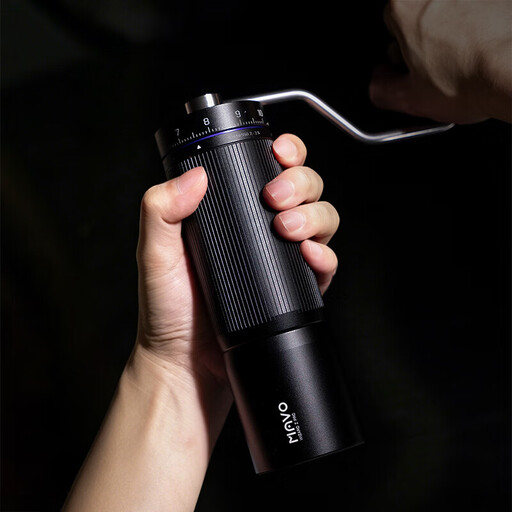 No image available
A manual grinder for anyone who wants to grind without electricity; you’ll need to turn the handle.
The product name specifies a stainless steel version.
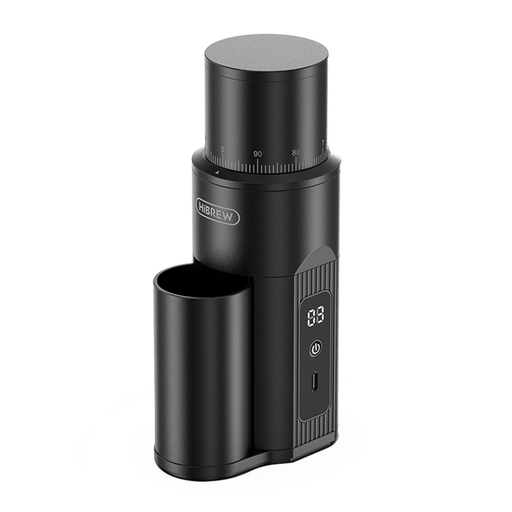 No image available
An electric option for anyone who wants to switch between grind settings without turning a handle by hand.
The product name specifies a 5200-mAh dual-battery system, 420 stainless steel, a 6-star conical burr and 100 grind settings.
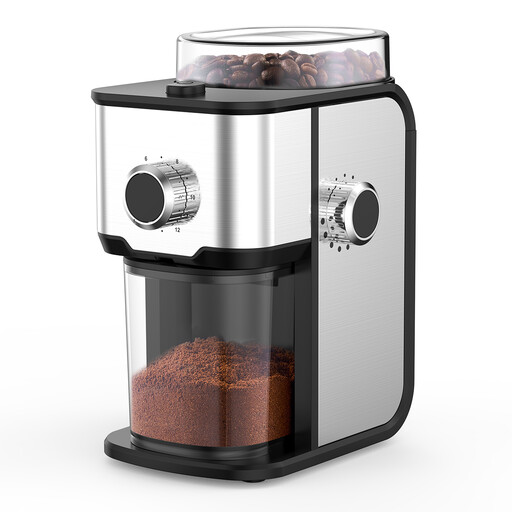 No image available
An electric option if you want to choose from several grind settings.
The product name specifies flat burrs and 14 grind settings.
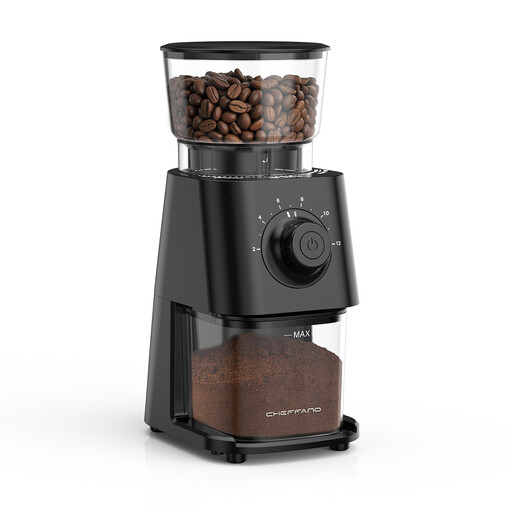 No image available
An electric option for anyone who wants to adjust the grind to suit their brewing method.
The product name specifies conical burrs and 30 grind settings.
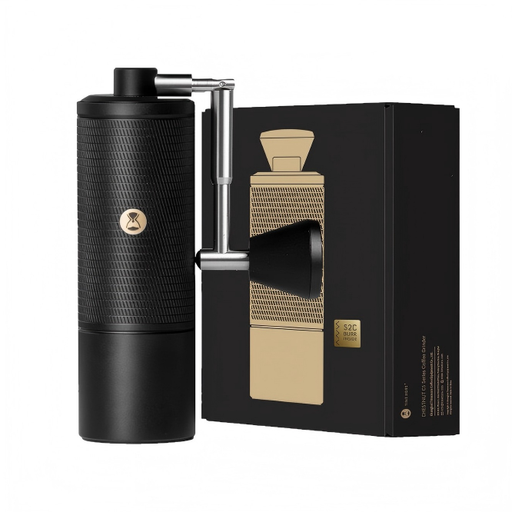 No image available
A manual grinder for anyone who wants to grind without electricity; turning the handle is part of the process.
If you’re happy to turn the handle, look for a hand grinder with a grounds container that has the right capacity for your routine. With an electric grinder, check whether you need to weigh the beans separately or whether the specific model has built-in scales; Melitta describes the Calibra as having a weight-based programme.
Comandante recommends brushing the burrs and inside of the grinder. According to the manufacturer, the C40 should not be soaked or cleaned in a dishwasher; follow the relevant instructions for other models.
No, the label does not necessarily mean that the coffee is caffeine-free. Under section 2 of the German Coffee Ordinance, green and roasted coffee may be labelled “decaffeinated” if it contains no more than one gram of caffeine per kilogram of dry coffee matter. This rule applies to the coffee, not the coffee grinder.
Check the mains specification and safety information for the exact version on offer. Baratza lists 220–240 V AC for the German Encore ESP; this does not tell you anything about other versions. The German Federal Network Agency describes the CE marking as a declaration made by the manufacturer on its own responsibility, not as the result of an independent comparative test.
Check how easily you can clean the burrs and accessible areas, following the instructions for the specific model. Single-dose accessories or a blow-out device do not, on their own, prove how much coffee is left behind; don’t treat claims about this as equivalent to an independently measured zero-retention result.