
Lieferung heute & morgen

Qualitätsgarantie

Willkommens-Angebote freischalten: KOSTENLOSE Lieferung | Bis zu 80 % RABATT | Kostenlose 30-Tage-JoyPlus-Testphase
App herunterladen
For many coffee lovers, the aroma of freshly ground beans is what truly starts the day. Owning a coffee grinder is the crucial step to extracting the full flavour from every bean. But the market is crowded and full of promises. Many models quickly prove to be a bad investment, causing more frustration than enjoyment.
As your Joybuy Product Recommendation Officer, I'm here to help you identify the typical pitfalls. Instead of falling for marketing hype, we'll focus on the facts that are essential for a consistently great cup. We'll shed light on three common problems that lead to useless appliances and wasted money.
To avoid these problems, you should check three core technical aspects before buying. These factors are the primary determinants of the grind quality and, therefore, the quality of your coffee.
The heart of any coffee bean grinder is its grinding mechanism. This is where quality is truly defined.
The ability to precisely adjust the grind size is not a luxury, but a necessity. Each brewing method requires a different level of fineness:
Look for the number of grind settings or a "stepless adjustment" feature. The more control you have, the more versatile the grinder will be.
The choice between a manual coffee grinder and an electric coffee grinder depends on your priorities.
Here are three recommendations tailored to different user profiles, each specifically designed to avoid the pitfalls mentioned earlier.
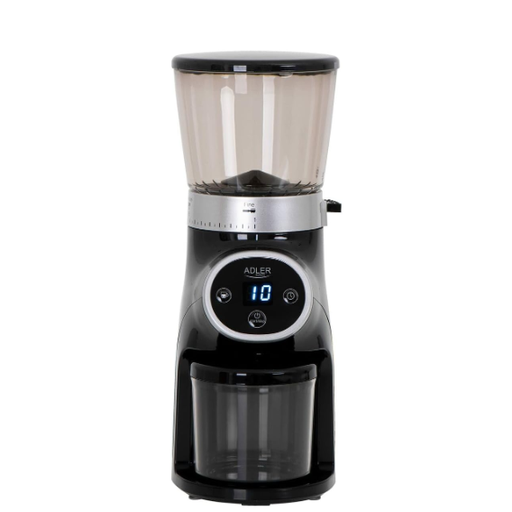
Why This Fits Their Persona: Ideal for users who want to experience freshly ground coffee without a major investment. The manual operation offers full control and an authentic coffee experience, suitable for brewing methods like filter coffee or French press.
This model bypasses the trap of unreliable electric motors found in budget devices. As a manual grinder, it gives the user direct control over the grinding process and consistency.
Large 300g capacity; portable and power-independent; simple and robust construction.
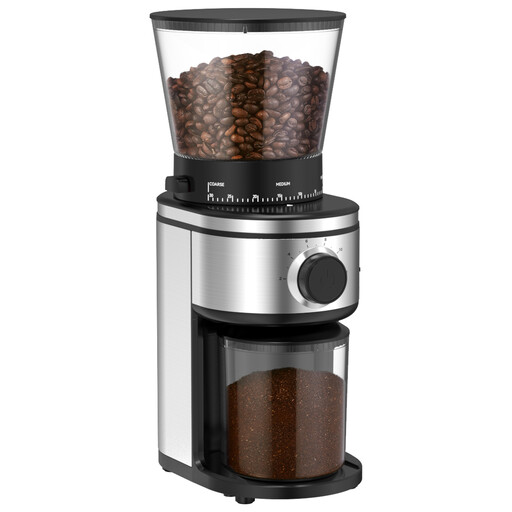
Why This Fits Their Persona: Perfect for coffee enthusiasts who want to experiment with different beans and brewing methods. The electric operation offers convenience, while the precise settings provide the necessary control for consistent results.
With its conical burr mechanism, it avoids the trap of inconsistent blade grinders. The 30 grind settings solve the problem of insufficient precision, allowing for adjustments from espresso to French press.
Precise conical burr for a uniform grind; wide range of grind settings; memory function for repeatable settings.
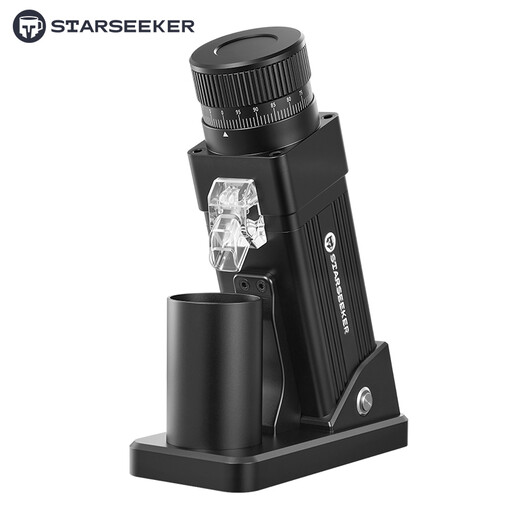
Why This Fits Their Persona: For users who make no compromises on quality, precision, and durability. This model is aimed at prosumers seeking a cafe-level grinder for home use, especially for preparing espresso.
Solves all three core problems: The 55mm titanium alloy conical burr ensures a professional-grade grind. The stepless fine adjustment offers maximum precision. The integrated plasma generator (anti-powder-flying technology) effectively prevents static buildup.
Professional-grade burr for espresso and filter coffee; stepless grind adjustment; all-metal aluminum alloy body; anti-static function.
We have compiled a comprehensive, up-to-date list of products that meet these strict selection criteria and comply with current safety regulations.
For an optimal taste experience, a daily surface cleaning to remove coffee ground residue with a brush is recommended. A more thorough cleaning of the burrs to remove coffee oils should be done every few weeks, depending on usage. Always follow the manufacturer's instructions and never use water on the grinding mechanism or motor.
As a rule of thumb:
Yes, using a manual coffee grinder can be worthwhile for several reasons. They are often more affordable than electric models with comparable grind quality, are quiet in operation, and portable for travel or camping. While they require more physical effort, they offer direct control over the grinding process and are an excellent choice for brewing methods like filter coffee or French press.