
Lieferung heute & morgen

Qualitätsgarantie

Willkommens-Angebote freischalten: KOSTENLOSE Lieferung | Bis zu 80 % RABATT | Kostenlose 30-Tage-JoyPlus-Testphase
App herunterladen
For many, the aroma of freshly ground coffee is the quintessential start to a perfect day. A manual coffee grinder allows you to release this aroma just moments before brewing, offering a level of control and a tactile experience that electric grinders often lack. However, the market is crowded, and not every model lives up to its promises. Many buyers invest in grinders that quickly prove to be impractical or unreliable.
This guide highlights the crucial features of a quality manual coffee grinder and will help you avoid common purchasing mistakes, enabling you to make an informed decision for your coffee enjoyment.
Before choosing a model, it's helpful to understand the most common issues found in low-quality products. These often lead to frustration and an unsatisfactory coffee result.
To avoid the problems mentioned above, you should focus on three core technical aspects when making your selection. These largely determine the performance and lifespan of your grinder.
The burr set is the most critical component for the quality of your coffee grounds. In manual coffee grinders, the conical burr grinder is dominant.
The ability to set the grind size precisely and repeatably is crucial for preparing different coffee specialities.
The body not only protects the internal mechanics but also determines how the grinder feels in your hand and how suitable it is for mobile use.
Based on the criteria above, we have identified a few models that are particularly well-suited for different user profiles.
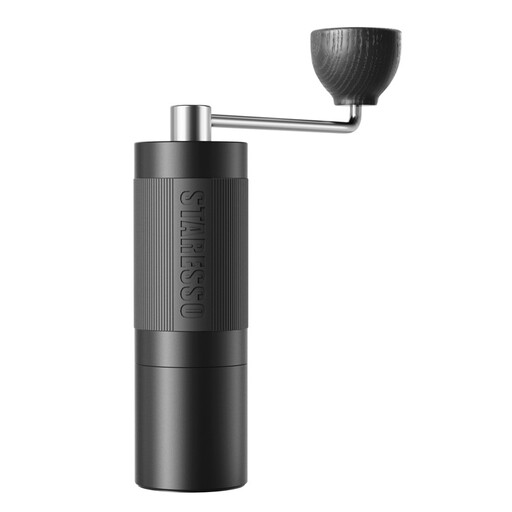
Why This Fits Their Persona: Ideal for coffee lovers looking for a reliable first manual grinder. It offers essential quality features without breaking the bank and is versatile enough for various brewing methods, from pour-over to French press.
The dual ball-bearing axle prevents an unstable burr assembly and ensures a consistent grind. Its metal body is significantly more robust than basic plastic models.
Features a stainless steel conical burr set and an adjustable grind control that offers good precision for entry-level use. The all-metal body ensures durability.
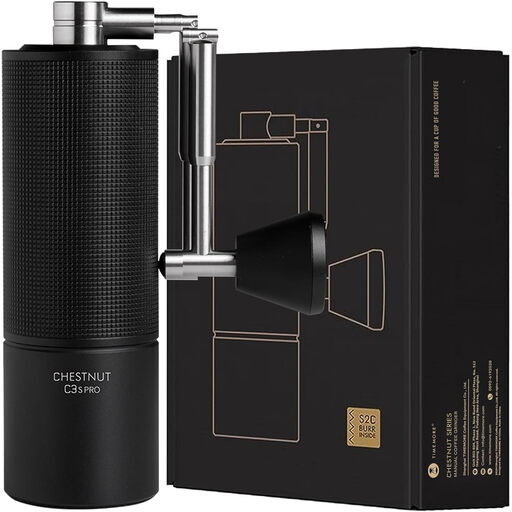
Why This Fits Their Persona: Perfect for travellers, campers, or commuters who refuse to compromise on freshly ground, high-quality coffee. This grinder combines a high-quality grind with a thoughtful, portable design.
The robust aluminium body and precision manufacturing prevent material fatigue. Its dual-bearing axle and CNC-machined burr set guarantee high consistency, even during mobile use.
The foldable handle and compact 52mm diameter make it extremely portable. Its 38mm stainless steel burr set ensures efficient and uniform grinding.
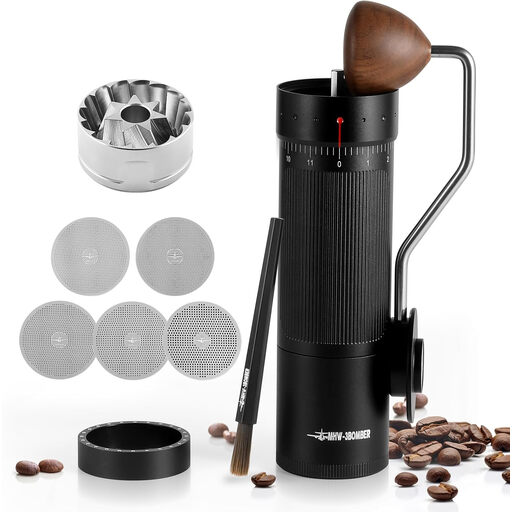
Why This Fits Their Persona: For coffee enthusiasts who demand maximum control and precision. This model offers features typically found in much more expensive segments, making it excellent for fine-tuning espresso and other demanding brew methods.
The external grind adjustment with 60 clicks per rotation offers extremely fine and repeatable control, solving the problem of imprecise settings. The CNC 420 stainless steel burr set ensures maximum consistency.
Offers a convenient external grind adjustment and a magnetic grounds container. The included five sieves allow you to filter out fine particles for an exceptionally clean flavour profile.
We've compiled a complete, up-to-date list of products that fully meet these strict selection criteria and all applicable safety regulations.
1. How do I properly clean a manual coffee grinder? Regular cleaning is important to remove old coffee oils and residues that can spoil the taste. Most grinders can be disassembled without tools. Use a small brush or an air blower to remove coffee grounds from the burrs and housing. Avoid using water to clean the burr set, especially with stainless steel burrs, to prevent corrosion. The body and grounds container can typically be wiped with a damp cloth.
2. How many grind settings do I really need? This largely depends on your preferred brewing methods. If you primarily use one method like French press or pour-over, a grinder with 15-20 well-defined steps is sufficient. However, if you also want to make espresso, which requires very fine adjustments, a grinder with 30 or more click settings is recommended. More steps mean more control and the ability to get the best out of every coffee bean.
3. Is a more expensive manual grinder with a stainless steel burr set worth it? For coffee lovers who value flavour and consistency, investing in a grinder with a high-quality stainless steel burr set is generally worthwhile. Such burrs produce a more homogenous grind with fewer fine particles ("fines"), leading to a cleaner, more balanced extraction. They are also often faster and more durable than the simple ceramic or metal burrs found in cheaper models. The difference is clearly palpable in the final taste.