
Lieferung heute & morgen

Qualitätsgarantie

Willkommens-Angebote freischalten: KOSTENLOSE Lieferung | Bis zu 80 % RABATT | Kostenlose 30-Tage-JoyPlus-Testphase
App herunterladen
Freshly ground coffee beans can make preparing espresso, filter coffee, moka or French press much more flexible. However, finding the right coffee grinder is not simply a matter of motor power or design. The key factors are the grinding mechanism, adjustment options, capacity and cleaning requirements.
The Joybuy Product Recommendation Officer selection therefore focuses on transparent product data rather than sweeping advertising claims.
An electric coffee grinder with a blade or impact mechanism chops beans using rotating blades. The desired grind size is usually controlled by how long you press the button. This can produce both finer and coarser particles at the same time. This principle is straightforward for simple applications, but achieving a repeatable setting is more difficult for espresso or pour-over coffee.
A conical burr grinder or another bean grinder works with two grinding surfaces. Depending on the design, the distance between them can be adjusted more precisely. This is important if you want to use the same coffee bean grinder for several brewing methods.
Having lots of grind settings does not automatically mean they are suitable for your coffee. What matters is whether the settings actually cover the range you need: very fine for espresso, medium for filter coffee and pour-over, or coarse for a French press coffee grinder.
With manual models, you should also check whether the adjustment wheel is located inside or outside. An external scale is easier to access when switching between recipes. An internal adjustment can keep the housing more compact, but requires more attention when changing the setting.
A grinder with a capacity of 20 to 30 g is generally suitable for individual servings. For several people, an office or a larger cafetière, 50 to 75 g is more practical. However, a large bean hopper is not always useful if you portion out fresh beans every day.
Maintenance should also form part of your comparison. Coffee grounds can build up in the grinding chamber and around the outlet. Many devices are designed for dry cleaning with a brush. Burrs and motor units should only come into contact with water in accordance with the operating instructions.
A coffee grinder with a stainless steel grinding mechanism can be designed as either a blade model or a burr model. Stainless steel blades are common in compact devices and are suitable for occasional portions. A conical burr grinder, on the other hand, is designed to produce a more controlled particle size.
For espresso, pour-over and French press, models with an adjustable grinding mechanism are particularly appealing. An espresso grinder should offer a sufficiently fine setting. French press requires a coarser range so that the coffee grounds do not pass too finely through the filter.
A coffee grinder with adjustable grind size should provide clear information about how the adjustment works. Examples include clicks per rotation, a specified number of settings or a continuously adjustable scale. The description “fine to coarse” on its own says little about the practical increments.
Manual coffee grinders do not need a power socket, making them suitable for travel, camping or offices without a fixed workstation. Electric coffee grinders reduce the effort required and are more convenient when preparing several portions. With rechargeable models, charging method, battery capacity and protection against moisture are also important.
For one cup of filter coffee or a dose of espresso, 20 g is often enough. Households with several coffee drinkers can benefit from 50 to 75 g. Devices with a 220 g hopper capacity are designed for larger quantities, but require more worktop space.
Before buying, you should also check the dimensions, weight, power supply and collection container. A portable coffee grinder should be compact and secure when closed. For the kitchen, a heavier metal housing can provide greater stability.
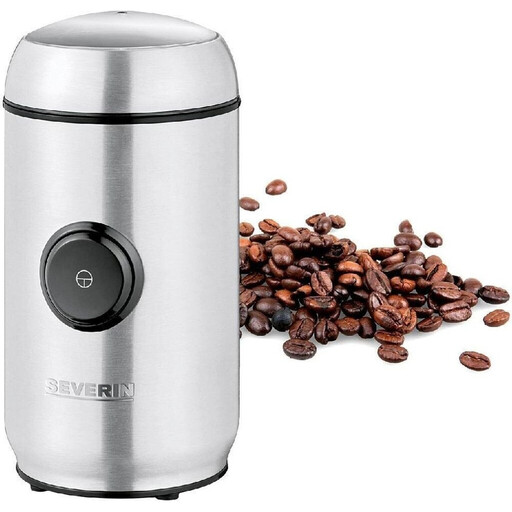
Why this product suits this profile: This electric model offers 150 W of power, push-button operation and a capacity of around 50 g. The transparent lid lets you monitor the grinding process.
Short pulses help you influence the grind size gradually. For highly precise espresso, however, a conical burr grinder remains the better choice.
50 g capacity, transparent cover and compact stainless steel housing.
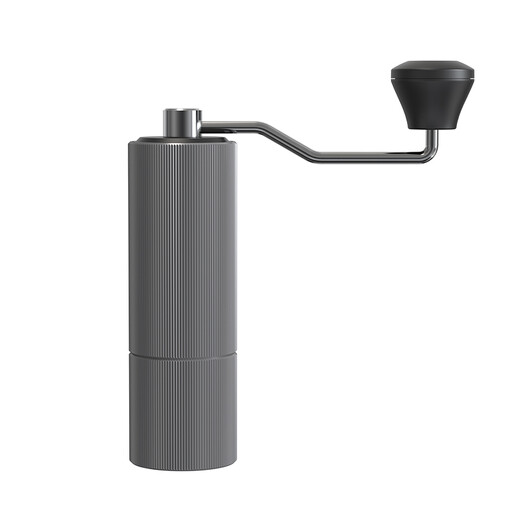
Why this product suits this profile: This manual coffee grinder combines an aluminium housing with a CNC-machined 420 stainless steel conical burr grinder and internal click adjustment.
The grind is not controlled solely by how long the grinder runs. According to the product details, the internal click adjustment covers fine to coarse grind sizes.
20–30 g capacity, dual-bearing design and 420 stainless steel burr grinder; designed for brush cleaning.
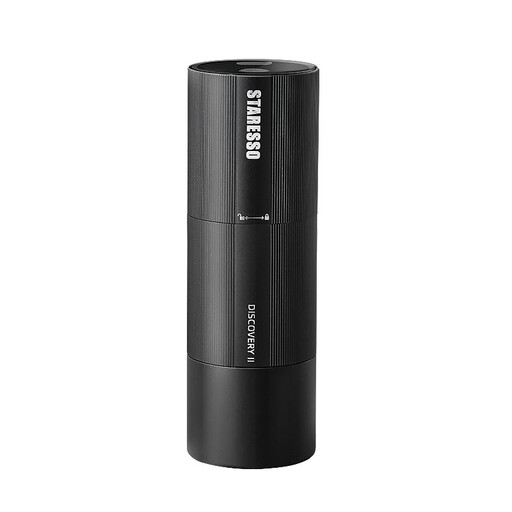
Why this product suits this profile: This rechargeable model features one-touch operation, a stainless steel burr grinder and USB-C charging. It is designed for use at home, in the office or while travelling.
The grind size can be adjusted directly on the device. Before buying, remember to allow for the charging time of around 2.5 hours when planning how you will use it.
1000-mAh battery, USB-C charging port, metal housing and grind settings ranging from espresso to French press.
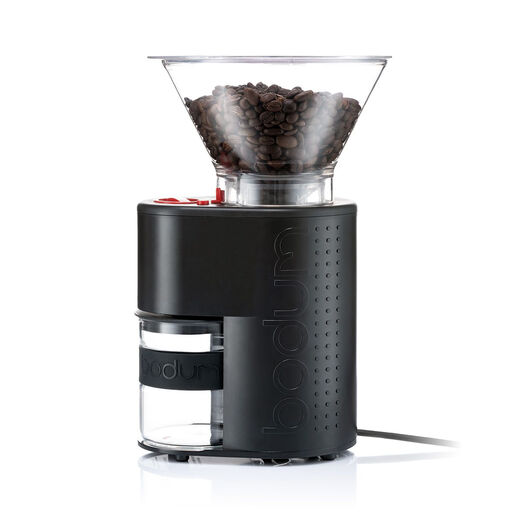
Why this product suits this profile: This electric model features a conical burr grinder, adjustable grind setting, timer and capacity of up to 220 g.
The setting is adjusted via the burr grinder rather than relying solely on the running time. The timer supports repeatable portions for everyday use.
160 W motor, 220 g capacity, timer and collection container made from antistatic borosilicate glass.
We have put together a complete, regularly updated list of products that fully meet these strict selection criteria and the safety regulations applicable in the EU.
A coarse grind is ideal for French press. A French press coffee grinder with an adjustable grinding mechanism makes it easier to fine-tune the setting. Manual models should offer several coarse click settings. Blade grinders can also be used, but they often produce less uniform particles.
A manual coffee grinder does not need electricity, is compact and is suitable for individual portions, travel and camping. An electric coffee grinder saves time and effort, particularly when making several cups or using it regularly. The right choice therefore depends on the number of portions, how often you need to transport it and the level of convenience you want.
Its service life depends on the grinding mechanism, frequency of use, type of beans and maintenance. A durable stainless steel grinding mechanism, sturdy shaft guidance and regular dry cleaning can help maintain its performance. The care instructions provided by the respective manufacturer and the stated warranty terms are decisive.