
Lieferung heute & morgen

Qualitätsgarantie

Willkommens-Angebote freischalten: KOSTENLOSE Lieferung | Bis zu 80 % RABATT | Kostenlose 30-Tage-JoyPlus-Testphase
App herunterladen
Freshly ground coffee beans may require different grind sizes depending on the brewing method. A coffee grinder should therefore not be chosen solely on the basis of its casing, price or marketing claims. The key factors are the burrs, adjustment range, dosing and whether the grinder is suitable for espresso, moka pot, pour-over or French press.
A high number of settings may sound convincing at first. However, it is more important to know whether the grind size can actually be adjusted consistently and whether the adjustment can be operated safely while the grinder is running. When choosing a coffee grinder with adjustable grind size, buyers should therefore look for a clear scale, secure click stops or an easy-to-understand fine adjustment.
Espresso requires a significantly finer grind than French press. If the setting is too coarse or uneven, this can affect the brewing time and flavour. Manufacturer claims about compatibility with several brewing methods should therefore be checked against the technical specifications.
A larger burr diameter can be useful for higher throughput. However, it does not replace information about the burr type, material or recommended operating time. A coffee grinder with burrs should only be designed for dry coffee beans. Spices, nuts or unroasted beans can damage the burrs and motor.
Very oily or flavoured beans can also leave residue in the output chute. Before buying, it is therefore worth checking the cleaning instructions and whether the burrs and grounds container can be cleaned dry.
A battery-powered electric coffee grinder is practical for the office, camping or travel, but it needs to be charged regularly. Battery capacity, motor power and grinding speed can also limit the amount ground per cycle. When choosing a portable coffee grinder, check how many servings are possible per charge according to the product description and whether it has a USB-C port.
If you mainly prepare several espressos one after another at home, you will generally need different features from someone who grinds a single serving while out and about each day.
The models considered here include conical burrs and stainless steel burrs. A conical burr set often allows for a compact design and is used in both electric and manual devices. The shape is not the only important factor. You should also consider:
A coffee bean grinder with stable burr guidance can support a more even particle distribution during repeated use. However, this does not provide a blanket indication of the quality of the flavour.
Espresso requires a fine grind. Pour-over and filter coffee usually sit in the medium range, while a coffee grinder for French press needs to produce coarse particles. A good selection should not only cover several ranges, but also make it easy to return to a setting used previously.
Manual models such as the TIMEMORE and STARESSO grinders offer mechanical grind adjustment. Electric models may also feature a timer, automatic dosing or one-button operation. Buyers should bear in mind that the ideal setting always depends on the beans, roast level, brewing recipe and desired quantity.
For a single-person household, 15 to 20 grams per grinding cycle is often sufficient. According to the product description, the STARESSO D6 PLUS has a capacity of 20 grams. Larger containers, such as the 210-gram bean capacity of the HiBREW G3, are more suitable for several servings or a household with higher throughput.
You should also look out for:
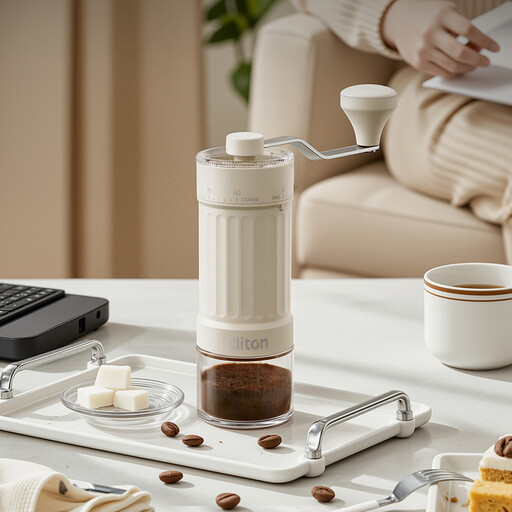
Why this product suits this profile: A manual coffee grinder does not require electricity, making it suitable for beginners who want to grind individual servings at home or on the go.
Manual operation avoids dependence on batteries and cables. Before buying, check the grind adjustment and capacity directly in the listing.
No power supply required; compact design for easy storage and transport.
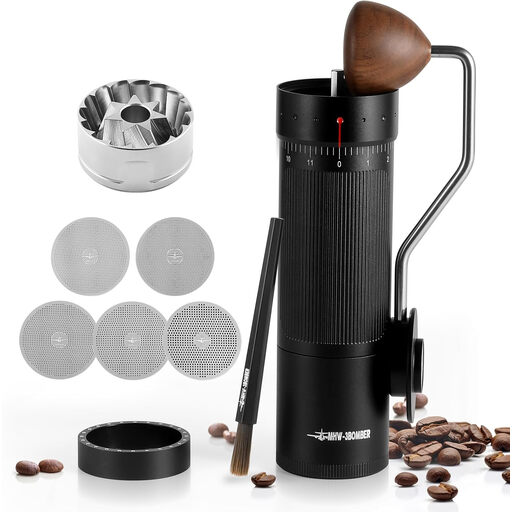
Why this product suits this profile: This grinder is aimed at users who want to combine external adjustment, a stainless steel conical burr set and compatibility with different brewing methods in one device.
The external adjustment with 60 clicks per revolution makes it easy to understand the change between finer and coarser ranges. Clean it dry with a brush.
CNC-manufactured stainless steel conical burr set; magnetic grounds container with a capacity of around 20 grams.
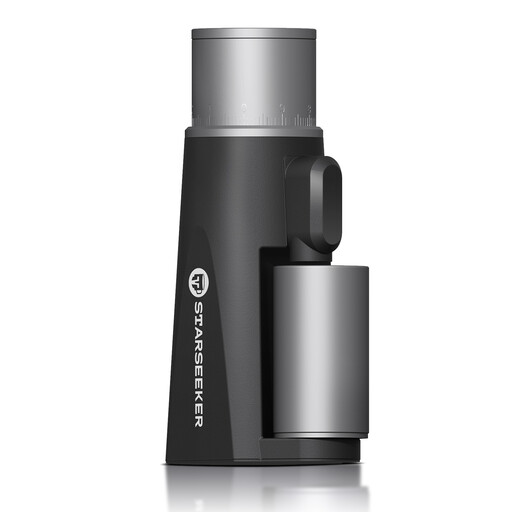
Why this product suits this profile: The cordless design is intended for camping, travel, the office and situations where no power socket is available. According to the product description, the 2600-mAh battery supports several grinding cycles.
The product description specifies a battery, USB-C charging and automatic shut-off. It also points out the possibility of static build-up and recommends using medium- to dark-roasted beans.
38-mm conical burr set; 100-step grind adjustment according to the supplier's specifications; cordless operation with a USB-C port.
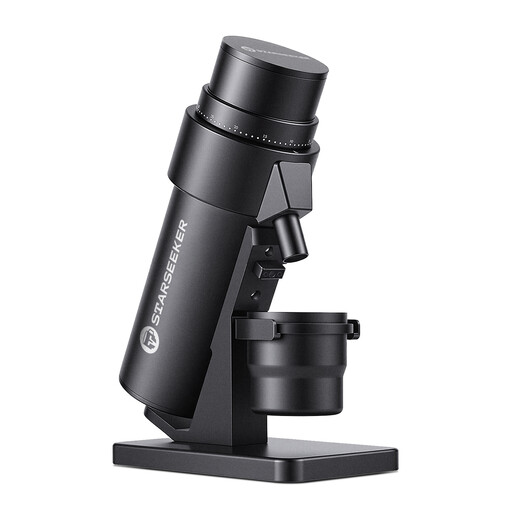
Why this product suits this profile: This electric model is specified for home use, espresso and pour-over coffee. It is aimed at users who grind regularly and would rather not use a hand crank.
The safety instructions specify a maximum uninterrupted running time of 60 seconds followed by a cooling period. This helps when planning several servings.
63-mm burr set according to the product name; electric operation for home use; designed for espresso and pour-over coffee.
We have put together a complete, regularly updated list of products that fully meet these strict selection criteria and the safety regulations applicable in the EU.
An electric coffee grinder saves time and is convenient when preparing several servings. Models with a timer or dosing button can make operation easier. However, they require mains power or a charged battery and should be disconnected from the power supply before cleaning.
A manual coffee grinder works independently of a power socket and battery. It is suitable for travel, camping and small quantities. Grinding takes longer and requires effort, particularly with very fine espresso settings. Nevertheless, it can be a space-saving solution for a single cup.
If you want the benefits of both options, you can also find 2-in-1 grinders with a hand crank and electric drive. Before buying, however, check the details for grind size, capacity and power supply.
For espresso, you need a grinder with a fine, consistently adjustable setting and, ideally, reproducible dosing. An espresso grinder should also be suitable for the intended level of use. Whether a particular model is right for you depends on the burrs, adjustment system and espresso machine used.
With daily use, regular dry cleaning of the burrs and output chute is recommended. Remove coffee residue with a suitable brush. Do not use water on electrical components or untreated burr areas unless the instruction manual states otherwise.
Running electricity costs depend on the power rating, grinding time and frequency of use. With a battery grinder, charging cycles and eventual battery wear must also be taken into account. A manual coffee grinder uses no electricity while grinding, but requires more time and physical effort.