
Lieferung heute & morgen

Qualitätsgarantie

Willkommens-Angebote freischalten: KOSTENLOSE Lieferung | Bis zu 80 % RABATT | Kostenlose 30-Tage-JoyPlus-Testphase
App herunterladen
Freshly ground coffee beans don't automatically require an expensive setup. What matters is whether the coffee grinder suits your preferred brewing method, the quantity you need, and the space you have available. Filter coffee for daily use has different requirements to espresso. There are also clear differences between an electric coffee grinder and a manual coffee grinder when it comes to operation, noise levels and portability.
A high motor power rating alone tells you very little about the quality of the coffee grounds. With electric models, the type of burr, the grind adjustment and the operating logic are all relevant. A machine with stainless steel blades can chop beans quickly, but often doesn't offer a fixed setting for coarse, medium or fine.
If you regularly switch between espresso, filter coffee and French press, you should specifically look for a coffee grinder with adjustable grind settings. A wattage figure is no substitute for this function.
A coffee grinder with burrs processes beans between two grinding surfaces, whereas blade grinders chop the beans using rotating blades. With conical burrs or flat burrs, the grind size is set by design. With blade grinders, the result depends more on the running time and how the beans move around.
This is particularly important for espresso: small adjustments are crucial for this brewing method. For a French press, a coarser grind is usually sufficient, although here too, the setting and dosing make handling easier.
A large bean hopper isn't automatically practical. If you only make one or two cups a day, you generally don't need capacity for many portions. In small households or for home office use, a single-serve grinder can leave fewer bean residues.
Also look out for removable containers, dry cleaning with a brush, and easily accessible burr areas. Water should not come into contact with the burrs or motor housing on many models. The respective manufacturer's instructions are binding.
For filter coffee and French press, a clear gradation from fine to coarse is helpful. A coffee grinder for French press should allow a coarse grind, while a coffee grinder for pour over needs a finer intermediate setting. For espresso, an espresso grinder with particularly fine adjustment is advisable.
Models with conical burrs are often sold as an electric coffee grinder with conical burrs. Before buying, check how many steps are actually specified and whether the adjustment is on the outside or inside. Many steps don't automatically mean that every setting is suitable for your machine.
An electric coffee grinder suits households, offices and users who want to grind several portions with minimal manual effort. Machines with a pressure switch or timer are straightforward to operate. For battery-powered models, charging time, USB-C connection and bean capacity are relevant.
A portable manual coffee grinder works independently of a power socket and is ideal for travel, camping or small kitchens. The grinding process takes longer and requires more effort, but such machines are usually compact and quiet.
Typical capacities of the selected models range from around 20 to 30 g for compact hand grinders up to 220 g for the BODUM BISTRO. For a single cup, 15 to 20 g of beans is usually enough. Multiple people in a household will benefit from 60 to 75 g or a larger capacity.
Pay attention to the footprint, weight and height. In an office or home office, a small machine with simple one-button operation can be more practical than a large model with numerous settings.
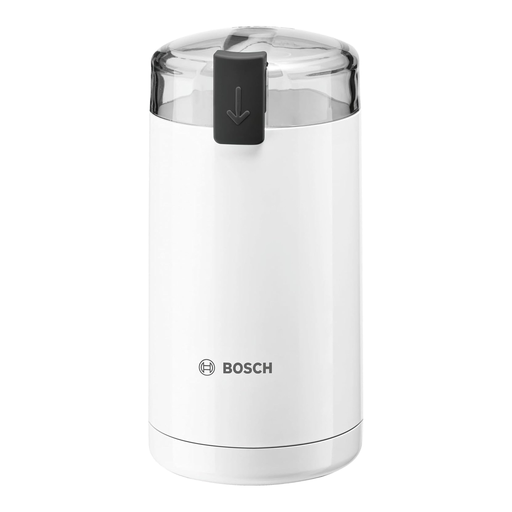
Why this product fits the profile: This electric coffee grinder operates at 180 W, holds up to 75 g of beans and has a compact design suitable for the kitchen or home office.
The technical specifications clearly state the blade type and maximum fill capacity. This makes it easier to compare the machine realistically with a coffee grinder that has burrs.
75 g capacity, safety function when the lid is closed, and space-saving dimensions of 9 × 9 × 17 cm.
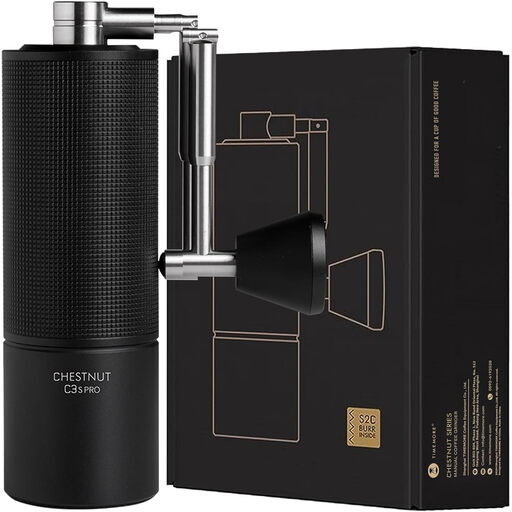
Why this product fits the profile: This manual coffee grinder combines an aluminium housing with a conical stainless steel burr and approximately 36 adjustable grind settings.
The grind adjustment is specifically stated and, according to the product description, covers fine to coarse applications. Cleaning is done dry with a brush.
38 mm conical burr, foldable handle and compact body with 52 mm diameter for travel and storage.
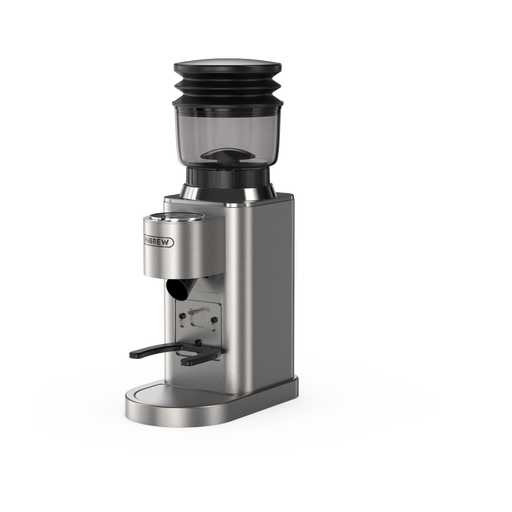
Why this product fits the profile: The electric conical burr grinder offers 48 steps, a timer function and modes for 51, 54 and 58 mm portafilters.
Instead of just stating a motor power rating, the product description specifies concrete grind steps, portafilter sizes and time-controlled dosing.
48 grind settings, 150 W power and a 2 kg machine for permanent use in the kitchen, home office or office.
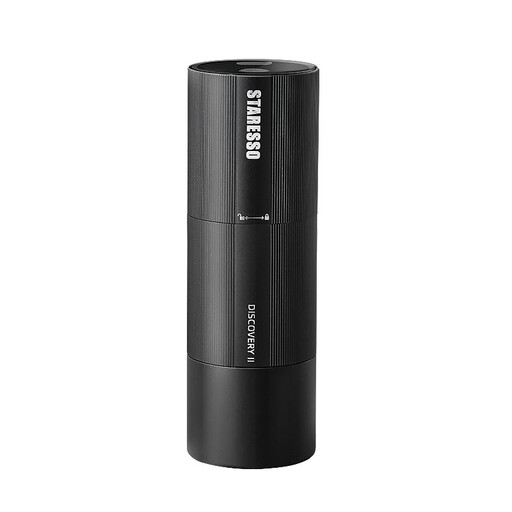
Why this product fits the profile: This battery-powered model combines one-button operation, a stainless steel burr and Type-C charging for home, office and travel.
The charging method, battery capacity and approximate charging time are specified. This makes mobile use easier to plan than with battery-operated machines that aren't described in detail.
1000 mAh battery, Type-C connection, metal housing and suitability for espresso, pour over and French press according to the product specifications.
We've put together a complete, regularly updated list of products that fully meet these strict selection criteria and the safety regulations in force in the EU.
For espresso, an espresso grinder with a finely adjustable grind setting and burrs is advisable. Models with many steps or stepless adjustment allow you to adapt to the bean, portafilter and quantity. A simple blade grinder with only a running time control is less predictable for this purpose.
A manual coffee grinder suits small quantities, travel and quiet grinding without a power supply. An electric coffee grinder saves manual effort and is more convenient for multiple portions in a household or office. The deciding factors are your daily quantity, space and desired flexibility.
The lifespan depends on the burrs, frequency of use, cleaning and correct application. Do not exceed the fill capacity, do not grind other food items, and remove residues regularly. For electric models, the motor, cable and safety switch should also remain undamaged.