
Lieferung heute & morgen

Qualitätsgarantie

Willkommens-Angebote freischalten: KOSTENLOSE Lieferung | Bis zu 80 % RABATT | Kostenlose 30-Tage-JoyPlus-Testphase
App herunterladen
Freshly ground coffee beans can make preparing coffee at home more flexible. However, finding the right coffee grinder is not simply a matter of motor power or design. The key factors are the grinder mechanism, controls, capacity and your preferred brewing method.
Many purchasing decisions fall into three common traps:
Before buying, consider how you will use the grinder every day. An electric coffee grinder is suitable when you want short preparation times and larger quantities. A manual coffee grinder does not require a power socket, making it an appealing choice for travelling, camping or use in the office.
Espresso usually requires a finely adjustable grind size. With a French press, on the other hand, a coarse grind is standard. For pour-over and moka, the setting is often somewhere in between. A coffee grinder for espresso should therefore do more than simply grind “fine”: it should offer the most precise and repeatable adjustment possible.
Compact models with stainless steel blades break the beans up using rotating blades. The grinding time affects the grind size. This design saves space and is often simple to operate, but it does not provide a precisely defined grind setting.
A coffee grinder with conical burrs works using two interlocking grinding surfaces. Models with several fixed settings make it easier to adjust the grind in a consistent, measurable way. This is particularly important if you regularly switch between espresso, filter coffee and French press.
With a coffee grinder with stainless steel burrs, you should also consider the adjustment system, cleaning requirements and construction. Material specifications alone do not indicate how well a model will suit your preferred brewing style.
An adjustable grind size can be implemented in several ways:
When using blades, it is advisable to work in short intervals. This helps limit heat build-up in the grounds and gives you better control over the grind size. Always follow the instructions in the manual.
For a one-person household or when travelling, 20 to 30 g may be sufficient. A coffee grinder with a 60 g capacity is suitable for around two to eight cups, depending on the dosage. Models with a capacity of 75 g or 200 g are better suited to households preparing several servings one after another.
Look out for:
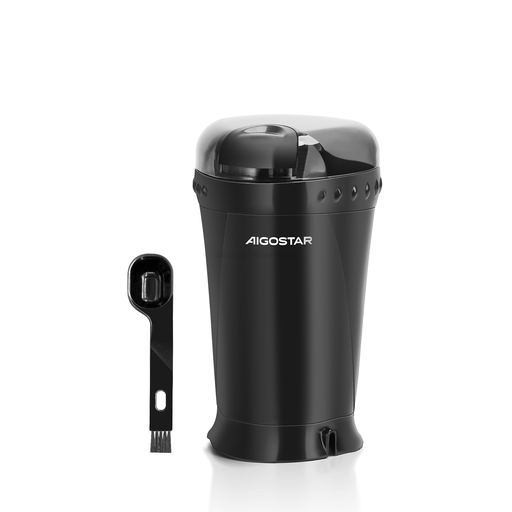
Why this product suits the profile: This electric grinder has a 200 W motor, a push-button switch and a 60 g container. Its straightforward operation makes it a practical introduction to grinding coffee beans every day.
The capacity is clearly stated as 60 g. The transparent lid lets you monitor the process, while the grind size is controlled by how long you press the button.
200 W of power, a 60 g capacity and a safety start function when the lid is closed correctly.
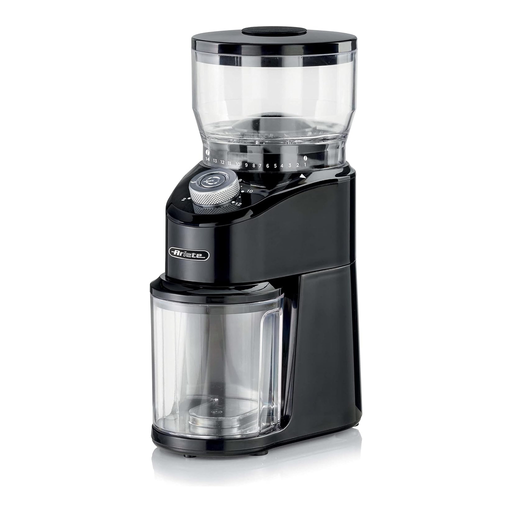
Why this product suits the profile: This model offers a conical burr mechanism, 14 grind settings and a 200 g bean hopper. It is designed for different brewing methods and multiple servings.
The 14 grind settings can be selected using an adjustment dial. This makes switching between fine, medium and coarse settings more predictable than relying solely on timed grinding.
Conical burrs, 14 settings, dosing for 2 to 12 cups and a 200 g capacity.
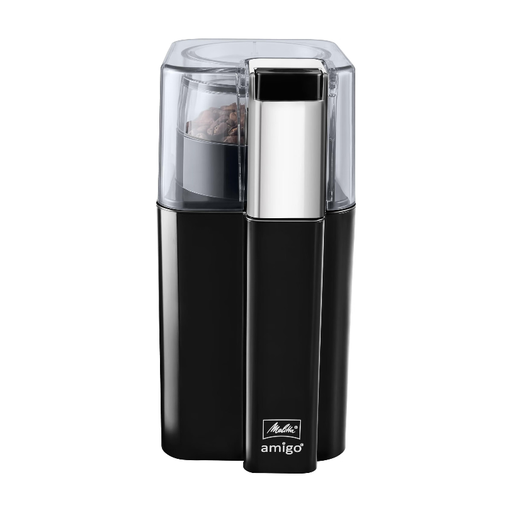
Why this product suits the profile: With a 60 g capacity, compact dimensions of 10,7 × 9,2 × 19,5 cm and stainless steel blades, it is designed for everyday preparation in smaller households.
The transparent cover lets you monitor the grinding process. The motor only starts when the lid is closed, while the grind size is adjusted by changing the running time.
60 g capacity, transparent cover, safety function and, according to the product information, a two-year manufacturer’s warranty.
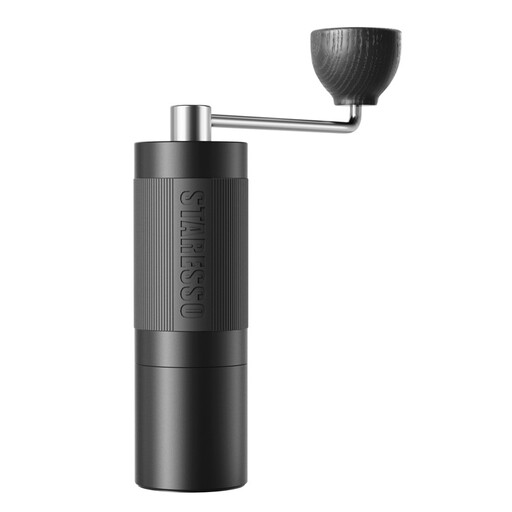
Why this product suits the profile: This portable coffee grinder works without electricity, holds 20 g and features stainless steel conical burrs with adjustable click settings. It is suitable for espresso, pour-over and French press.
There is no need for a power supply. The clearly described click adjustment means you do not have to estimate the grind size solely by timing the grinding process.
20 g capacity, stainless steel burrs, dual ball bearings and a fully dismantlable design for dry cleaning.
We have put together a complete, regularly updated list of products that fully meet these strict selection criteria and the safety regulations applicable in the EU.
A compact coffee grinder with blades is a sensible choice when simple operation, a small footprint and an affordable price are the main priorities. Fixed grind settings are generally more practical if you frequently switch between brewing methods. A manual coffee grinder does require more time and effort, but it offers independence from electricity and is suitable for small individual servings.
When using the grinder, make sure the quantity of beans matches the manufacturer’s recommendation. The motor housing must not be immersed in water. When using blades, keep your hands and kitchen utensils away from the mechanism while it is running. The burrs or blades, container and lid should be cleaned regularly to remove residue, as old coffee grounds can affect the flavour of the next serving.
French press coffee is usually made with coarsely ground coffee. A model with an adjustable grind size makes it easier to find the right setting. With blades, the desired grind must be controlled using short grinding intervals; with a conical burr grinder, a coarse setting can usually be selected more directly.
That depends on the quantity you prepare and the level of convenience you want. A container holding around 20 to 30 g is enough for one or two servings. If you prepare several cups or grind coffee regularly, a capacity of 60 to 75 g and an electric motor can be beneficial.
It is not possible to determine a fixed service life based solely on the design. Usage frequency, the quantity of beans, cleaning and proper handling are all important factors. Overloading, moisture and grinding unsuitable ingredients can put strain on the blades, burrs or motor. You should therefore follow the care and safety instructions provided by the manufacturer.