
Lieferung heute & morgen

Qualitätsgarantie

Willkommens-Angebote freischalten: KOSTENLOSE Lieferung | Bis zu 80 % RABATT | Kostenlose 30-Tage-JoyPlus-Testphase
App herunterladen
The journey to exceptional coffee begins with freshly ground beans. However, the world of electric coffee grinders is filled with pitfalls that can lead to disappointment and wasted money. As your Joybuy Product Recommendation Officer, I'm here to help you separate marketing hype from genuine quality features. Before you invest, you need to know about three common problems that can sour your coffee experience.
To avoid these pitfalls, you should focus on the technical fundamentals that separate a great grinder from a subpar one.
The most critical component of any coffee grinder is its burr set. There is a clear distinction here:
The ability to adjust the grind size finely and repeatably is crucial. Different brewing methods require different particle sizes:
A good electric coffee grinder should offer at least 30 adjustment steps to cover this range and allow for fine-tuning.
Modern coffee grinders use thoughtful designs and materials to minimise static build-up in the coffee grounds. Features like built-in ionisers or special coatings on the chute can significantly reduce mess. Equally important is a low-retention design, which refers to the amount of ground coffee left inside the grinder after use. Low retention ensures you get fresh grounds with every single dose.
Here are some models that represent a considered choice for different user profiles based on their objective features.
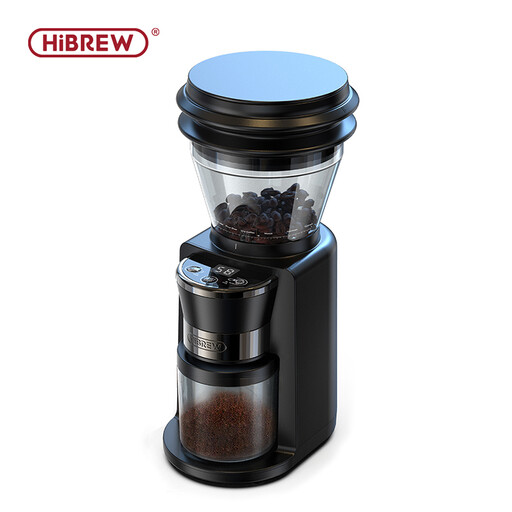
Why it's a great fit: Perfect for anyone transitioning from pre-ground coffee to a true burr grinder without a major initial investment. Its 34 grind settings offer enough flexibility for your first forays into filter coffee or French press.
Unlike basic blade grinders, its integrated conical burr set ensures a consistent grind, preventing uneven extraction. The anti-static function also reduces the typical mess from stray coffee grounds.
Provides a solid foundation with a conical burr set and a good range of grind settings for various brewing methods.
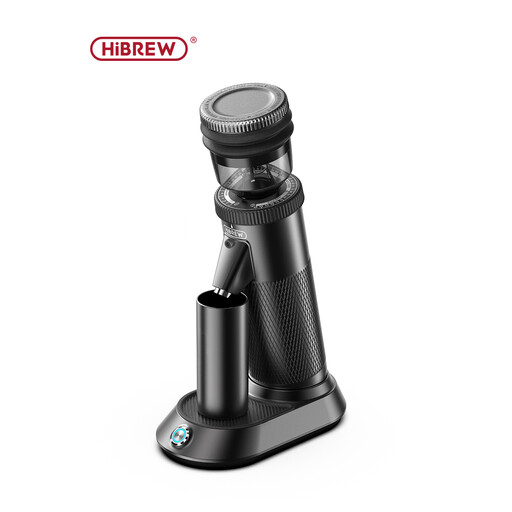
Why it's a great fit: Perfect for users of espresso machines who need a precise espresso grinder. The fine adjustment steps and slow-grind option provide the control required for a perfect espresso shot.
This model solves the problem of insufficient grind settings. With 36 steps and a 48mm CNC-machined conical burr set, it delivers the fine, consistent grind essential for espresso. The slow-speed option minimises heat build-up.
Precise grind adjustment and a slow-grind function (400 RPM) to reduce heat build-up, preserving the coffee's delicate aromas.
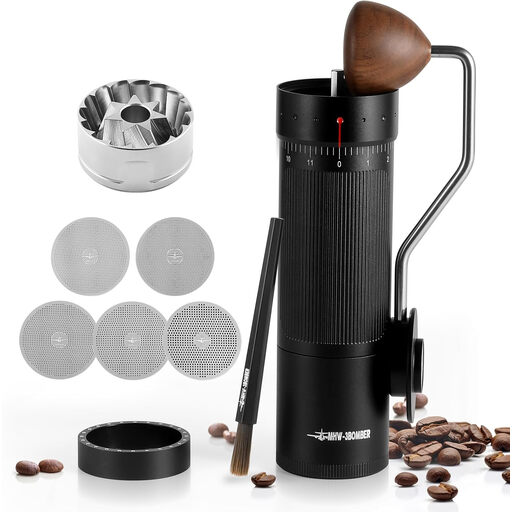
Why it's a great fit: For coffee lovers who want complete control over the brewing process or need a high-quality, off-grid solution for travel. This manual grinder offers maximum control and a satisfying tactile experience.
It completely bypasses the drawbacks of many entry-level electric grinders. The CNC stainless steel conical burr set guarantees exceptional grind consistency. The included sifters even allow you to filter out fines for greater clarity.
External grind adjustment with 60 clicks per rotation and five calibrated sifters for an extremely uniform particle size and exceptional clarity in the cup.
A precision grinder is the foundation, but other tools are helpful for achieving repeatable results. A coffee scale with a timer, like the TIMEMORE Black Mirror Basic 2, allows for precise control over your coffee dose and brew time.
For moments when you need speed or are on the go, high-quality drip coffee bags offer a convenient alternative. They contain pre-ground coffee in the perfect single-serving amount and allow for a hassle-free pour-over. Options like the Trung Nguyen Legend Drip Coffee are ideal for the office or while travelling.
Once you've found the right grinder, the next step is choosing the perfect beans. Explore our curated selection of whole bean and pre-ground filter coffee.
Always unplug the grinder from the power source. Use a small brush and an air blower to remove coffee grounds from the burrs and chute. Strictly avoid water, as it can cause the burrs to rust and damage the electronics. For a deeper clean, you can use specialised grinder cleaning pellets.
For most filter coffee methods (pour-over, drip machine), a medium grind size is ideal. The consistency should be similar to that of table salt. A coffee scale with a timer is a useful tool here to keep your coffee-to-water ratio (brew ratio) and drawdown time consistent, helping you optimise the result.
Yes, the difference is significant. While blade grinders shatter beans, leading to uneven extraction, conical or flat burr grinders mill the beans consistently. This allows for a balanced extraction of flavours, resulting in a more rounded, sweeter, and less bitter coffee. Investing in a grinder with a true burr set is the single most important step you can take to improve your coffee quality at home.