First, choose a grinder with an adjustable range that goes coarse enough for your cold-brew recipe. Then check its footprint, storage requirements and capacity per grind. A hand grinder is usually easier to store, but you’ll need to turn the handle yourself and may have to refill it several times for larger batches. An electric grinder is more convenient, but needs a suitable place on your worktop and access to power. A recipe from the German Coffee Association uses 20–25 g of coarsely ground coffee for 250 ml of cold water; this doesn’t translate into one universal grind setting for every grinder.
Which grinder is right for you?
Cold-brew beginners with limited space
If you want a coarse grind but don’t have room for a large espresso grinder, check the grind range and the appliance’s actual dimensions rather than focusing only on the number of settings. The German Coffee Association uses coarsely ground coffee in its cold-brew recipe.
Occasional small-batch grinders
You can put a hand grinder away after use. If your recipe needs more beans than the grinding chamber can hold, remember to allow for extra fills and the effort of turning the handle.
Cold-brew makers preparing several servings
If you often grind larger batches, weigh up the convenience of an electric grinder against the space it takes up and the cleaning it needs. The bean hopper and grounds container may have different capacities.
What should you look for when space is limited?
Compact hand grinder
A good fit if: You have limited storage space and usually grind small quantities.
Keep in mind: You’ll need to turn the handle yourself and may have to refill the grinder several times for larger batches. According to the manufacturer, TIMEMORE C3 variants and the 1Zpresso Q have different capacities depending on the model.
Electric grinder
A good fit if: You often prepare larger quantities, would rather not grind by hand and have a suitable place for it.
Keep in mind: You’ll need space and a power socket. Also, don’t confuse the bean hopper capacity with the grounds container capacity: for the ROMMELSBACHER EKM 200, the manufacturer lists a 250 g bean capacity and a 170 g grounds container capacity.
The German Coffee Association gives an example cold-brew recipe using 20–25 g of coarsely ground coffee for 250 ml of water. Compare your usual recipe quantity with the grinding chamber capacity, and check that the specific grinder can be set coarse enough.
| What matters |
What to look for when buying |
Who it matters most to |
| Coarse grind |
Check that the grind range includes a coarse setting. Don’t assume that setting numbers mean the same thing across different models. |
I want to find a suitable coarse setting for cold brew rather than rely on a particular setting number. Around 36% of consumers put a coarse grind first. |
| Worktop and storage space |
Measure the space on your worktop or in your cupboard, and allow room to fill the grinder. A foldable handle can make it easier to store. |
If my kitchen has little worktop space, I want to know whether I can leave the grinder out or will need to put it away after every use. Around 29% of consumers prioritise the storage space available. |
| Quantity per batch |
Compare the amount of beans you use with the grinding chamber capacity and, for electric models, the grounds container capacity. |
I want to grind my usual recipe quantity with as few fills as possible. Around 21% of consumers put the quantity per batch first. |
| Cleaning |
Check the instructions to see which parts can be removed and how the grinder should be cleaned. |
If I use my grinder regularly, I want to be able to remove grounds as thoroughly as the manufacturer recommends. Around 14% of consumers prioritise easy care. |
What should you watch out for when buying?
-
Choosing a hand grinder based on storage space alone
According to the manufacturer, the 1Zpresso Q holds 15–20 g of ground coffee. The German Coffee Association’s example recipe already uses 20–25 g of coffee for 250 ml of water, so you may need to refill the grinder several times for some batches.
First decide how much you typically make, then compare that with the capacity of the specific hand grinder variant.
Larger quantities mean extra fills and more turning by hand.
-
Confusing the bean hopper capacity with the grounds container capacity
For the ROMMELSBACHER EKM 200, the manufacturer lists a bean capacity of 250 g and a grounds container capacity of 170 g. These figures refer to two different containers.
Check both capacities if you want to grind larger quantities in one go.
If the grounds container won’t hold enough for your batch, emptying it could interrupt the process.
A look at popular coffee grinder brands
TIMEMORE
The C3 hand grinders are a stowable option for smaller cold-brew batches.
- According to TIMEMORE, the C3S Pro has a foldable handle and a 20 g capacity.
- This capacity applies to this specific variant. Check the model name before comparing it with other versions in the range.
1Zpresso
The Q hand grinder is aimed at buyers who want a small grinder they can put away and plan to grind relatively small quantities.
- The manufacturer lists a foldable handle and a 15–20 g ground coffee capacity for the Q.
- Larger batches may require extra fills. The instructions recommend cleaning the grinder with a brush and blower, and advise against washing or soaking it.
Melitta
The electric Molino offers an adjustable coarse grind range and a 200 g bean hopper.
- Melitta lists 17 grind settings, up to ‘very coarse’, and removable parts for cleaning.
- These details describe the adjustment options and care requirements, not the independently measured consistency of the grounds.
ROMMELSBACHER
The EKM 200 and EKM 300 are different electric grinders, each with its own capacity and grind settings.
- For the EKM 200, the manufacturer lists a 250 g bean hopper and a 170 g grounds container; for the EKM 300, it lists 12 grind settings and a 220 g bean capacity.
- These details are specific to each model and shouldn’t be applied interchangeably to the EKM 200 and EKM 300.
GRAEF
The CM800 is a versatile electric grinder for buyers who plan to prepare drinks other than cold brew too.
- GRAEF lists 40 grind settings, including a coarser range for French press and a fine range for espresso.
- Check the appliance dimensions against your available space; the espresso range isn’t a necessary reason to buy if you only make cold brew.
Joybuy products for cold brew
This selection includes manual and electric coffee grinders with details on coarse grind settings or cold-brew preparation.
 No image available
MAVO Wizard stainless steel hand coffee grinder, Obsidian Black
A manual grinder for you if you’re happy to turn the handle for every batch.
The product description lists an adjustable grind from coarse for French press to fine for espresso.
View at Joybuy
 No image available
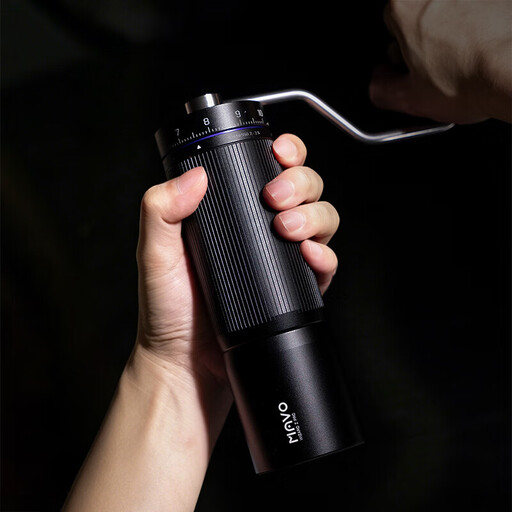
MAVO Wizard stainless steel hand coffee grinder, Obsidian Black
The product description lists settings up to cold brew; the dimensions can help you work out how much storage space you’ll need.
Dimensions are listed as 170.5 × 52 mm, or 175 mm long with the handle.
View at Joybuy
 No image available
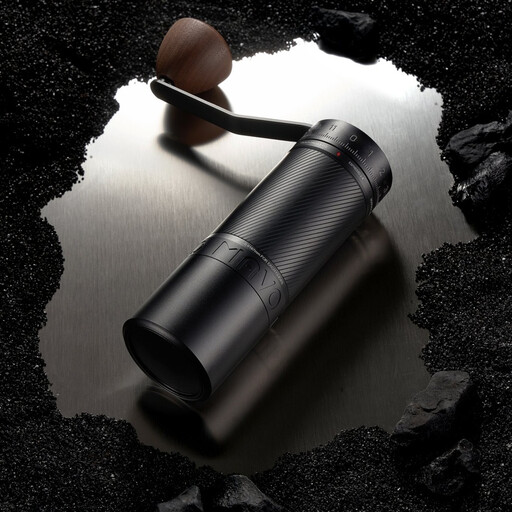
MAVO Phantom PRO stainless steel hand coffee grinder, Obsidian Black
The product description lists a grind range that includes cold brew; you’ll need to turn the handle to use it.
It has 120 clicks per rotation for adjusting the grind. Dimensions are 165 × 55 mm, or 170 mm long with the handle.
View at Joybuy
 No image available
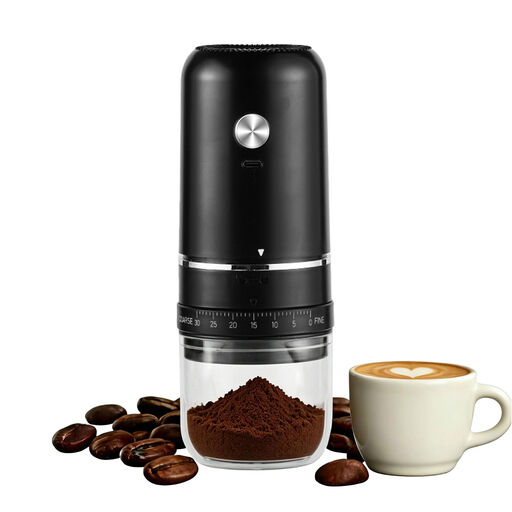
Electric coffee grinder with battery, 30 grind settings, USB-C
An electric option if you’d rather not turn a handle and don’t want to rely on a permanent mains connection.
The product title lists 30 settings and USB-C. The product description says not to clean the housing directly with water.
View at Joybuy
 No image available
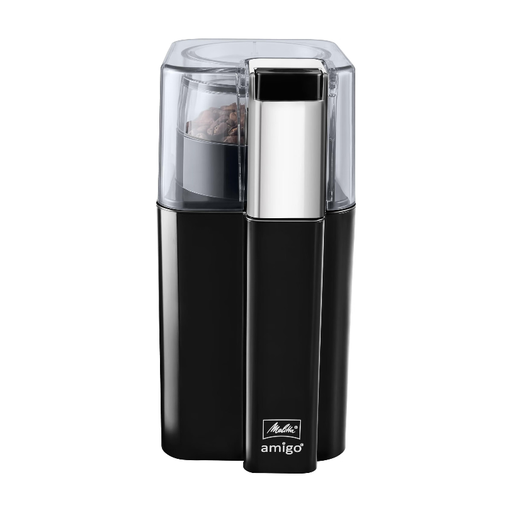
Melitta Amigo coffee grinder with stainless steel blade
This electric grinder is worth considering if you’re looking for a capacity of up to 60 g and want to adjust the grind by changing the grinding time.
The listed appliance dimensions are 10.7 × 9.2 × 19.5 cm.
View at Joybuy
Frequently asked questions about coffee grinders for cold brew
How coarse should I grind coffee for cold brew?
The German Coffee Association uses coarsely ground coffee in its cold-brew recipe. There’s no single grind setting number that applies across different grinders, so adjust your grinder to suit the recipe and filter you’re using.
How many beans do I need for a batch of cold brew?
The German Coffee Association’s example recipe uses 20–25 g of coarsely ground coffee for 250 ml of cold water. This is an example recipe, not a recommended dose for everyone, so compare your planned quantity with the capacity of the specific grinder.
How do I clean a hand grinder?
Follow the instructions for your model. For the 1Zpresso Q, the manufacturer recommends using a brush and blower, and advises against washing or soaking the grinder. This guidance applies to this model.
What are your rights if a product is faulty or you change your mind after buying it in Germany?
If a product is faulty, your statutory rights are against the seller and are separate from any voluntary guarantee. According to the consumer advice centre, online purchases generally come with a 14-day right to cancel; you must notify the seller that you wish to cancel.
Does an electric coffee grinder sold in the EU need a CE mark?
Whether a CE mark is required depends on which EU product rules apply to the specific appliance. The European Union describes CE marking as the manufacturer’s declaration of conformity, not an independent quality mark, so check the marking and manufacturer’s information for the model you’re considering.


