Coffee drinkers who need to keep beans separate
If you use both decaf and regular beans in the office, you’ll want to know which beans go into the grinder and whether any grounds are left behind.


If you need to keep decaf and regular beans strictly separate, a dedicated grinder used exclusively for decaf is the clearest choice; single dosing alone does not guarantee that no grounds are left behind. A hand grinder may suit you if you only need a few portions, while an electric grinder means less cranking if you grind frequently. Also check that the grind settings and cleaning routine suit your brewing method and office routine.
If you use both decaf and regular beans in the office, you’ll want to know which beans go into the grinder and whether any grounds are left behind.
If you’re grinding coffee near people’s desks, you’ll need to decide whether a manual grinder with no electric motor or the easier operation of an electric grinder better suits your routine. There is no substantiated ranking of these models by noise level.
When several people make coffee, consistent grind settings, suitable containers and a cleaning routine the team can stick to day to day all matter.
First, decide whether the grinder will be used exclusively for decaf or whether the team often switches between bean varieties. This will determine how important separate use, cleaning and container size are.
| Consideration | What to check before buying | Who it matters to |
|---|---|---|
| Keeping beans and grounds separate | Decide whether the grinder will be used only for decaf; check access to the grinding chamber and outlet, and make sure it can be clearly labelled. | If I use both types of beans in the office, I want to avoid any grounds ending up in the next portion. Around 33% of consumers put keeping beans and grounds separate first. |
| Consideration for nearby desks | Think about where and when the grinder will be used; don’t treat manufacturers’ claims about noise reduction as comparable measurements. | If I’m grinding within earshot of others, I want to consider the source of the noise and when it happens as part of the office routine. Around 27% of consumers prioritise consideration for nearby desks. |
| Grind size for your brewing method | Identify the brewing method you actually use and check that the specific model’s adjustment range is suitable. | If the team uses different brewing methods, I need settings that suit the method we already use. Around 20% of consumers focus primarily on getting the right grind size. |
| Portions and cleaning | Work out how many portions will be ground at a time and who is responsible for cleaning; don’t assume that a cup selector means the grinder has built-in scales. | If several people grind coffee one after another, I want to know how much the container holds and who will look after the grinder. Around 20% of consumers prioritise portion size and cleaning within the team. |
The manufacturer promotes a blow-out system to remove any grounds left behind. This does not prove that the next portion will be completely free of residue.
If keeping beans separate matters, decide whether the grinder will be used exclusively for decaf and label it clearly in the office.
A second grinder reserved for decaf takes up extra space; if it’s shared, you’ll also need to allow time for emptying and cleaning it.
Hoppers that hold several portions make it easier to grind the same beans repeatedly, but they make spontaneous switches less straightforward. Grounds may be left behind.
Before buying, decide whether the grinder will be assigned to one type of bean or regularly emptied and cleaned.
If you switch varieties often, you’ll need to empty and clean the bean hopper and grinder accordingly.
For the models described, a setting by cup or portion is not evidence of built-in scales.
If a specific weight of ground coffee matters, weigh each portion separately and check the features of the full model variant.
The Q is a compact hand grinder for smaller, separately measured portions.
The Mignon Zero is an electric single-dose grinder designed for frequent changes of beans.
According to GRAEF, the CM800 combines a conical burr grinder and bean hopper with settings for different brewing methods.
The Molino is an electric disc-burr grinder with a hopper and several grind settings.
The EKM 300 is an electric conical burr grinder with a hopper and settings for several portions.
This selection includes manual and electric coffee grinders that could work as a separate grinder for decaf beans. Single dosing or a cleaning system alone does not prove that all leftover grounds will be removed.
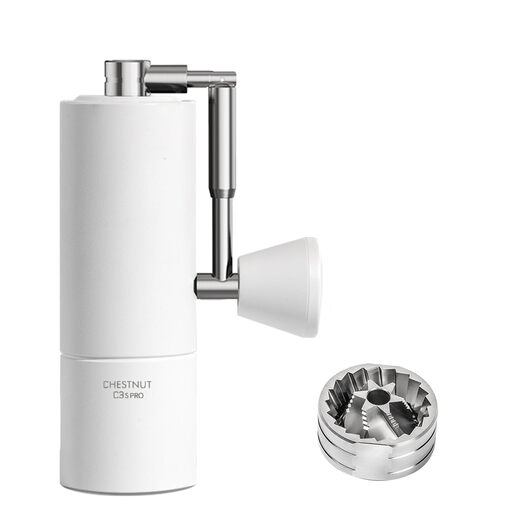 No image available
This manual grinder could suit a separately allocated portion of decaf; grinding requires manual cranking.
Conical S2C stainless-steel burrs, a foldable handle and adjustable grind size from espresso to French press.
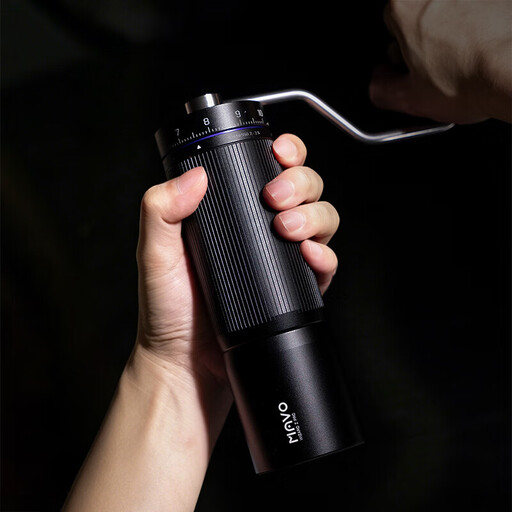 No image available
This manual grinder can be set aside for decaf use; it needs to be operated by hand.
Stainless-steel Volcano burrs and an adjustment ring with 100 settings per rotation; the stated grind range runs from espresso to cold brew.
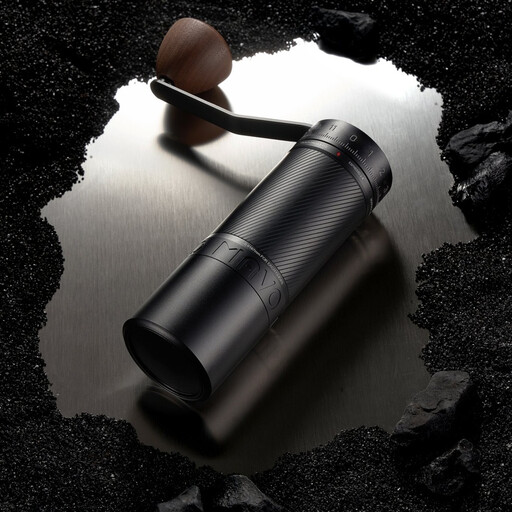 No image available
This manual model could be set aside as a dedicated decaf grinder; it needs to be cranked by hand.
Stainless-steel burrs and an adjustment dial with 120 clicks; the stated grind range runs from espresso to cold brew.
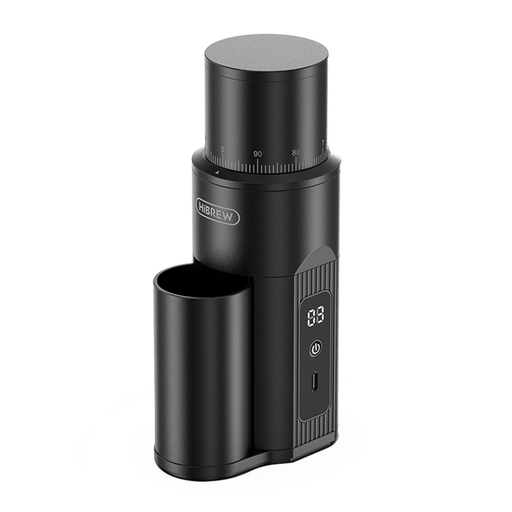 No image available
This electric grinder could be suitable for a dedicated decaf setup.
5200-mAh dual-battery system, 420 stainless-steel conical burrs and stepless grind adjustment with 100 settings.
 No image available
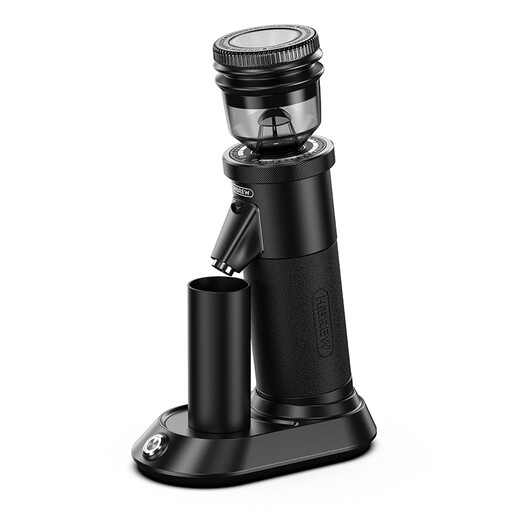
This electric coffee grinder could be set aside for decaf beans.
36 grind settings and a grounds ejection system; the product details specify slow and fast grinding speeds.
No. You’ll need a set routine for emptying and cleaning it. Melitta highlights coffee particles and oily residue; a system promoted by Eureka is designed to remove leftover grounds, but it does not prove that the next portion will be completely free of residue. If you need strict separation, using a grinder exclusively for decaf is the more cautious practical choice.
No. Germany’s Coffee Regulation allows raw and roasted coffee labelled as ‘decaffeinated’ to contain no more than one gram of caffeine per kilogram of dry coffee matter. This labelling rule applies to the coffee itself, not to any grounds that may be left in a shared grinder.
Follow the instructions for the specific model. For the Q series, 1Zpresso explicitly advises against washing or soaking the grinder to clean it; this instruction does not automatically apply to other models.
No. A cup or portion setting does not prove that the grinder has built-in scales. If a specific weight of ground coffee matters, weigh each portion separately and check the features of the particular model variant.
Check the power supply version and the safety information for the specific model. EUR-Lex explains the EU Low Voltage Directive 2014/35/EU, which applies to electrical equipment within certain voltage limits; a marking alone is not a performance test and does not replace checking that the appliance is suitable for your intended use.