Start by choosing a grinder that suits your brewing method. For espresso made with a portafilter, you’ll need a suitable, finely adjustable setting; pour-over calls for a different grind size. If you use the same grinder for regular and decaffeinated beans, make sure the burr chamber and outlet are easy to access as part of your cleaning routine. Baratza notes that grounds can be left behind in these areas, so no particular grinder or cleaning method can guarantee that your next serving will be caffeine-free.
Who might want a grinder for decaf?
Switching between decaf and regular beans
If you grind decaffeinated beans in the afternoon and regular beans at other times, bear in mind that Baratza says grounds can be left behind in the burr chamber and outlet. How easy these areas are to access is therefore an important factor when choosing a grinder.
Decaf for a portafilter
For espresso, you’ll need a grind setting that suits your brewing method. Baratza describes the Encore ESP as designed for espresso, but this is the manufacturer’s positioning, not an independent performance comparison.
Small servings, ground by hand or for filter coffee
If you usually make a small serving using a pour-over or similar method, weigh up the manual effort, the space it takes up and the capacity of the specific model. TIMEMORE lists a capacity of 20 g for the C3-ESP-Pro variant.
What should you look for when buying?
Start by deciding how you’ll brew your coffee. If you switch between beans, also check how easily you can access the burr chamber and outlet for cleaning.
| Priority |
What to look for |
Who is this important to? |
| Switching beans |
Baratza notes that grounds can be left behind in the burr chamber and outlet. Check how easy both areas are to access and what the recommended cleaning routine involves. |
If I use the same grinder for regular and decaffeinated beans, I want to be able to switch between them easily. Around 31% of consumers in this buying situation are likely to put switching beans first. |
| Espresso grind setting |
Compare the espresso setting specifically described for the model you’re considering with your brewing method. Baratza says grind size affects flow rate and extraction. |
If I make decaf in a portafilter, I want to be able to adjust the grind size precisely. Around 31% of consumers are likely to prioritise the espresso setting above all else. |
| Small serving |
Check the capacity and the smallest documented quantity setting. Melitta lists a selection of 2–14 cups for the Molino. |
If I’m making just one small afternoon cup, I want to be able to choose a suitable amount of beans and a convenient routine. Around 23% of consumers are likely to prioritise an easy single serving. |
| Cleaning |
Check the instructions for the specific model for guidance on brushes, removable parts and cleaning with water. Melitta says the Molino has removable parts; Baratza recommends maintaining the burr chamber and outlet on its grinders. |
If I want to look after my grinder regularly, I should know in advance what the instructions recommend. Around 15% of consumers are likely to consider ease of maintenance their top priority. |
Common buying misconceptions
-
Assuming “decaf” means completely caffeine-free
Under § 2 KaffeeV, green and roasted coffee may be labelled commercially as “decaffeinated” if the caffeine content is no more than 1 g per kg of dry coffee matter. In addition, as Baratza explains, grounds from the previous beans may remain in a grinder used for both types.
Keep the labelling of the beans separate from the question of residue left behind during grinding. The term alone does not mean the coffee contains no caffeine.
-
Looking only at the bean hopper when making a single cup
For the Melitta Molino, the manufacturer lists a bean hopper that holds up to 200 g and a quantity setting of 2–14 cups. A large hopper therefore doesn’t tell you whether the preset makes it easy to measure out the small serving you want.
Check the smallest documented serving size and consider how you’ll measure out the beans for the amount you actually need.
Depending on how you measure out your coffee, you may have extra work if you need to weigh the beans or take them back out of the hopper.
-
Choosing a grinder for espresso based only on its total number of grind settings
A high number of settings doesn’t, by itself, prove that a particular model can be adjusted to the espresso grind size you need. Baratza describes the Encore ESP as designed for espresso; assess the suitability of other models based on their own specifications.
Compare the espresso adjustment specifically documented for the exact model with your brewing method, and bear in mind that you may need to change the setting when switching beans.
Brands to consider
Baratza
Baratza describes the Encore ESP as a model for espresso and explains how to switch between grind settings.
- The manufacturer’s guidance covers adjusting the grind size and dealing with grounds left in the grinding area.
- It doesn’t prove that switching beans leaves no residue or that the grinder has any special effect on decaf.
TIMEMORE
For the C3-ESP-Pro hand grinder, TIMEMORE lists a capacity of 20 g and a finer espresso adjustment than the classic C3 adjustment variants.
- The model specifications help you check the capacity and settings for a small serving.
- You’ll need to turn the handle to grind, and specifications for one C3 variant don’t automatically apply to other TIMEMORE models.
Melitta
For the electric Molino, Melitta lists 17 grind settings, a bean hopper that holds up to 200 g and a quantity setting of 2–14 cups.
- The manufacturer says it has removable parts for cleaning.
- The quantity setting starts at 2 cups, with no preset for a single cup.
GRAEF
GRAEF lists 40 grind settings for the CM800, with applications ranging from espresso to French press.
- The manufacturer describes an upper burr that can be removed and finely adjusted.
- These manufacturer specifications don’t prove that no grounds are left behind when you switch beans.
Grønenberg
Grønenberg describes its manual stainless steel coffee grinder as having stepless grind adjustment and a capacity of 35 g.
- It’s an option if you want to grind without using an electric motor.
- The manufacturer says it isn’t dishwasher-safe; check the capacity for the specific variant you’re considering.
Coffee grinders at Joybuy
The following selection at Joybuy includes manual and electric coffee grinders. Check the grind settings for the specific model and consider whether a hand-operated, electric or battery-powered grinder best suits your routine.
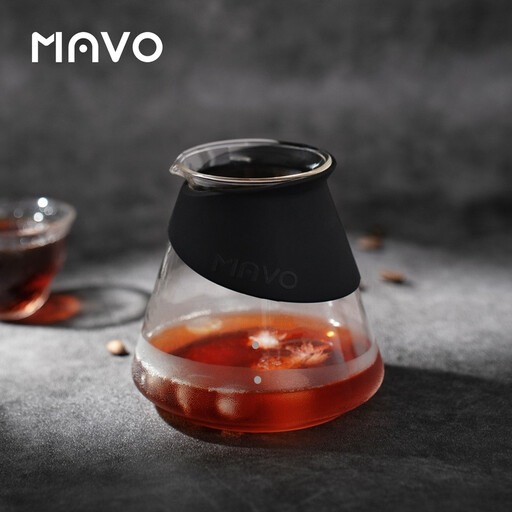 No image available
MAVO Wizard Manual Coffee Grinder, Obsidian Black
This manual grinder could suit you if you prefer to grind by hand; turning the handle is part of the routine.
View at Joybuy
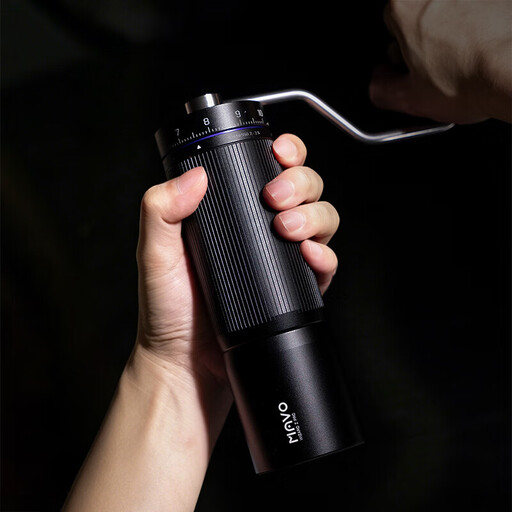 No image available
MAVO Wizard Manual Coffee Grinder, Obsidian Black
This manual version suits a routine where you’re happy to turn the handle yourself; check that this step works for your afternoon serving.
View at Joybuy
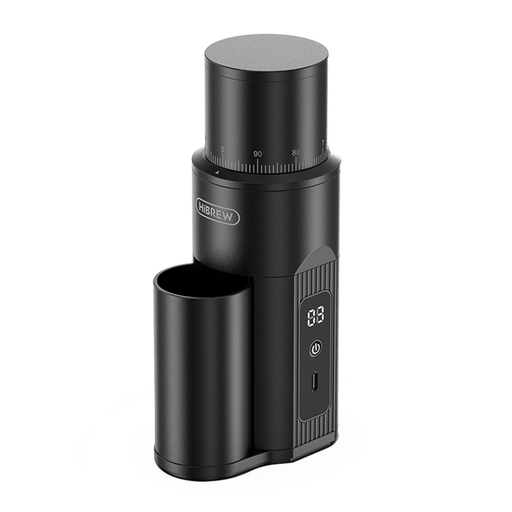 No image available
HiBREW G5MINI coffee grinder, 5200 mAh dual battery system, 100-level continuous grind adjustment
This model could suit you if you’d rather not grind by hand and want to adjust the grind size; check that the settings listed suit your brewing method.
The product name lists a 5200 mAh dual battery system, 100-level stepless grind adjustment, a 420 stainless steel conical burr and an aluminium alloy body.
View at Joybuy
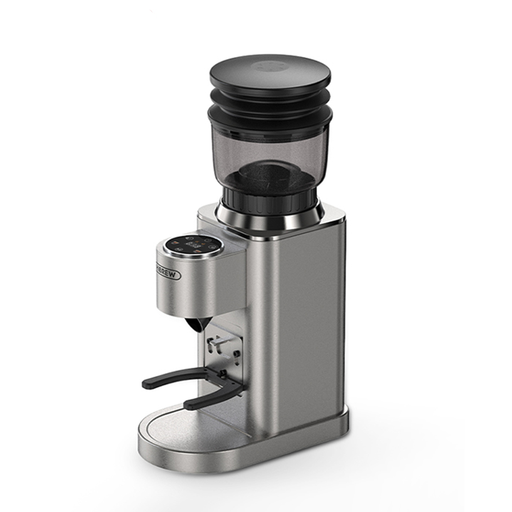 No image available
HiBREW G7 coffee grinder, touchscreen, 48 grind settings, silver
The product name mentions a portafilter holder, making this model worth considering for espresso if its settings suit your needs.
The product name lists 48 grind settings, a stainless steel conical burr and a portafilter holder.
View at Joybuy
 No image available
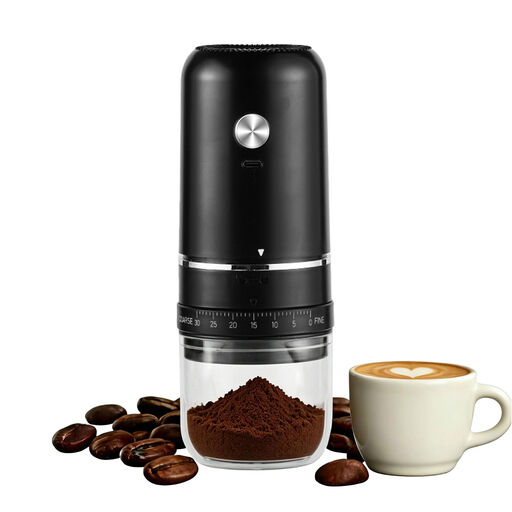
Battery-powered electric coffee grinder, 30 grind settings, USB-C, black
This electric model could suit you if you’d rather not turn a handle by hand; check that the settings work for your brewing method.
The product name lists 30 adjustable grind settings and USB-C charging.
View at Joybuy
Frequently asked questions
Do I need a separate grinder for decaf?
Not for everyone. In a grinder shared between different beans, grounds from the previous batch can remain in the burr chamber and outlet. If keeping the two types as separate as possible matters to you, factor this into your choice of grinder; purging or brushing it out can’t guarantee that your next serving will be caffeine-free.
How should I clean my grinder after an afternoon break?
Follow the instructions for your specific model. Baratza recommends brushing out the burr chamber and outlet and carrying out regular maintenance on its grinders. For the C40, Comandante advises brushing out the burr set and the inside of the grinder, and says not to soak it or put it in the dishwasher. These manufacturer recommendations don’t automatically apply to other models.
What should I know about buying a grinder and dealing with a fault in Germany?
Your statutory rights against the seller are separate from any voluntary manufacturer’s guarantee. The Verbraucherzentrale recommends keeping the two distinct: check who the seller is and what guarantee terms apply to the specific offer. A voluntary guarantee doesn’t replace your statutory rights if the product is faulty.
Are there specific labelling rules for decaf beans or electric grinders?
For the commercial labelling of green and roasted coffee, § 2 KaffeeV allows the term “decaffeinated” when the coffee contains no more than 1 g of caffeine per kg of dry coffee matter; the term therefore doesn’t mean zero caffeine. For electrical appliances, whether CE marking is required depends on the relevant EU rules. The EU’s guidance on CE marking explains that it is only required when harmonised rules apply to the product. This does not confirm that any specific model complies.


