For a French press, first check whether the specific grinder offers a coarse grind setting for this brewing method. Forbrugerrådet Tænk recommends a coarse grind for French press coffee, but the number of grind settings alone doesn’t tell you how consistently a grinder performs. A hand grinder is better suited to smaller portions if you don’t mind turning the handle; an electric model saves you the effort but needs space and electricity. Compare the capacity and ease of cleaning of the specific model, and check the labelling, manufacturer’s information and safety instructions for mains-powered appliances.
Which grinder suits you
A coarse grind for French press coffee
If a coarse grind is your priority, look for a grinder that’s suitable for French press coffee rather than focusing solely on the number of settings. Forbrugerrådet Tænk recommends a coarse grind for French press coffee; Melitta and GRAEF list French press settings for specific models.
A quick coffee break
If you grind coffee regularly or for several cups, compare the amount you need with the capacity and controls of the specific model. Melitta and GRAEF describe electric grinders with adjustable grind settings.
A small portion, ground by hand
If you usually grind small amounts and don’t need a power socket where you grind, a hand grinder could suit you – as long as turning the handle fits into your routine. TIMEMORE and Comandante offer hand grinder models with features that vary by model.
What to consider when buying
Hand grinder
A good fit if: you usually grind a smaller portion, don’t need a power socket nearby and don’t mind turning the handle.
The trade-off: You’ll need to grind by hand, and capacity and adjustment range vary by model.
Electric grinder
A good fit if: you grind regularly or for several people and prefer not to turn a handle.
The trade-off: You’ll need electricity and worktop space. Check the noise level and ease of cleaning for the specific model.
| Buying priority |
What to check before buying |
Who it matters most to |
| Coarse grind range |
Forbrugerrådet Tænk recommends a coarse grind for French press coffee. Check whether the manufacturer lists a French press setting for the specific model; Melitta specifies settings 13–17 for the Molino. |
If I’m grinding coffee for a French press, I want a suitable coarse setting rather than as many settings as possible. Around 36% of consumers put a coarse grind range first. |
| Grinding several cups with ease |
Compare the amount you need with the capacity and quantity setting. Melitta offers a choice of 2 to 14 cups; this doesn’t correspond to a standard weight in grams per cup. |
If I’m grinding for several cups, I want to know how much effort each batch will take and how much coffee it will produce. Around 29% of consumers prioritise the convenience of grinding for several cups. |
| A small portion without a power socket |
Check the capacity and exact model variant. TIMEMORE lists 20 g for the C3S Pro, while a Joybuy listing for this variant gives a capacity of 25 g. |
If I usually grind a small portion and don’t need a power socket, I can weigh up grinding by hand against the capacity. Around 21% of consumers particularly prefer making a small portion with a hand grinder. |
| Easy to clean |
Read the instructions for the specific model: GRAEF says the CM800 has a removable upper burr, while Comandante advises against soaking the C40 or putting it in the dishwasher. |
If I want to remove any leftover grounds easily after grinding, access for cleaning matters. Around 14% of consumers put easy cleaning first. |
French press grinder buying pitfalls
-
Assuming more grind settings mean a better coarse grind for French press coffee
The number of settings doesn’t show how consistently a grinder performs at a coarse setting. Forbrugerrådet Tænk recommends a coarse grind for French press coffee.
Check whether the manufacturer lists a coarse setting for the specific model and, if available, look for a model-specific test of the ground coffee.
-
Assuming a capacity figure applies to every version of a hand grinder
The manufacturer’s overview lists a capacity of 20 g for the TIMEMORE Chestnut C3S Pro, while a Joybuy listing gives 25 g. This difference could affect your routine if you’re making a larger pot.
Before buying, check the exact model variant and confirm which capacity applies to the product on offer.
If the portion is too small, you may need to grind another batch.
-
Confusing a discontinued Skerton Pro with a current version
HARIO Europe describes the Skerton Pro as discontinued and points to a newer version. You can’t necessarily assume that the model name and features carry over.
Compare the full model name with the manufacturer’s information for the version on offer.
-
Assuming the CE mark or an additional warranty offers complete protection
According to the European Commission, for products covered by the rules, the CE mark is a declaration by the manufacturer – not an approval issued by a central EU body. When you buy from a trader as a consumer, you also have statutory rights against the seller; a voluntary guarantee doesn’t replace them.
For a mains-powered appliance, check the labelling, manufacturer’s information and safety and usage instructions. If there’s a fault, contact the seller about your statutory rights.
Key brands at a glance
Melitta
The electric Molino is worth considering if you use a French press and want adjustable quantities and a coarse setting specified by the manufacturer.
- Melitta says the Molino has a disc grinder, 17 settings and a quantity selector for 2 to 14 cups. For French press coffee, the manufacturer recommends settings 13–17.
- The cup selector doesn’t specify a standard weight in grams per cup, nor does it confirm a particular level of grind consistency.
GRAEF
The electric CM800 is an option if you want to use the grinder for other brewing methods as well as French press coffee.
- GRAEF lists a stainless steel conical burr grinder, 40 settings and a removable upper burr.
- The manufacturer’s claim that it’s suitable for French press coffee isn’t a substitute for an independent comparison of its coarse grind.
TIMEMORE
The manual Chestnut C3S range is worth considering for small portions and places without a power socket.
- The manufacturer’s overview lists a 20 g capacity for the C3S Pro variant and a grind range that includes French press.
- A different capacity of 25 g is also listed for the version on offer. Check the exact variant and its capacity before buying.
Comandante
The C40 Mk4 Black is a manual option if you value detailed information about the specific variant and don’t mind turning the handle.
- Comandante lists a Nitro Blade grinder and two included grounds jars, each with a 40 g capacity.
- The manufacturer advises against soaking the C40 or cleaning it in the dishwasher. Information about grind quality isn’t the same as independent comparative testing.
HARIO
With HARIO, it’s important to check the exact Skerton version, as you shouldn’t assume that model names and availability are the same.
- HARIO Europe points to a newer version of the Skerton Pro.
- HARIO Europe describes the Skerton Pro as discontinued; this doesn’t automatically apply to other Skerton models.
Joybuy products for French press coffee
These Joybuy options cover manual and electric grinding for French press coffee.
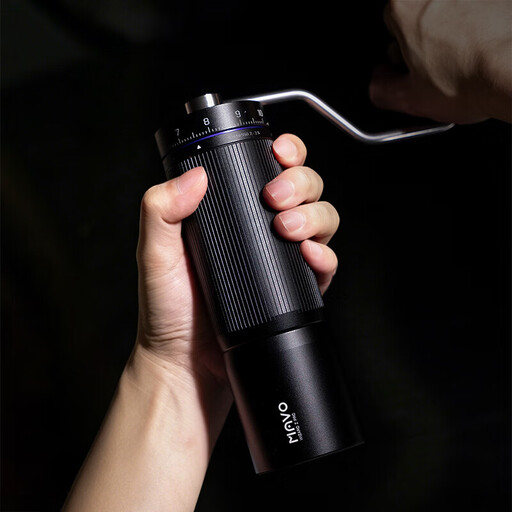 Image unavailable
MAVO Wizard Manual Coffee Grinder, Stainless Steel, Obsidian Black
This manual grinder is a good fit if you’re happy to turn the handle yourself and don’t want an electric grinder.
View at Joybuy
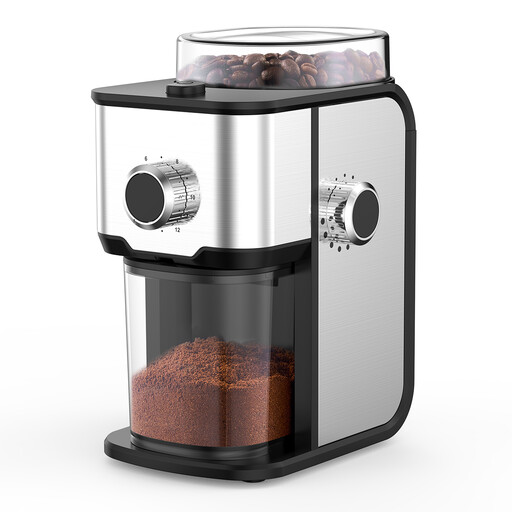 Image unavailable
Ollygrin BG705 Electric Flat Burr Coffee Grinder
The product information lists French press as a suitable brewing method and describes an electric grinder with flat burrs.
14 grind settings; quantity selector for 2–12 cups.
View at Joybuy
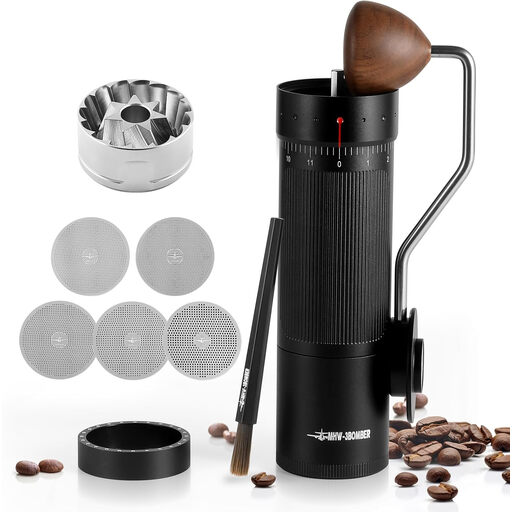 Image unavailable
MHW-3BOMBER R3 Manual Coffee Grinder, G5847B-OS
The product information lists French press as a suitable brewing method; this model is operated manually.
The title lists five sieves, and the grounds cup has a stated capacity of around 20 g. The product description recommends using a brush for cleaning and advises against getting water directly on the burrs.
View at Joybuy
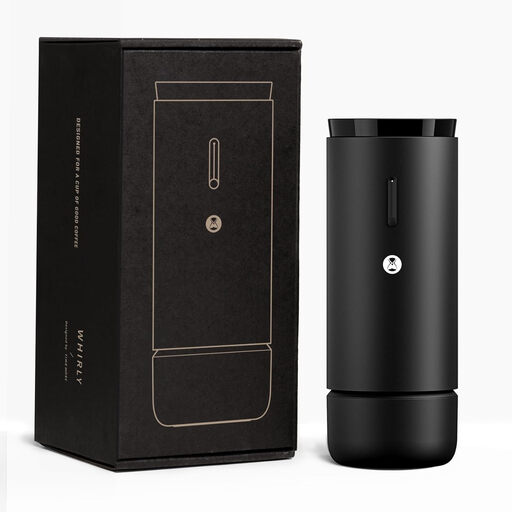 Image unavailable
TIMEMORE Whirly Burr Coffee Grinder, Portable Electric, Black
The product information lists French press in the grind range; this electric model is designed for anyone who’d rather not turn a handle.
The instructions warn against grinding more than 13 batches in a row due to the risk of overheating.
View at Joybuy
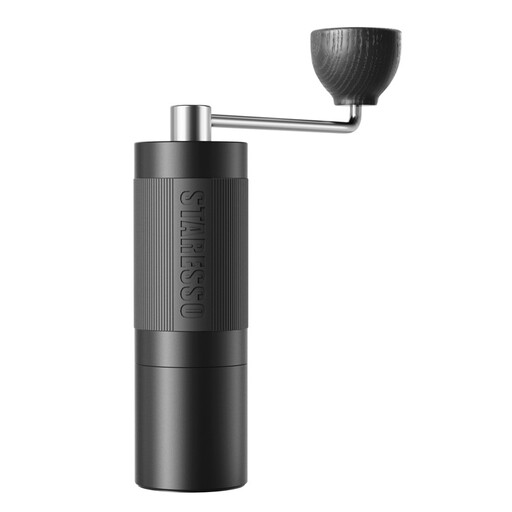 Image unavailable
STARESSO D6 PLUS Manual Coffee Grinder, 20 g
The product information lists French press as a suitable brewing method; the grinder is designed for manual use.
20 g capacity; stainless steel conical burr grinder and internal grind adjustment, according to the product name.
View at Joybuy
Frequently asked questions about coffee grinders for French press
What’s a good starting setting for my French press?
Start with the coarse setting recommended in your grinder’s instructions for French press coffee, then adjust to suit your beans and brewing method. The manufacturer only specifies settings 13–17 for the Melitta Molino; these settings don’t apply to other grinders.
Can I rinse the burrs with water after every coffee break?
Not necessarily: Comandante advises against soaking the C40 or putting it in the dishwasher, and recommends brushing the burrs clean. Check the instructions for other models; unplug an electric grinder before working on the grinding chamber or outlet.
What are my rights if I buy a faulty appliance from a retailer?
For consumer purchases from a trader in the EU, you’re generally entitled to at least a two-year legal guarantee from the date you receive the goods, as explained by the European Commission on Your Europe. An additional manufacturer’s guarantee doesn’t replace your rights against the seller.
What should I check when buying an electric coffee grinder in Germany?
For the specific appliance, check the labelling, the manufacturer’s information and clear safety and usage instructions. For products covered by the rules, the CE mark is a declaration by the manufacturer, not an approval from a central EU body; the European Commission and the German Federal Network Agency list labelling and product identity as relevant checks.


