Those who measure out breakfast portions
If you grind small amounts every day, portion settings can be handy. Rommelsbacher, De’Longhi and Melitta offer different options, from cup or portion settings to weight-based dosing.


If you want to grind several portions in the morning without having to turn a handle, look for an electric burr grinder with portion settings to suit your needs and a grind range that works for your brewing method. A hand grinder may suit single portions, provided its capacity and the extra effort involved fit your breakfast routine. A cup setting is not the same as weighing out a dose.
If you grind small amounts every day, portion settings can be handy. Rommelsbacher, De’Longhi and Melitta offer different options, from cup or portion settings to weight-based dosing.
If you make several coffees in a row in the morning, it’s worth considering whether you want to keep grinding by hand as well as how you’ll measure out each dose. Rommelsbacher specifies quantity settings for up to twelve portions, while 1Zpresso gives the J hand grinder a ground coffee capacity of 30–35 g.
If you make filter coffee and espresso, for example, check that the grind range of the specific model suits both methods. Melitta and Graef specify different adjustment options and brewing methods.
For small breakfast quantities, first decide how you want to measure out your coffee. Then consider the workflow, grind size and day-to-day cleaning.
| What matters | What to look for when buying | Who is this important to? |
|---|---|---|
| Measuring out small quantities | Check whether the model doses by cup, portion or weight. | If I want a small, consistent amount, the dosing method is key. Around 33 % of consumers may consider suitable dosing their main priority. |
| Grinding quickly in the morning | Compare the total amount you need with the capacity and portion settings of the specific model. | If I’m making several cups in a row, I don’t want to have to turn the handle again for every portion. Around 27 % of consumers may prioritise a quick breakfast routine. |
| The right grind size | Check the brewing methods specified by the manufacturer and the settings available for your coffee maker. | If I use different brewing methods, I need to be able to adjust the grind size to suit them. Around 20 % of consumers may see grind size as their most important buying consideration. |
| Cleaning and ease of use | Check the manual to see which parts can be removed and whether spare parts are available for the exact model. | If I use my grinder every day, I want to know how to clean the accessible parts and whether suitable spare parts are available. Around 20 % of consumers may prioritise maintenance and long-term usability. |
A cup or portion setting doesn’t automatically measure out a dose by weight. The amount dispensed may matter if you want a specific portion size.
If you need a precise amount of ground coffee, check whether the model has a weight-based programme or weigh the output yourself.
For the 1Zpresso J, the manufacturer specifies a ground coffee capacity of 30–35 g. Whether that’s enough for your household depends on how much you grind in the morning.
Compare your needs for each breakfast with the capacity of the specific model. Bear in mind that making several batches may mean refilling the grinder and turning the handle again.
The number of settings alone doesn’t prove that the grind size will suit your brewing method. Manufacturers also specify different adjustment ranges and uses.
Check which brewing methods are specifically listed. For espresso, also check how finely you can adjust the grinder.
The EKM 400 is an electric grinder for pre-selected quantities, from small to several portions, and for various brewing methods specified by the manufacturer.
The Calibra is designed for households that want to choose between cup settings, weight-based dosing and manual grinding.
The KG79 is an electric burr grinder with cup settings, suited to households that are happy with this way of measuring out portions.
According to the manufacturer, the CM800 offers grind settings for different brewing methods and lets you grind directly into a portafilter.
The J hand grinder is an option for individual portions ground by hand, with a focus on pour-over coffee.
This selection includes manual burr grinders for small amounts of freshly ground coffee, as well as an electric grinder with cup settings.
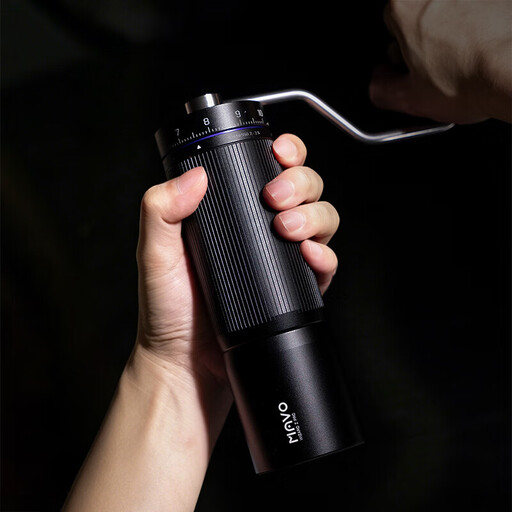 No image available
For small amounts of freshly ground coffee when you want to do the grinding by hand.
The grounds container is specified as holding 20 g. The grind settings can be adjusted externally; the specifications list 100 clicks per rotation and a 43-mm stainless steel burr set.
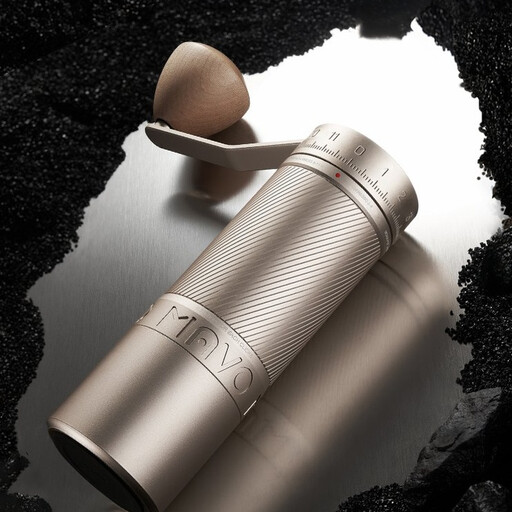 No image available
A manual option if you want to adjust the grind size for different brewing methods.
The product description lists settings from espresso to cold brew, 120 clicks and a 45-mm stainless steel burr set.
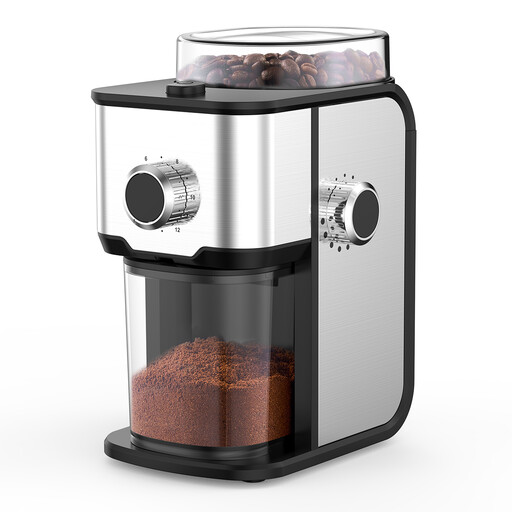 No image available
For several cups at the breakfast table, if cup-based portion settings suit your needs.
The product details list 14 grind settings and a choice of 2 to 12 cups. This does not confirm weight-based dosing.
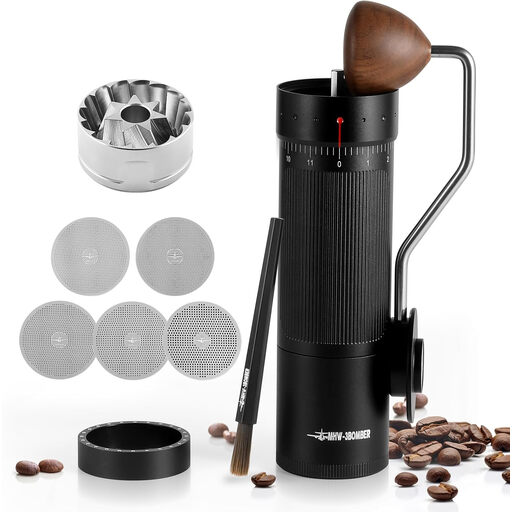 No image available
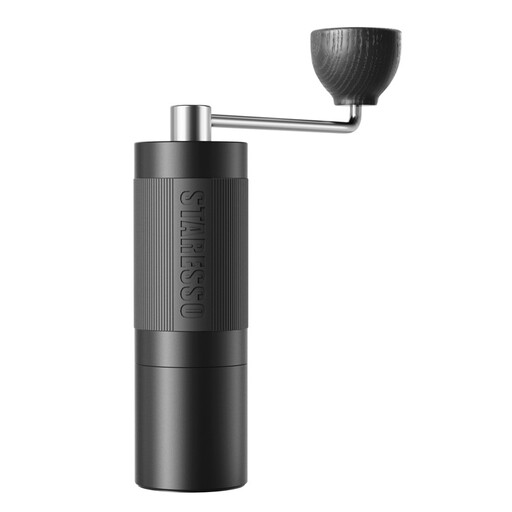
A hand grinder for small amounts of coffee if you want to grind it yourself and adjust the grind size to suit your brewing method.
The grounds container is specified as holding 20 g. The description lists an external adjustment dial with 60 clicks per rotation, and grind settings for espresso, filter coffee and French press.
 No image available
For a small portion if you’re looking for a manual grinder with adjustable grind settings.
The capacity is specified as 20 g. The description lists click-based adjustment and grind settings from espresso to French press.
No. A cup setting doesn’t provide weight-based dosing. According to the manufacturer, the De’LongHi KG79 offers cup settings, while Melitta specifies a weight-based programme for the Calibra. Decide which dosing method you need before buying.
Follow the instructions for the specific model. Unplug the appliance before cleaning or taking it apart if the manual says to do so. The Graef manual requires the grinder to be unplugged; according to the manufacturer, the upper burr on the De’Longhi KG79 can be removed for cleaning.
For goods bought in the EU, you’re generally entitled to at least two years of legal protection from the date you receive them. This is separate from a voluntary manufacturer’s guarantee. The seller is responsible for dealing with claims under your legal rights.
Relevant EU rules require electrical and electronic appliances to carry a CE marking. It is the manufacturer’s declaration of conformity, not approval from a central EU testing body. A purely mechanical hand grinder cannot automatically be assumed to have the same CE requirements just because it belongs to the same product category.
When you buy online from a trader, you generally have a 14-day right to cancel, according to consumer information from the European Union. Exceptions and the terms of the specific contract apply.