What should you look for when buying?
First decide on your brewing method and how much coffee you need. If you switch beans, factor in how you’ll clean the grinding chamber and outlet too.
Hand grinder for small portions
A good fit if: you only grind occasionally, don’t need an electric grinder and are happy to turn the handle.
Bear in mind: Filling it repeatedly and grinding by hand can become a chore when you have several guests.
Electric single-dose grinder
A good fit if: you switch beans regularly and want to measure out each portion before grinding.
Bear in mind: A low-retention claim doesn’t guarantee that the next portion will be free of coffee residue. You’ll also need counter space and a power supply.
Electric grinder with hopper
A good fit if: you make several cups in a row and want to dose without turning a handle.
Bear in mind: A removable hopper doesn’t automatically clear residue from the burrs and outlet.
| What matters |
What to check before buying |
Who it matters most to |
| Switching beans and leftover grounds |
Check how to access and clean the grinding chamber and outlet on the specific model. Baratza describes how to clean both areas; Eureka mentions a blow-out hopper, but this doesn’t guarantee that the next portion will be residue-free. |
If you switch from caffeinated to decaf beans, you’ll also want to account for possible residue in the grinder. Around 33% of consumers put switching beans first. |
| Grind size for your brewing method |
Decide whether you’ll be making filter coffee or espresso, then check the settings on the specific model. According to 1Zpresso, the Q Air is designed for pour-over. |
If you want to stick with your usual filter or espresso method when guests visit, the grinder should be suitable for it. Around 27% of consumers prioritise their brewing method. |
| Several portions |
Compare the amount you need to grind with the container size and dosing options. Melitta’s German website lists weight-based dosing and a bean hopper that holds up to 375 g for the Calibra. |
If you’re making several cups in a row, you’ll want to limit the effort involved in grinding and refilling. Around 20% of consumers prioritise the process for making several portions. |
| Small amounts and storage |
Check the capacity, access for cleaning and the brewing methods specified by the manufacturer. Comandante lists two collection jars for the C40 Mk4, each with a 40 g capacity; 1Zpresso gives the Q Air a ground coffee capacity of 15–20 g. |
If you only grind small amounts occasionally, a compact grinder that’s easy to put away may matter more than a large hopper. Around 20% of consumers prioritise small amounts and occasional use. |
Coffee grinders at Joybuy
The selection includes manual coffee grinders and an electric grinder with specifications for making several cups. Which one is right for you depends, among other things, on your brewing method, portion size and whether you’re happy to grind by hand.
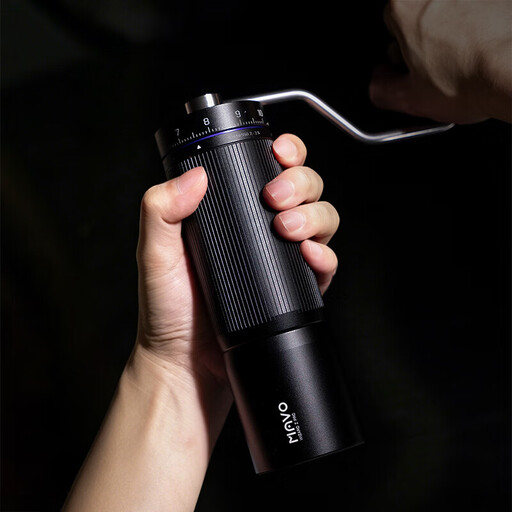 Image unavailable
MAVO Wizard manual coffee grinder, Obsidian Black
A manual grinder for anyone who prefers not to use an electric grinder.
Described as a coffee grinder with stainless steel burrs.
View at Joybuy
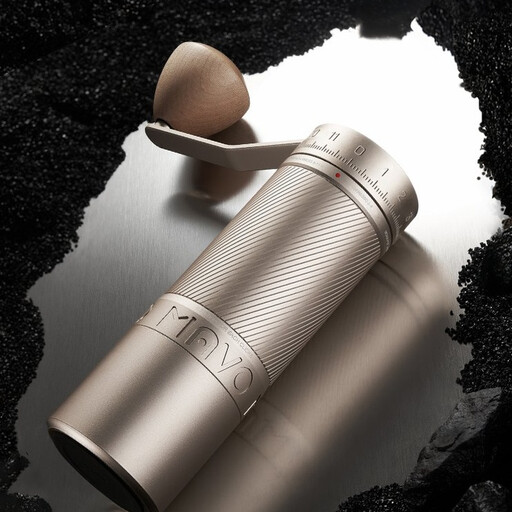 Image unavailable
MAVO Phantom PRO manual coffee grinder, Starlight Silver
A manual grinder for anyone who wants to grind their coffee by hand.
Described as a coffee grinder with stainless steel burrs.
View at Joybuy
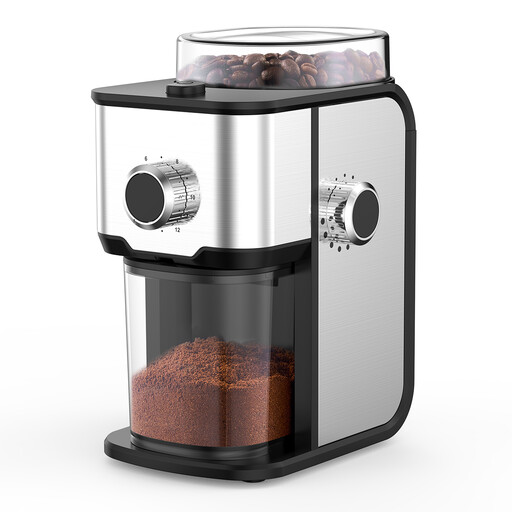 Image unavailable
Ollygrin BG705 electric coffee grinder with flat burrs
An electric option if you want to grind for several cups without turning a handle.
The product name lists 14 grind settings and a capacity for 2–12 cups.
View at Joybuy
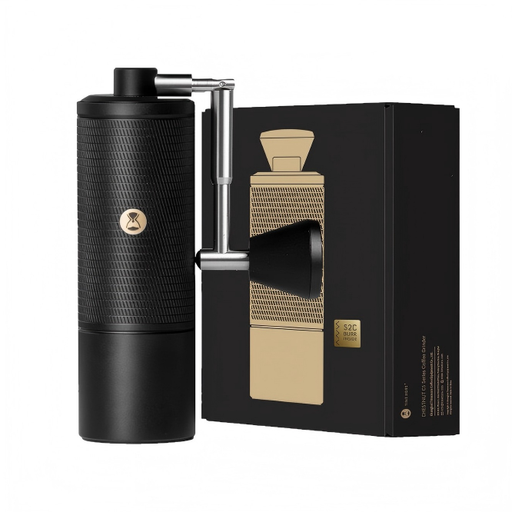 Image unavailable
TIMEMORE C5 Pro manual coffee grinder
A manual coffee grinder for anyone who would rather not use an electric grinder.
View at Joybuy
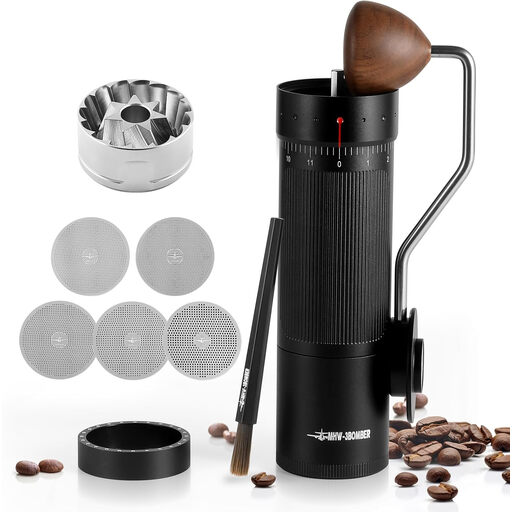 Image unavailable
MHW-3BOMBER R3 manual coffee grinder, G5847B-OS
A manual grinder for smaller amounts if you want to grind your coffee by hand.
The product name lists a conical stainless steel burr set.
View at Joybuy
Frequently asked questions
Does a single-dose grinder automatically make the next decaf portion free of caffeinated coffee?
No, you can’t assume that just because it has a single-dose container. If you’ve previously ground different beans, clean the grinding chamber and outlet according to the manufacturer’s instructions too. If caffeine avoidance is particularly important, neither a low-retention claim nor simply brushing out the grinder is a guarantee.
How do I clean a Comandante C40 after switching beans?
Comandante recommends brushing out the burrs and interior. According to the manufacturer, the C40 shouldn’t be soaked or cleaned in a dishwasher.
Is decaf coffee completely caffeine-free in Germany?
No. For roasted coffee sold commercially, German coffee regulations allow it to be labelled ‘decaffeinated’ if it contains no more than 1 g of caffeine per 1 kg of dry coffee matter. This is a labelling requirement for the coffee, not a feature of the grinder or a guarantee about an individual cup. The Bavarian State Office for Health and Food Safety also explains this limit.
What should I look for in an electric coffee grinder for use in Germany?
Check the specifications and labelling for the specific appliance, and make sure its electrical design is suitable for your needs. According to information from the European Union, CE marking is only required for products covered by specific EU rules that explicitly call for it; it isn’t an independent quality mark.
Who should I contact if the grinder I bought is faulty?
The seller is responsible for your statutory consumer rights; a voluntary manufacturer’s guarantee is separate. The German consumer advice centre lists repair and replacement as possible remedies.


