For hosts making individual cups
You occasionally grind a small amount of beans fresh and don’t want to fill a large hopper every time you have guests.


For a single small serving, a hand grinder with a suitable capacity is a natural place to start. If you’re making coffee for several guests, an electric grinder can reduce the effort involved. According to the manufacturer, the 1Zpresso Q is designed for 15–20 g of coffee grounds, while Rommelsbacher describes 15 g as a rather unsuitable single dose for the EKM 200. So check the actual quantity of beans you need and the appropriate grind size. A cup selector alone doesn’t prove that a grinder is suitable for very small servings.
You occasionally grind a small amount of beans fresh and don’t want to fill a large hopper every time you have guests.
You make several servings in a row when you have guests and want to keep the effort involved in each grind to a minimum.
For example, you serve filter coffee and espresso, so you need suitable grind settings that are easy to find again.
For small groups, the main differences between a hand grinder, an electric burr grinder and a blade grinder are capacity, ease of use and grind settings.
A good fit if: You usually grind one small serving at a time, have limited worktop space and don’t mind turning a handle.
The trade-off: Capacity varies by model; you may need several batches for a larger group of guests.
A good fit if: You often make several servings and want to choose a grind setting to suit your brewing method.
The trade-off: According to the manufacturer, the Melitta Molino’s cup selector covers 2 to 14 cups, but doesn’t specify a minimum quantity in grams. Rommelsbacher considers 15 g a rather unsuitable single dose for the EKM 200.
A good fit if: Being able to grind a small amount of beans matters more to you than selecting a repeatable setting on the grinder.
The trade-off: According to the manufacturer, the grind size on the Rommelsbacher EKM 100 is controlled by grinding time. If you need precise settings for espresso, check the results for yourself.
| Priority | What to look for when buying | Who it matters most to |
|---|---|---|
| Small single doses | Check the capacity of the specific model and whether it can dispense small quantities. | If I weigh out a small amount of beans, I want as little coffee as possible left in the grinder. Consumers who prioritise single doses make up around 36%. |
| Several guests | Compare the total quantity with the capacity per batch, and consider whether you’ll be using a handle or a quantity selector. | If several cups are needed in a row, I want to keep the process manageable for each serving. Consumers who focus mainly on the number of guests make up around 29%. |
| Grind size and brewing method | Check the brewing method you need and how the specific model’s settings work. | If I switch between filter coffee and espresso, I want to be able to find the right settings again reliably. Consumers who prioritise changing the grind size make up around 21%. |
| Space and cleaning | Check how the grinder can be stored, how to access the burrs and what the model’s cleaning instructions say. | If I only use the grinder occasionally, I want it to be easy to store and clean properly after grinding. Consumers who prioritise space and maintenance make up around 14%. |
A cup scale doesn’t automatically tell you the right quantity of beans in grams. Rommelsbacher describes 15 g as a rather unsuitable single dose for the EKM 200.
If you weigh out your beans individually, check how much the specific model dispenses rather than relying on the cup scale alone.
According to the manufacturer, the 1Zpresso Q holds 15–20 g of coffee grounds. You’ll need additional batches to grind a larger quantity.
Estimate the total quantity of beans you need before buying and compare it with the grinder’s capacity per batch.
Extra batches take longer and mean more manual work.
According to the manufacturer, the grind size on the Rommelsbacher EKM 100 depends on grinding time, while the Melitta Molino offers selectable grind settings.
Choose according to your brewing method and how important it is to you to be able to find the same setting again.
The Q hand grinder is an option for small servings ground one after another.
The manual stainless steel GR01 combines compact storage with an adjustable ceramic burr grinder.
The electric Molino has a cup selector for buyers who want to make several servings.
The EKM 100 blade grinder and the EKM 200 disc burr grinder use different approaches to adjusting the grind.
According to the manufacturer, the electric CM800 offers several grind settings and a portafilter contact function.
This selection includes manual and electric coffee grinders. Some models specifically state that they’re suitable for small servings or offer a cup selector.
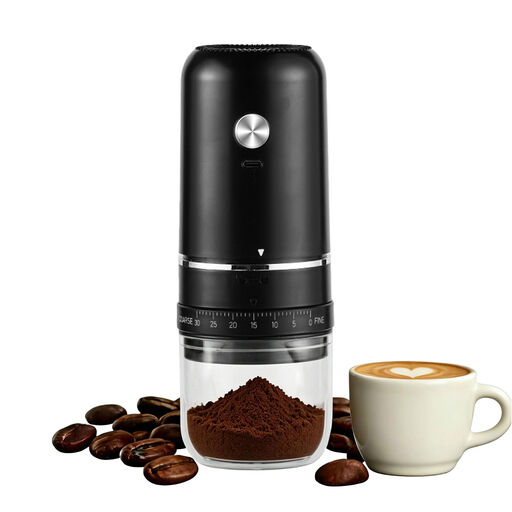 No product image available
For buyers who want to choose between different grind settings and grind without a plug socket.
30 settings; ceramic grinding core; detachable design and reverse-cleaning function. According to the description, the casing isn’t washable.
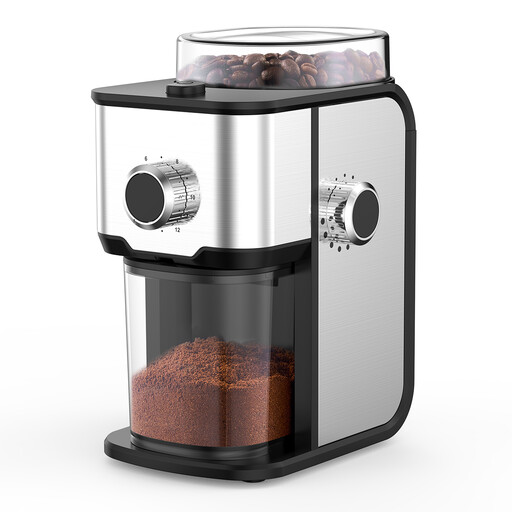 No product image available
For making several servings and for buyers who want to switch between grind settings.
Electric flat burr grinder; 14 settings from fine to coarse; cup selector for 2 to 12 cups. Match the selected quantity to the amount of beans you actually need.
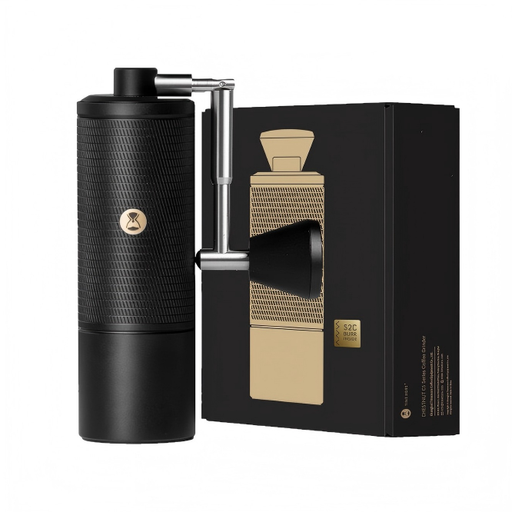 No product image available
For buyers who want to grind coffee by hand.
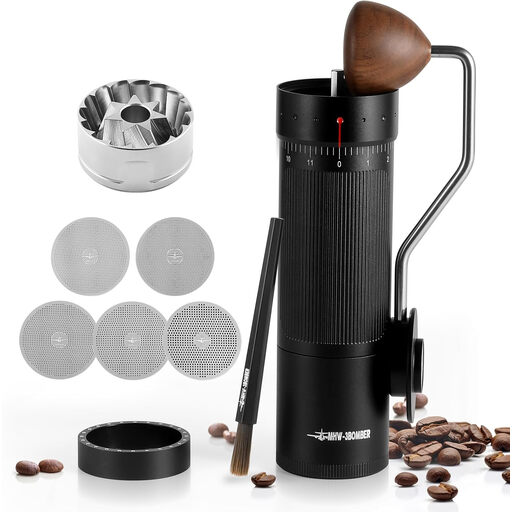 No product image available
For grinding small servings by hand: according to the description, the grounds cup holds around 20 g.
Stainless steel conical burrs; 60 clicks per rotation; five screens. According to the description, water shouldn’t come into direct contact with the burrs, and all parts must be completely dry before reassembly.
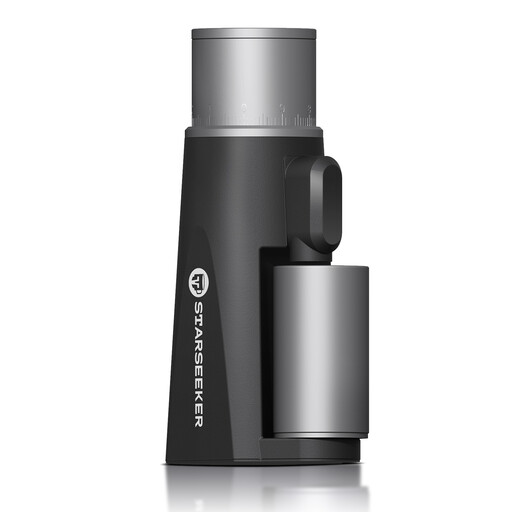 No product image available
For buyers who want to grind small servings and adjust the grind size to suit different brewing methods.
100 stepless settings. According to the description, grinding 15 g of pour-over beans takes around 35 seconds, while 18 g of espresso beans takes 80–90 seconds. Very light-roast beans may block the burrs at a fine espresso setting; dry air or oily beans can contribute to static, grounds scattering and clumping.
Compare the amount of beans you’ve weighed with the capacity of the specific model. For electric grinders, check how much ground coffee they actually dispense. A cup selector doesn’t replace a measurement in grams; Rommelsbacher describes 15 g as a rather unsuitable single dose for the EKM 200.
Not necessarily. The 1Zpresso Q instructions say not to wash or soak the grinder and describe cleaning it with a brush and air blower. Always follow the instructions for the model you’ve bought.
As a general rule, consumers who buy faulty new goods can exercise their statutory rights against the seller within two years of delivery or receipt, as explained by Verbraucherzentrale. Statutory consumer rights are separate from a voluntary guarantee.
For electrical appliances that are required to carry a CE marking, the Federal Network Agency describes CE as the manufacturer’s declaration that the product complies with relevant requirements, not as a mark of origin. It also lists the required accompanying documents and German-language safety information as points to check.
No. Waste electrical equipment is collected separately in Germany; the Federal Environment Agency lists local collection points as a free way to return it. This applies to electric grinders, not to a hand grinder simply because it has burrs.