Considerate solo grinders
If you grind a small portion near other workstations, a hand grinder avoids the motor as a source of noise. Kaffeemacher also points out that it takes extra effort to crank.


If you grind a small portion now and then and want to keep disruption to a minimum, a hand grinder is a good place to start: Kaffeemacher describes hand grinders as quiet, while noting that they take effort to crank. If several people will use the grinder, or you’d rather not grind by hand, check an electric model’s smallest adjustable quantity, how easy it is to clean and whether it’s suitable for your office use. Noise levels vary by model.
If you grind a small portion near other workstations, a hand grinder avoids the motor as a source of noise. Kaffeemacher also points out that it takes extra effort to crank.
If several people use the same grinder, easy dosing and cleaning between uses are important. Check how easy it is to remove the grounds container and clean the grinder when changing beans.
If you make espresso with a portafilter, the adjustable grind range needs to suit your brewing method. The number of grind settings alone doesn’t prove that a grinder can be adjusted finely enough for your portafilter.
A good fit if: you usually grind a small portion yourself and want to avoid motor noise as much as possible.
The trade-off: Cranking takes time and effort, especially when grinding several portions in a row.
A good fit if: several people will be grinding, or you want to avoid the manual effort.
The trade-off: You’ll need a power supply and worktop space, and there’ll be grinding noise. Selecting a number of cups doesn’t automatically give you a precise dose in grams.
| Priority | What to check before buying | Who it matters most to |
|---|---|---|
| Keeping disruption to others to a minimum | Weigh up manual operation against an electric motor; for electric models, look for noise figures measured in a clear, comparable way. | If I grind near my colleagues, I want to disturb them as little as possible. Around 33 % of consumers prioritise keeping disruption to a minimum. |
| Small portions and changing beans | Check the smallest adjustable quantity, and how easy it is to remove and clean the grounds container. | If I grind a small portion for myself and want to change the beans or grounds between uses, ease of use matters. Around 27 % of consumers make this their main priority. |
| Grind size for your brewing method | Decide on your brewing method and check that the specific model’s grind range is suitable. For espresso, pay particular attention to the fine adjustment. | If I make espresso or another specific type of coffee, the grind size needs to suit how I prepare it. Around 20 % of consumers put their brewing method first. |
| Grinding several portions without cranking | Weigh up how often the grinder will be used, whether there’s a power socket nearby and how easy it is to operate, compared with the effort of a hand grinder. Check the model’s instructions for office use. | If several people grind in turn, I want to avoid manual effort and make sure the grinder is suitable for our office. Around 20 % of consumers prioritise ease of use. |
A cup setting doesn’t automatically tell you how much coffee will actually be dispensed or how much ground coffee will remain in the grinder.
For the small portion you want, check the amount dispensed and how to empty the specific model.
Espresso and filter coffee require different grind settings.
First decide on your brewing method. If you make espresso, check that the specific model’s usable fine range suits your portafilter.
A manufacturer’s claim without comparable test conditions tells you little about how disruptive the grinder will be at your workstation.
Look for clear noise data measured on a comparable basis, or consider a hand grinder if you work in a quiet environment.
The instructions for the Rommelsbacher EKM 200 rule out commercial use. This doesn’t apply as a blanket judgement to every shared office or other models.
Check the intended use stated in the instructions for the specific appliance against how you plan to use it in your office.
The C40 Mk4 is a hand grinder. Comandante says it comes with two Bean Jars, each with a 40 g capacity.
The J is a hand grinder. According to 1Zpresso, the grounds container on the current version holds 30–35 g.
According to Tchibo, its electric coffee grinder with order number 157781 has a conical burr grinder, 26 grind settings and a cup selector for up to twelve cups.
According to De’Longhi, the electric Dedica KG521.M has 18 settings and a cup selector ranging from one to 14 cups.
According to Rommelsbacher, the electric EKM 200 has a flat burr grinder and a quantity selector for two to twelve cups.
This selection includes hand and electric grinders for small portions in a shared office.
 No image available
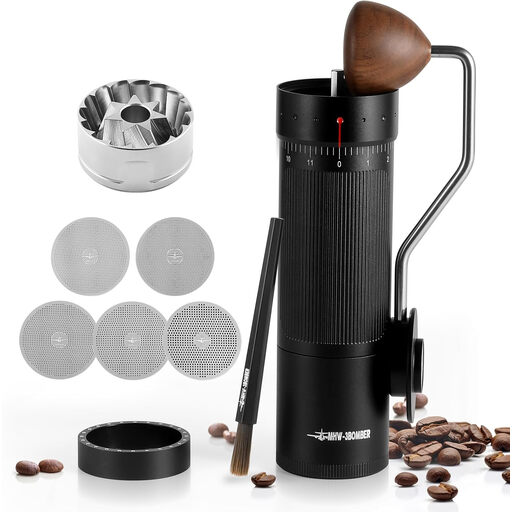
A hand grinder for small portions if you want to grind without a motor.
The product title lists a stainless steel conical burr grinder, five sieves, a magnetic grounds container and external grind adjustment. French press, filter coffee and espresso are listed as suitable brewing methods.
 No image available
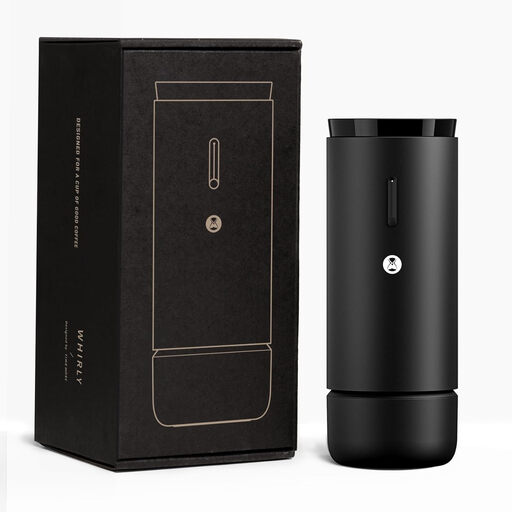
An electric grinder for anyone who’d rather not crank by hand in a shared kitchen.
The product title lists a metal body, automatic shut-off and protection against blockages. The description limits use to no more than 13 grinding cycles or six espresso portions in a row; keep this limit in mind. The term ‘Low Noise Design’ isn’t a comparable noise measurement.
 No image available
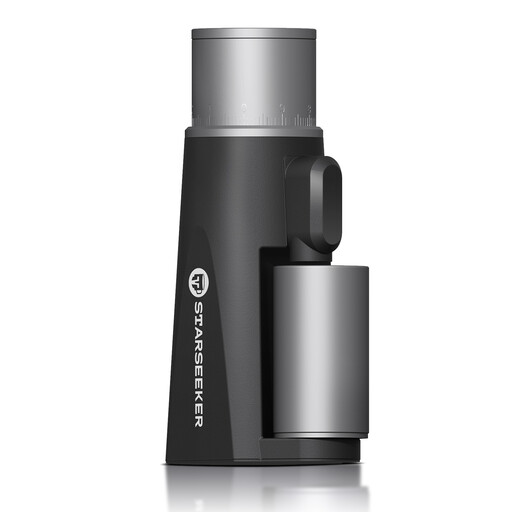
A cordless electric grinder for anyone who wants to grind small portions without cranking by hand.
The product title lists a conical burr grinder suitable for espresso and pour-over. The description warns that very lightly roasted beans may cause the grinder to jam when ground finely for espresso; bear this in mind when choosing your beans.
 No image available
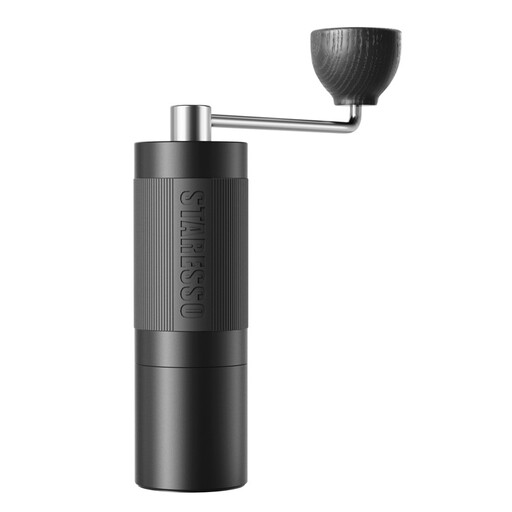
A hand grinder with a 20 g capacity for small portions, if you don’t mind cranking.
The product title lists a stainless steel conical burr grinder and adjustable grind settings. Espresso, moka, pour-over and French press are listed as suitable brewing methods.
 No image available
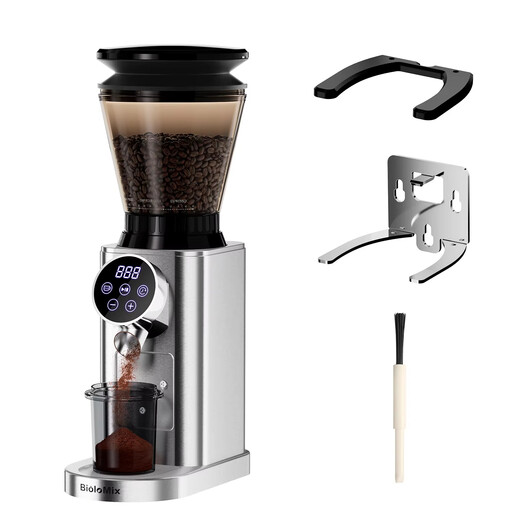
An electric grinder for several users if a cup selector and a wide range of grind settings are important.
The product title lists a conical burr grinder, 48 grind settings, a timer and a selector for two to twelve cups. A one-cup setting isn’t listed.
A hand grinder may be a good fit if you only grind coffee yourself now and then and keeping disruption down matters more than speed. Check its capacity and grind range for your brewing method; making several espresso portions in a row means more cranking.
Empty the grounds container and follow the instructions for the specific model. The 1Zpresso J product page lists a brush and tool-free disassembly; this doesn’t mean the same cleaning instructions apply to other grinders.
For a consumer purchase, the statutory right to claim against the seller for faulty goods is separate from a voluntary guarantee; if a product is faulty, repair or replacement is generally the first step. According to Verbraucherzentrale, many online consumer contracts generally come with a 14-day right to cancel. If a company buys the grinder for its office, consumer rules don’t automatically apply to that contract without checking first.
No. The German Environment Agency explains that old electrical appliances must be collected separately in Germany; you can usually drop them off free of charge at a recycling centre. Returns to retailers are subject to the relevant conditions in force.
There’s no general answer. The instructions for the Rommelsbacher EKM 200 rule out commercial use. Check the instructions to see whether this grinder is suitable for your planned use; other models are subject to their own stated conditions.