
Lieferung heute & morgen

Qualitätsgarantie

Willkommens-Angebote freischalten: KOSTENLOSE Lieferung | Bis zu 80 % RABATT | Kostenlose 30-Tage-JoyPlus-Testphase
App herunterladen
Choosing the right coffee machine can be a challenge, given the vast array of models and technologies available. From the convenience of fully automatic machines to the hands-on control of manual brewing for purists, the options are diverse. This guide is here to help. It explains the key differences between machine types and presents a selection of models for various use cases, providing you with a solid basis for making an informed decision.
The best coffee machine for you depends heavily on your personal preferences, lifestyle, and desired level of convenience. Three key aspects will help you narrow down your choices.
The most fundamental decision concerns the degree of automation.
Two features are crucial for the quality and variety of your coffee.
Besides home use, there are also solutions for when you're on the go. A portable coffee machine is a compact, often battery-powered option that allows you to prepare high-quality espresso while travelling, camping, or in the car, without having to resort to instant coffee.
Based on different user requirements, we have compiled a selection of models that cater to various needs—from fully automatic convenience and manual control to complete mobility.
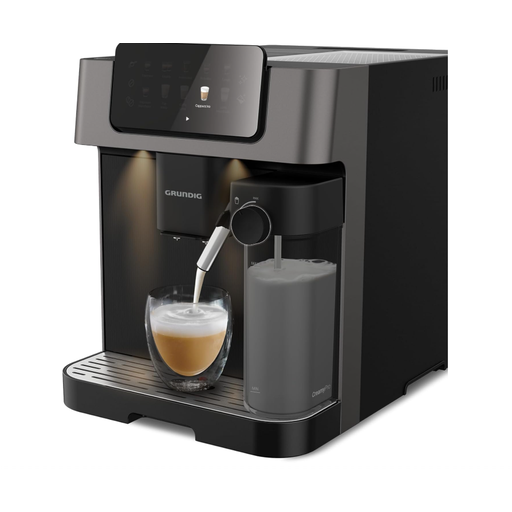
The Grundig KVA 7230 is a bean-to-cup machine designed for convenience and variety. It processes whole beans and prepares a wide range of coffee specialities at the touch of a button.
Why it stands out: The device combines a stainless steel conical burr grinder with an integrated milk system. With 19-bar pump pressure and 13 adjustable grind settings, it offers a solid technical foundation for everything from espresso to latte macchiato. It is operated via an intuitive touch display.
Pros:
Who is it for? This model is an excellent choice for users who value quick, easy, and versatile coffee preparation in their daily routine without wanting to delve into the technical details of the brewing process. Ideal for families and small offices.
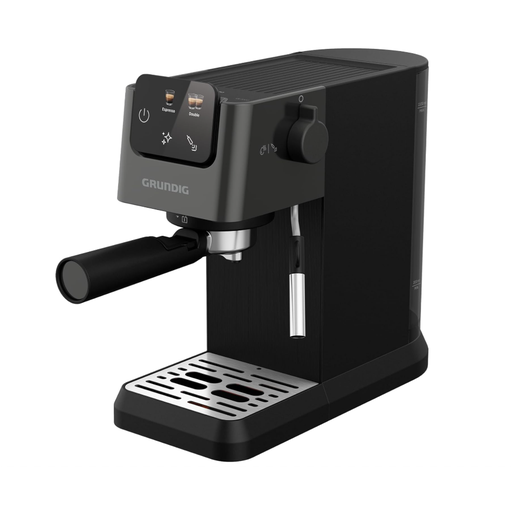
The Grundig KSM 4330 is a semi-automatic espresso machine that gives the user control over the preparation. It is designed for use with pre-ground coffee.
Why it stands out: With 15-bar pump pressure and a manual steam wand, this machine allows you to prepare authentic espresso and creamy milk foam. The memory function for saving your preferred coffee volume and the touch display simplify recurring routines. Its slim design fits well even in smaller kitchens.
Pros:
Who is it for? The KSM 4330 is aimed at coffee enthusiasts who want to take charge of the espresso extraction process and learn how to froth milk. It is a great entry-level option for those new to the world of portafilter machines.
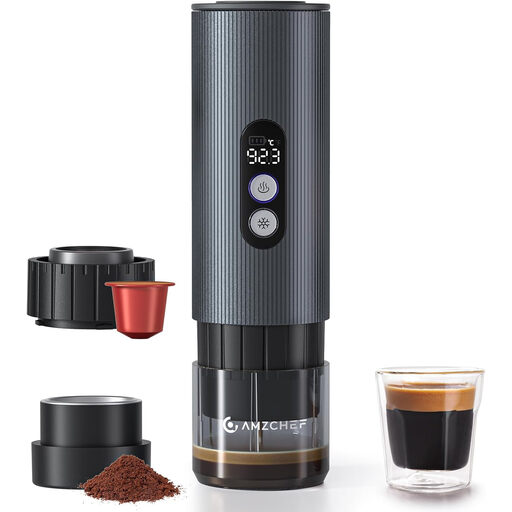
The portable coffee machine from AMZCHEF is designed for mobile use. It allows you to prepare espresso without access to a power outlet or hot water.
Why it stands out: Its standout feature is the integrated 9000 mAh battery, which heats the water on its own. The device generates a high pressure of 20-bar for a mobile machine and is compatible with both NS capsules and ground coffee. The display shows the water temperature and battery level in real-time.
Pros:
Who is it for? This device is the ideal solution for commuters, travellers, campers, and anyone who doesn't want to miss out on a freshly brewed espresso while on the move. Its flexibility and self-sufficiency make it a practical companion for outdoor activities and travel.
View the AMZCHEF Portable Coffee Machine
The products featured here cover specific use cases. If you haven't found the right model for your needs yet, you can find more options in our broader selection. Discover additional bean-to-cup machines, portafilter machines, and specialty brewers.
Explore Our Full Range of Coffee & Espresso Machines
1. What is the difference between a bean-to-cup machine and a portafilter machine? A bean-to-cup machine handles all the steps—grinding, brewing, milk frothing—automatically at the touch of a button. A portafilter machine requires manual steps: the user fills a portafilter with ground coffee, tamps it down, and starts the brewing process manually. This allows for more control over the result but also requires more practice.
2. What should you look for in a coffee machine with a grinder? A high-quality grinder (ideally ceramic or stainless steel) and the ability to adjust the grind size are important. A finer grind leads to a slower extraction and a more intense espresso, while a coarser grind is suitable for a café crème. Adjustability allows you to adapt to different bean types and roasts.
3. How many bars of pressure does a good espresso machine need? For preparing a true espresso, a pressure of around 9 bars at the brew head is considered ideal. Many home machines advertise a higher pump pressure (e.g., 15 or 19 bars). This higher value ensures that 9 bars can be consistently achieved at the coffee puck, even if the grind or tamping isn't perfect. A value of 15 bars or more is therefore a common standard for home espresso machines.