
Lieferung heute & morgen

Qualitätsgarantie

Willkommens-Angebote freischalten: KOSTENLOSE Lieferung | Bis zu 80 % RABATT | Kostenlose 30-Tage-JoyPlus-Testphase
App herunterladen
Choosing a new coffee machine can be a daunting task given the vast array of models and brewing methods available. From classic drip coffee makers and fast capsule machines to manual French presses, each method has unique characteristics that affect taste, preparation time, and effort. This article serves as a guide to introduce the different types and help you make an informed decision for your household.
Before you buy a coffee machine, there are a few key considerations. The following points will help you narrow down the options to models that suit your needs.
The method of coffee preparation is crucial for the flavor experience and daily use.
Consider how much coffee you typically prepare. For a single-person household where only an occasional cup is consumed, a compact capsule machine or a small French press may be sufficient. A household with multiple coffee drinkers, or someone who wants to prepare a full pot for the day in the morning, is often better served with a drip coffee maker with a capacity of 1 to 1.5 liters.
Modern coffee machines offer various convenience features. A drip-stop feature prevents coffee from dripping onto the warming plate when the carafe is removed. An auto shut-off function ensures safety and saves energy. Also, consider the cleaning effort: while a French press or a filter holder can be quickly rinsed by hand, automatic coffee and espresso machines require regular descaling to maintain their functionality and the great taste of the coffee.
Here is a selection of different coffee machine types that cater to various needs and preferences.

Why It Stands Out The Clatronic KA 3808 is a classic drip coffee maker that focuses on the essentials: reliably brewing large quantities of coffee. With its stainless steel housing, it blends seamlessly into many kitchens.
Pros
Who It's For For households, small offices, and anyone who wants to regularly prepare large amounts of straightforward drip coffee.

Why It Stands Out The Essenza Mini by Nespresso stands out for its ultra-compact design, which fits into even the smallest of kitchens. It combines minimalist aesthetics with quick and easy operation for Espresso and Lungo.
Pros
Who It's For For singles, small households, and users who value speed, a wide variety of blends, and minimal cleaning effort.
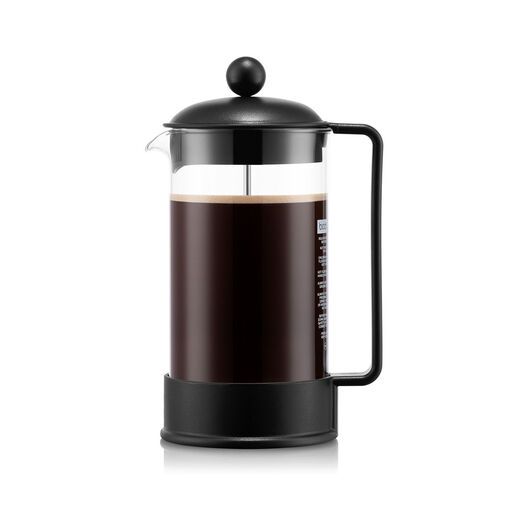
Why It Stands Out The BODUM BRAZIL is an iconic coffee maker that puts the brewing process entirely in the user's hands. It operates without paper filters or capsules, allowing for the creation of an exceptionally aromatic and full-bodied coffee.
Pros
Who It's For For coffee connoisseurs who celebrate the brewing process, appreciate the taste of unfiltered coffee, and prefer an eco-friendly brewing method.
The right coffee machine is the foundation for great coffee. But the right vessel also contributes to the enjoyment. If you want to complete your coffee experience, discover our selection of stylish black mugs that suit any occasion.
1. What is the difference between a French press and a drip coffee maker? The main difference lies in the filtering process. A drip coffee maker uses a paper filter that retains oils and fine particles, resulting in a very clear coffee. A French press uses a metal sieve that only separates the coarse coffee grounds from the water. This allows more oils and sediment to enter the cup, creating a stronger, more textured coffee.
2. How often should you descale a coffee machine? The frequency of descaling depends on the water hardness in your area and how often you use it. As a general guideline, it is recommended to descale an automatic coffee machine every two to three months. Many modern devices have an indicator that reminds you when descaling is necessary. Regular descaling maintains the machine's performance and ensures the quality of the coffee.
3. Are capsule machines harmful to the environment? The environmental impact of coffee capsules is a frequently debated topic. The production of the capsules, usually from aluminum or plastic, consumes resources. However, many manufacturers, including Nespresso, now offer recycling programs where used capsules can be returned and recycled. Additionally, there are refillable capsules from third-party manufacturers as an alternative to single-use products.