
Lieferung heute & morgen

Qualitätsgarantie

Willkommens-Angebote freischalten: KOSTENLOSE Lieferung | Bis zu 80 % RABATT | Kostenlose 30-Tage-JoyPlus-Testphase
App herunterladen
The search for the right coffee machine can quickly become overwhelming. The market is filled with hundreds of models, all advertising impressive features and elegant designs. But not every expensive purchase leads to better coffee. As your Joybuy Product Recommendation Officer, I'll help you recognise the typical marketing traps and make a decision based on solid facts and your actual needs.
Many buyers invest in devices whose costly extras remain unused in daily life or whose running costs blow the budget. Before you decide, you should know the most common pitfalls:
To make an informed choice, focus on a few, but crucial, technical features. These are the primary determinants of your coffee's quality and your machine's longevity.
Choosing the system is the most fundamental decision and depends on your preferences:
Sufficient pressure is crucial for preparing a true espresso with a stable crema. A value of at least 9 bars at the brew head is considered the industry standard. Most home espresso machines and bean-to-cup models advertise 15 to 20 bars, which provides a good buffer to keep the optimal pressure constant during extraction. This value is irrelevant for a drip coffee maker, as the water flows through the coffee grounds without pressure.
For a coffee machine with a grinder, typically a bean-to-cup model, two aspects are important:
Here are some recommendations tailored to different user profiles that specifically avoid the pitfalls mentioned.
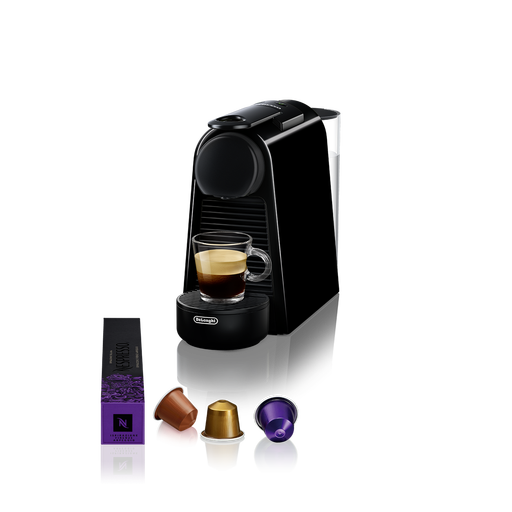
Why This Fits Their Persona: Ideal for singles or small kitchens where speed is essential. This Nespresso machine reliably delivers espresso or lungo at the touch of a button without complicated settings. The ultra-compact design saves valuable counter space.
The device focuses on its core function, forgoing expensive, unused extras. Operation is self-explanatory and maintenance is minimal, thus avoiding the maintenance trap.
Very short 25-second heat-up time and a high pump pressure of 19 bars for a good crema. The automatic shut-off function saves energy.
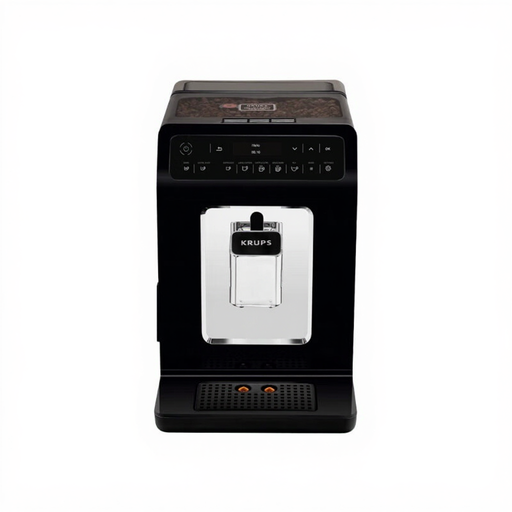
Why This Fits Their Persona: This bean-to-cup machine is for households that appreciate a wide variety of beverages. With 11 coffee specialities and 3 tea programs, it covers almost every desire. The One-Touch Cappuccino function prepares milk foam drinks fully automatically.
The features are practical and actually used in daily life. The automatic cleaning system (Autoclean) significantly minimises manual maintenance effort and prevents the maintenance trap.
Large water tank (2.3 L) and bean container (260 g) for less frequent refilling. The stainless steel conical burr grinder and Quattro Force technology optimise every step of the preparation.
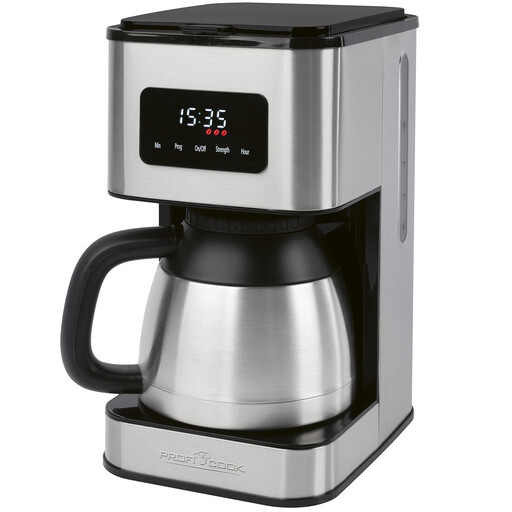
Why This Fits Their Persona: Perfect for families, the home office, or anyone who enjoys several cups of classic filter coffee. The double-walled stainless steel thermal carafe keeps the coffee hot for a long time without it turning bitter on a hotplate.
This drip coffee maker is a robust workhorse without expensive capsules or complex mechanics. It focuses on one task and performs it reliably, thus avoiding the running costs trap.
Large capacity (up to 10 cups) and a programmable timer. The electronic 3-stage aroma selection allows for adjusting the coffee strength.
We have compiled a complete, up-to-date list of products that fully meet these strict selection criteria and German safety regulations.
1. How often does a coffee machine need to be descaled? The frequency depends on the water hardness in your region and your usage. Most modern devices, especially bean-to-cup machines, have an automatic indicator that reminds you. As a general rule: with average use and medium water hardness, descaling should be done every two to three months to extend the life of the device and preserve the coffee's taste.
2. What pump pressure is necessary for an espresso machine? For an authentic espresso, a pressure of about 9 bars directly on the coffee grounds (the puck) is required. Many manufacturers advertise 15, 19, or even 20 bars. This higher value refers to the maximum output of the pump and ensures that the necessary 9 bars of pressure are consistently achieved at the brew head, even with slight fluctuations in the system. A value higher than 15 bars brings hardly any noticeable advantage in practice.
3. What is the difference between a bean-to-cup machine and a portafilter machine? A bean-to-cup machine is designed for maximum convenience. It grinds the beans, brews the coffee, and disposes of the coffee grounds automatically at the touch of a button. A portafilter machine, on the other hand, requires manual work: you grind the beans separately, fill the powder into the portafilter, press it down (tamp), and lock the portafilter into the machine. This gives you full control over the brewing process and is valued by coffee enthusiasts for the ability to perfect the result.