
Lieferung heute & morgen

Qualitätsgarantie
App herunterladen
Kategorien
Choosing a coffee machine is a decision driven by technical specifications and personal brewing habits. The variety of systems on the market—from portafilter machines and fully automatic coffee machines to capsule machines—requires a detailed analysis of their respective features. This guide highlights the key criteria for selecting a new coffee maker and presents a selection of models with diverse functional profiles.
To make an informed decision when buying a coffee machine, it is essential to consider objective technical features. The following aspects define a machine's performance and its ideal use case.
The method of coffee preparation is the most fundamental distinguishing feature.
For machines with an integrated grinder, two aspects are crucial:
For brewing authentic espresso, a pressure of approximately 9 bar at the brew head is the ideal physical standard. Many manufacturers advertise a pump pressure of 15 bar or more; this value describes the pump's maximum output, not the actual pressure during extraction. What's more critical is consistent pressure delivery. Equally critical is the water's temperature stability, which should ideally be between 90 and 94°C to avoid over-extraction (bitter flavours) or under-extraction (sour flavours).
For preparing milk-based specialities like cappuccino or latte macchiato, a coffee machine with a milk frother is required.
The following models represent different technological approaches and cover various user profiles. The selection is based on technical specifications and the practical utility of the devices.
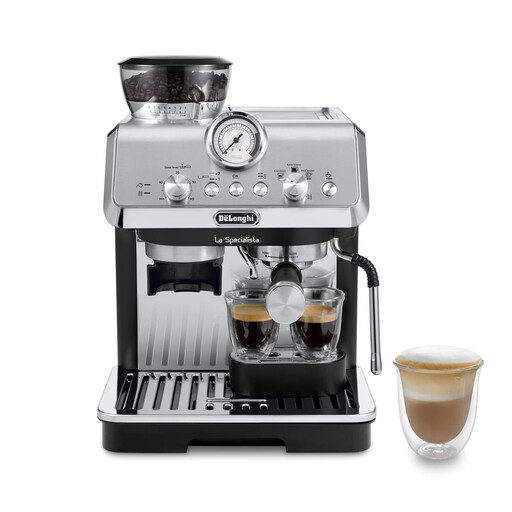
Analysis of Product Specifications: The De’Longhi La Specialista Arte is a portafilter machine that simplifies the entry into manual espresso making. It combines an integrated grinder with 8 settings and a 15-bar pump with assistive features. The included Barista Kit, consisting of a tamper, tamping mat, and dosing funnel, supports a consistent brewing process. The manual "My LatteArt" steam wand allows for the creation of fine, silky microfoam.
Advantages Based on Technical Data:
Who It's For: This model is aimed at coffee enthusiasts who want to take control of the brewing process and learn the art of espresso extraction, without forgoing beginner-friendly assistance.
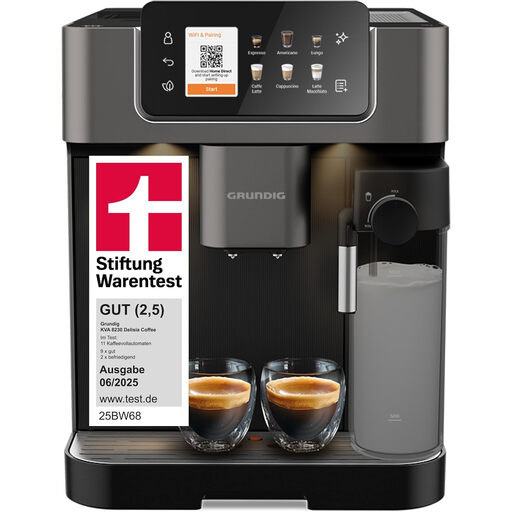
Analysis of Product Specifications: The Grundig KVA 8230 is a fully automatic coffee machine designed for maximum convenience and variety. With a pump pressure of up to 19 bar and a stainless steel grinder with 13 settings, the machine prepares up to 18 different coffee specialities. It can be operated via a touchscreen display or, alternatively, through an app and voice assistants (Amazon Alexa, Google Assistant). The illuminated dual spout allows for the simultaneous preparation of two drinks.
Advantages Based on Technical Data:
Who It's For: Users who value convenience, speed, and a wide selection of coffee specialities. Ideal for families, offices, or tech-savvy users looking for a seamless "bean-to-cup" experience.
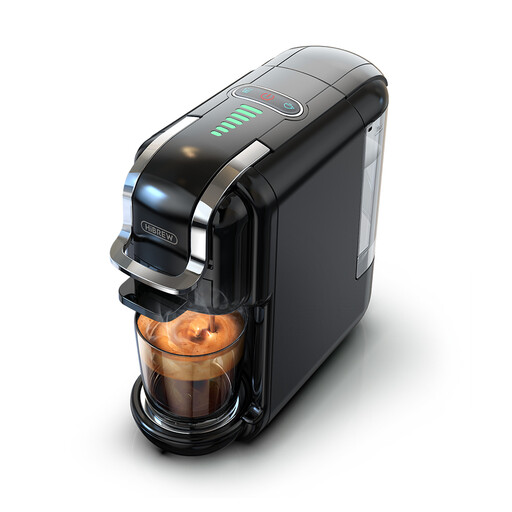
Analysis of Product Specifications: The HiBREW H2B is a multi-capsule espresso machine that stands out for its exceptional compatibility. Using various adapters, it can process Nespresso and Dolce Gusto capsules, ESE pods, and ground coffee. A unique feature is its ability to perform both hot and cold extraction, enabling the preparation of iced coffee. The 20-bar high-pressure pump ensures an intense extraction, while its compact design saves kitchen space.
Advantages Based on Technical Data:
Who It's For: This machine is perfect for users who don't want to commit to a single coffee system and are looking for maximum versatility in a small footprint. It is suitable for individuals or households with diverse coffee preferences.
If the models presented don't exactly meet your requirements, or if you'd like to compare more options, you can find a wider selection in our main category. There, you can filter specifically by features such as brewing system, brand, or price range.
Discover more models in the Espresso & Coffee Machines category
1. What is the key difference between a portafilter machine and a fully automatic coffee machine? The main difference lies in the degree of automation and control. A portafilter machine requires manual steps like grinding, dosing, and tamping the coffee, giving the user full control over the result. A fully automatic coffee machine performs all these steps automatically at the touch of a button, prioritising convenience and consistency.
2. How important is the pump pressure in an espresso machine? Pump pressure is an important technical parameter, but it is often misunderstood. For an optimal espresso extraction, a pressure of about 9 bar is required directly at the coffee puck. The 15 or 19 bar values stated by manufacturers refer to the pump's maximum output. A high-quality machine is distinguished less by an extremely high maximum pressure and more by its ability to maintain a constant pressure of around 9 bar throughout the entire brewing process.
3. How often should a coffee machine with a grinder be cleaned? The cleaning frequency depends on usage. The brew group, if removable, should be rinsed under running water weekly. The grinder itself needs to be cleaned of coffee oils less frequently, about every few months, using special cleaning pellets. The grounds container and drip tray should be emptied and cleaned daily to prevent mould growth. Regular descaling according to the manufacturer's instructions is also crucial for the machine's longevity.
Authored by your Joybuy Product Recommendation Officer