
Lieferung heute & morgen

Qualitätsgarantie

Willkommens-Angebote freischalten: KOSTENLOSE Lieferung | Bis zu 80 % RABATT | Kostenlose 30-Tage-JoyPlus-Testphase
App herunterladen
A coffee machine should suit your daily drinking habits – not just its product description. If you mainly drink filter coffee, you will need different features from a household that enjoys cappuccinos or a home barista interested in grind size and extraction. Before buying, it is therefore worth comparing the technical specifications, cleaning requirements and space needed objectively.
Manufacturers often state capacity in litres and additionally in “cups”. A cup can be considerably smaller than a standard mug. For example, a coffee machine with a 1.25-litre capacity may be advertised as making around 5 to 7 standard cups, while a compact filter coffee machine with a 500-millilitre capacity is designed for up to 4 cups.
A small tank can be practical for singles and couples because less coffee is left over. Families and offices are more likely to benefit from 1.2 to 1.5 litres. The key factor is therefore the actual amount dispensed per brewing cycle, not just the stated cup capacity.
High power consumption may indicate faster heating, but it does not automatically say anything about flavour or ease of use. With an espresso machine, pump pressure is also only one part of the system. Grind size, dosage, water temperature and consistent tamping also affect the result.
With a filter coffee machine, however, water flow, filter type, drip stop and warming method are often more important in everyday use than the highest possible wattage. A warming plate can continue to heat the coffee, whereas a thermal carafe retains heat without a permanently switched-on heating surface.
Coffee residue, milk residue and limescale can significantly increase the cleaning required. A bean-to-cup coffee machine with a milk system needs regular rinsing, cleaning and descaling programmes. With a coffee machine that includes a grinder, the bean hopper, grinder and coffee-grounds container also need attention.
Before buying, check the following:
A filter coffee machine uses ground coffee and is suitable for larger quantities. Models with a glass carafe and warming function are often straightforward to use, but should not be left on the hotplate unnecessarily long after brewing. A coffee machine with a thermal carafe keeps coffee warm without continuous heating, provided the carafe is properly sealed.
An espresso machine with a portafilter is aimed at users who want to control the dosage, grind size and milk texture themselves. A coffee machine with a milk frother expands the choice to include cappuccino, latte macchiato and flat white, but requires more cleaning.
A bean-to-cup coffee machine grinds the beans, brews the coffee and – depending on the model – froths the milk automatically. This reduces individual preparation steps, but increases the number of components and cleaning procedures. A capsule machine is very easy to use. Ongoing costs, capsule compatibility and disposal should all be considered when making your decision.
Measure the footprint, including space for the lid, water tank and carafe. A narrow bean-to-cup machine may take up little worktop space, but often needs room at the front or above for removable components.
For a coffee machine for home use, the following capacities can serve as a guide:
For German households, specifications such as 220–240 volts and 50 hertz are relevant. The appliance should be designed for the local electricity supply. Hot carafes, steam wands and outlets pose a risk of burns; automatic switch-off, overheating protection and dry-boil protection are therefore useful safety features.
Clear manufacturer information should be available for materials that come into contact with food. For example, the Aigostar model is described as having a BPA-free glass carafe made from food-grade material. Such information refers to the product description and does not replace checking the operating instructions yourself.
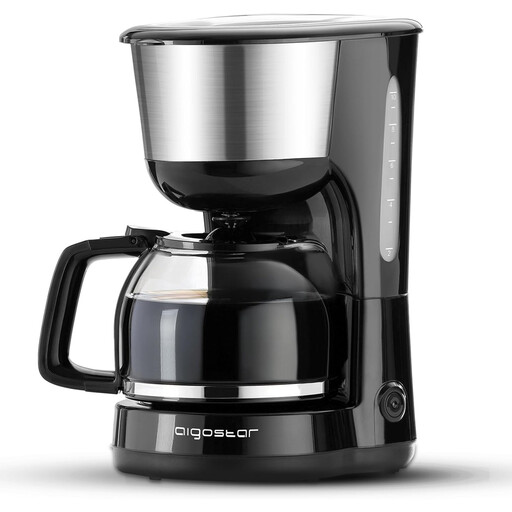
Why this product suits the profile: This filter coffee machine focuses on preparing larger quantities with ease and operates at 1,000 watts and 220–240 volts.
The product details specify a 30-minute warming function, drip stop and automatic switch-off after a total of 40 minutes.
1.25-litre glass carafe and washable, reusable filter mesh.

Why this product suits the profile: This appliance combines filter coffee, espresso and cold brew with an integrated grinder and milk frother.
With 25 grind settings and integrated scales, it offers specific adjustment options rather than vague promises about flavour.
Four frothing programmes, 1.5-litre capacity and accessories for the portafilter and cleaning.
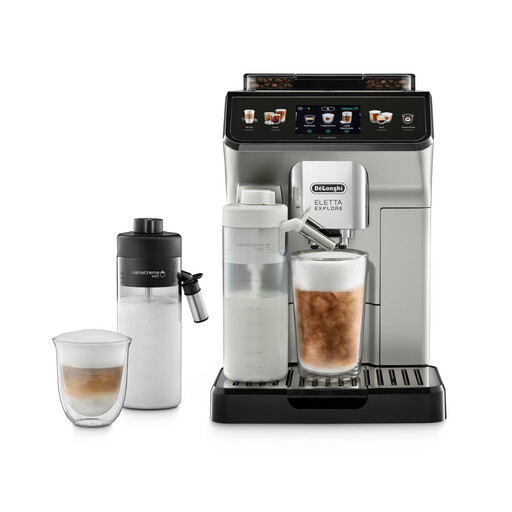
Why this product suits the profile: This bean-to-cup coffee machine is designed for a wide range of hot and cold drinks and regular household use.
The features include automatic cleaning, rinsing and descaling programmes, as well as removable dishwasher-safe parts.
40 recipes, 1.8-litre water tank, 300-gram bean hopper and two milk systems for hot and cold drinks.
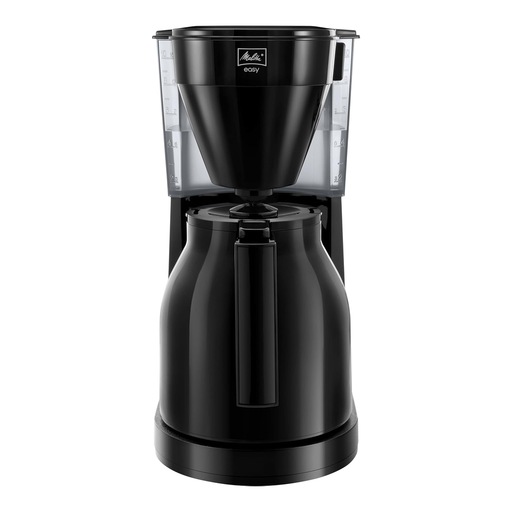
Why this product suits the profile: This compact filter machine with a 1-litre thermal carafe is suitable for couples and users who do not need a warming plate.
The thermal carafe keeps coffee warm without a permanently heated plate; a drip stop helps reduce spills when pouring.
1-litre capacity, swing-out removable filter and transparent water-level indicator.
We have put together a complete, regularly updated list of products that fully meet these strict selection criteria and the safety regulations applicable in the EU.
With filter machines, you will need to pay for ground coffee and, where applicable, paper filters. A permanent filter reduces the need for disposable filters, but must be rinsed after every use. Capsule machines are convenient for portioned drinks, but the cost per beverage can be higher.
Bean-to-cup machines also require descaler, cleaning tablets and – for milk drinks – consistent care of the milk system. Hard tap water may mean that descaling is required more frequently. A programmable coffee machine saves time in the morning, but does not replace regular cleaning.
For one person, compact models with a capacity of around 0.5 to 1 litre are a sensible choice. A small filter coffee machine avoids unnecessary leftovers. If you prefer espresso and milk drinks, you could choose a capsule machine, a compact portafilter machine or a small bean-to-cup machine.
Service life depends on the design, usage, water hardness and care. Regular descaling in accordance with the manufacturer’s instructions, emptying drip trays and proper cleaning can reduce the strain on the heating element, pump and milk system. It is not possible to give a reliable fixed service life without specific model and usage data.
In addition to the purchase price, you should factor in coffee, filters or capsules, electricity, water and cleaning products. A coffee machine with a warming function may continue to use electricity after brewing. With a thermal carafe, this continuous heating is not required. For a fair comparison, you should therefore consider the price per drink and the recommended maintenance intervals.