
Lieferung heute & morgen

Qualitätsgarantie

Willkommens-Angebote freischalten: KOSTENLOSE Lieferung | Bis zu 80 % RABATT | Kostenlose 30-Tage-JoyPlus-Testphase
App herunterladen
A coffee machine should do more than simply match your kitchen aesthetically. The key considerations are how much coffee you drink each day, the type of coffee you prefer, the space available and the effort involved in cleaning and maintenance. Singles often need a different solution from families, while espresso lovers should pay particular attention to hob compatibility or the capsule system.
When buying, three common pitfalls in particular can lead to the wrong choice:
A filter coffee machine is ideal if you regularly prepare several portions of coffee. For smaller households, models making 1 to 4 cups or up to around 500 ml are generally more suitable than larger appliances. With low consumption, a large jug can result in unnecessary keep-warm time and leftover coffee.
For families or offices, a coffee machine for 1 to 10 cups may be a sensible choice. However, you should consider more than just the maximum capacity. Also check the minimum fill level, jug material, automatic switch-off and filter size.
A moka pot is used on the hob and requires ground coffee. The Bialetti Moka Express, for example, is made from aluminium and, according to the product details, is suitable for gas, ceramic and electric hobs, but not induction. Its stated capacity of 270 ml corresponds to six Italian espresso cups.
Important: A moka pot brews strong coffee using steam pressure, but technically it is not the same as a pump-operated espresso machine. For induction hobs, you need a model specifically designed for this purpose, such as a coffee machine for induction with a stainless-steel base.
A manual espresso machine is aimed at buyers who want to measure out ground coffee, distribute it in the portafilter and, where required, froth milk. Models such as the ochama Semi-Automatic Pressure Espresso Machine feature, according to the product description, a 1.2-litre water tank, a steam wand and protection against overheating, as well as automatic pressure release.
The specification “15 Bar” or “20 Bar” describes the maximum possible pump pressure. On its own, it does not indicate how the finished drink will taste. You should also consider the portafilter size, water tank, heating system, controls and ease of cleaning.
A capsule machine is convenient when you want to prepare individual cups quickly with minimal measuring. According to the product data, the Nespresso Inissia EN80.B heats up in 25 seconds, has a 0.7-litre water tank and works with original Nespresso capsules. With its 0.6-litre water tank, the Essenza Mini EN85.B is even more compact.
Before buying, check which capsule system the machine uses, which drink sizes are available and how capsule prices and disposal affect the ongoing costs.
Manufacturers do not use cup specifications consistently. Filter coffee machines often calculate using larger portions than moka pots. For this reason, always compare the capacity in millilitres:
The Philips HD7888/01 has a 1.25-litre water tank; according to the product description, it offers settings for 1 to 10 cups. Its integrated conical grinder can process both whole beans and pre-ground coffee.
With a moka pot, the material and hob need to be compatible. Classic aluminium models such as the Bialetti Moka Express for 6 cups are, according to the available information, not suitable for induction. The Bialetti Moka Induction, on the other hand, combines an aluminium upper section with a stainless-steel boiler and is designed for various hob types, including induction.
With electrical appliances, you should check the mains voltage, power consumption, automatic switch-off and cable management. A compact coffee machine with 750 watts may be sufficient for small quantities, while a machine with a grinder and several functions requires more space and energy.
Removable filter holders, water tanks and drip trays make maintenance easier. The Severin KA 4808 has a permanent swing-out filter, a glass jug, a drip stop and automatic switch-off. Moka pots, by contrast, are often intended to be cleaned by hand. According to the product information, the Bialetti models in this selection are not dishwasher-safe and should be rinsed with water.
Limescale deposits can affect the performance of electrical appliances. Check whether the manufacturer provides descaling instructions, cleaning accessories and replacement parts.
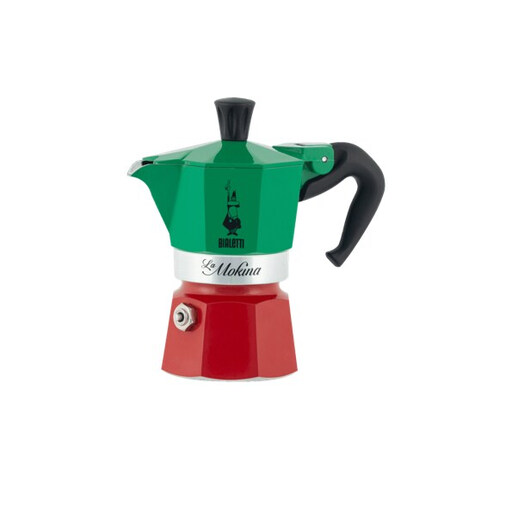
Why this product suits the profile: The 1-cup moka pot has a 40 ml capacity, requires no electricity and is suitable for small households with gas, electric or ceramic hobs.
The specific 1-cup specification prevents you from buying a large pot for a single portion. Its lack of induction compatibility is clearly stated.
Manual operation, compact design and removable aluminium parts; not dishwasher-safe.
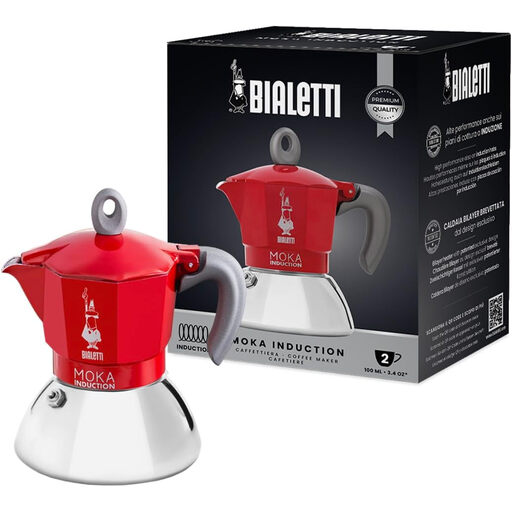
Why this product suits the profile: The combination of an aluminium upper section and stainless-steel boiler is designed for induction hobs while retaining manual operation.
Its construction addresses the common misconception that every moka pot works on an induction hob.
Specified for all common hob types, including induction; reusable filter and manual brewing.
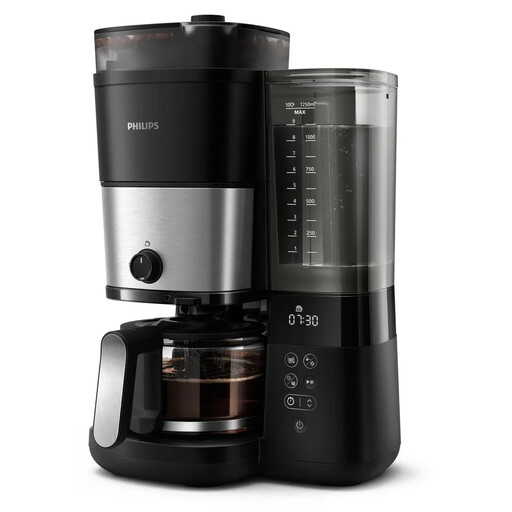
Why this product suits the profile: This appliance brews coffee from whole beans or pre-ground coffee and offers a 1.25-litre capacity for up to 10 cups.
The switchable coffee feed means you are not restricted to using only whole beans or only ground coffee.
Conical grinder, three strength levels, timer, drip stop and automatic switch-off; additional cleaning required because of the grinder.
We have put together a complete, regularly updated list of products that fully meet these strict selection criteria and the safety regulations applicable in the EU.
For one person, a compact filter coffee machine with up to 4 cups, a 1-cup moka pot or a capsule machine may be suitable. The deciding factor is whether you prefer filter coffee, strong moka coffee or the quickest possible individual portion.
The lifespan depends on the materials, frequency of use, cleaning and descaling. With electrical appliances, the water tank, filter unit and seals should be maintained regularly. Moka pots do not contain any electronics, but the sealing ring and safety valve may still be wear parts.
Filter coffee machines and moka pots use ground coffee and generally incur fewer system-specific ongoing costs than capsule machines. With a coffee machine featuring a grinder, you do not need to buy pre-ground coffee separately, but you will need to factor in cleaning and maintaining the grinder. Coffee consumption, portion size and appliance care are also important considerations.