
Lieferung heute & morgen

Qualitätsgarantie

Willkommens-Angebote freischalten: KOSTENLOSE Lieferung | Bis zu 80 % RABATT | Kostenlose 30-Tage-JoyPlus-Testphase
App herunterladen
The range of coffee machines extends from compact devices for individual cups to versatile bean-to-cup machines for several people. Marketing terms such as “barista quality”, “One Touch” or “particularly quiet” do not always describe the complete user experience. The technical specifications, cleaning requirements and the type of machine best suited to your daily routine are what really matter.
A machine with numerous drink recipes is not automatically a sensible choice if your household mainly drinks black coffee. A bean-to-cup coffee machine with a milk system can be practical for espresso and cappuccino. If you mainly prepare filter coffee for several people, however, you will need different features from a household focused on individual portions.
Although smaller tanks take up less space, they need to be refilled more often in everyday use. For an office or a household with several coffee drinkers, a 1.5 to 1.8-litre water tank capacity and a sufficiently large bean hopper are often more practical. At the same time, the tank should be removable so that it can be cleaned under the tap.
Milk systems, brewing units and grinders require regular care. Automatic cleaning and descaling programmes make maintenance easier, but they do not replace rinsing removable parts. With a coffee machine with an integrated milk frother in particular, the milk lines should be cleaned after use according to the operating instructions.
For a coffee machine for home use, compact dimensions are often more important than maximum capacity. The machine should be positioned with sufficient clearance from walls and wall-mounted cupboards. One example is the Melitta Caffeo Solo, measuring approximately 19 × 25 × 34 cm and featuring a 1.2-litre water tank. For an office coffee machine, on the other hand, a larger tank, a bean hopper holding around 250 grams or more and a two-cup function may be useful.
An integrated conical grinder allows you to use freshly ground beans. However, the adjustment options vary considerably. For example, the models in our selection offer:
Technical specifications such as pump pressure should be considered in context. A value of 15 bar describes the maximum stated pump pressure, but alone it does not indicate whether every drink will suit your personal taste.
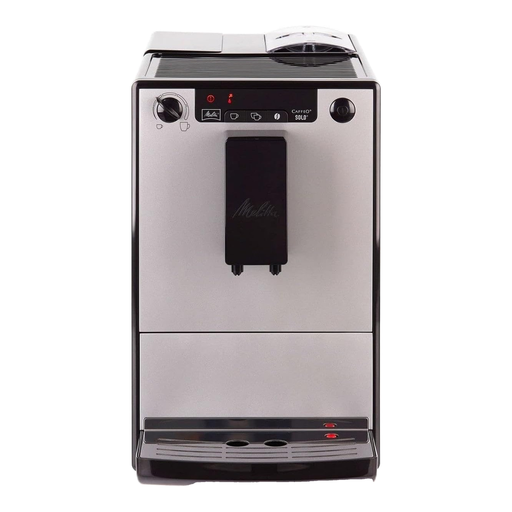
Why this product suits the profile: This compact bean-to-cup machine focuses on bean coffee and espresso, with three selectable intensity levels. It is well suited to smaller kitchens and users who do not need a milk system.
The features are kept to a practical minimum. Buyers do not pay for a milk system if they mainly drink espresso or black coffee.
Compact dimensions, height-adjustable double spout and removable 1.2-litre water tank.

Why this product suits the profile: This portafilter machine combines an integrated conical grinder with touchscreen controls and manual steps. It is ideal for home baristas who want to customise their espresso and milk texture.
The specifications list specific adjustment options: coffee strength, milk temperature and milk texture can be customised and saved.
Two-litre water tank, 250-gram bean hopper, five programmes and up to eight storable settings.

Why this product suits the profile: This machine combines espresso, cold brew and filter coffee. Four frothing settings, including cold foam, make it a good choice for households with different drink preferences.
The 3-in-1 design clearly shows which types of drink are covered. The included water-hardness testing kit also helps with setting up the machine.
25 grind settings, 1.5-litre water tank and four programmes for milk and plant-based drinks.
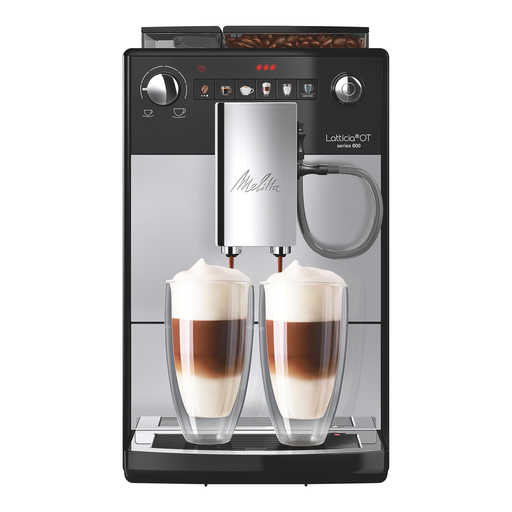
Why this product suits the profile: The One-Touch function and Latteperfection milk system are designed for users who want to prepare espresso, cappuccino and other milk drinks with just a few inputs.
The removable brewing unit and automatic cleaning and descaling programmes make the maintenance requirements easier to understand.
1.5-litre water tank, 250-gram bean hopper, height-adjustable spout and two-cup function.
In addition to the purchase price, you will need to budget for coffee beans, water filters, cleaning products and descaling agents. A bean-to-cup machine also requires time to empty the coffee-grounds container and drip tray. Milk systems require daily cleaning too. A water filter may be worthwhile depending on the hardness of your water, but it should be replaced according to the manufacturer’s instructions.
For a long service life, regular descaling, clean water and cleaning the brewing unit are particularly important. Never operate a coffee machine without water, and always use it on a stable, dry surface. Hot spouts, steam and milk frothers pose a scalding risk.
We have put together a complete, regularly updated list of products that fully meet these strict selection criteria and the safety regulations applicable in the EU.
This depends on the hardness of the water, how often the machine is used and the manufacturer’s instructions. Many machines allow you to set the water hardness and indicate when a descaling programme is required. If you can see limescale deposits, do not delay maintenance.
An integrated grinder removes the need to buy a separate appliance and grinds the beans immediately before brewing. It is particularly worthwhile if you regularly drink bean coffee and have little space for additional equipment. If you use pre-ground coffee, an integrated grinder is not essential.
A filter coffee machine is often suitable for preparing larger quantities of the same coffee. A bean-to-cup machine for espresso and cappuccino, on the other hand, provides individual portions and different drinks at the touch of a button. The key factors are the number of users, the preferred choice of drinks and the amount of cleaning you are prepared to undertake.