
Lieferung heute & morgen

Qualitätsgarantie

Willkommens-Angebote freischalten: KOSTENLOSE Lieferung | Bis zu 80 % RABATT | Kostenlose 30-Tage-JoyPlus-Testphase
App herunterladen
A coffee machine should reliably suit the way you drink coffee. Even so, certain purchasing decisions regularly lead to unnecessary follow-on costs or disappointment in UK households. There are three common pitfalls in particular: assuming that higher pump pressure automatically means better coffee, failing to check capsule compatibility carefully and underestimating the cleaning required before buying.
That is why our selection does more than showcase individual appliances. We have categorised them by everyday situation, space requirements and preferred coffee-making method.
Figures such as 15 bar or 20 bar pump pressure may initially seem clear-cut. In practice, however, this value mainly describes the pump’s maximum output. Extraction also depends on the correct brewing temperature, flow rate, coffee grounds used and the design of the brewing head.
A fully automatic coffee machine with 20 bar is therefore not automatically more suitable for every user than an espresso machine with 15 bar. What matters is whether the brewing method suits your habits.
A capsule machine does not necessarily work with every type of capsule. For example, a Nespresso machine designed for the Original system is not automatically compatible with Dolce Gusto capsules. If you are considering a multi-capsule coffee machine, check carefully which adapters are included in the box.
Coffee pads and ESE pads are not the same, either. If you want the flexibility to switch between capsules, pads and ground coffee, check the compatibility list for the model in question before buying.
Coffee oils, milk residue and limescale can make using a coffee machine more difficult. A fully automatic coffee machine with a milk system generally requires more care than a basic capsule machine. This includes rinsing milk-carrying components, emptying the coffee grounds container and descaling regularly.
Coffee machine cleaning tablets should only be used if the operating instructions state that they are suitable for the appliance in question. According to the product details, for example, Siemens TZ80001A cleaning tablets are intended for specific Siemens EQ models. Cleaning tablets designed for a different system should not be used without the manufacturer’s approval.
A compact coffee machine is a practical choice for single-person households, couples, small kitchens or offices. Before buying, consider not only the footprint but also the space above the appliance. A water tank that is removed upwards can be awkward to access beneath wall units.
For several people, a larger water tank and bean hopper are useful. Smaller tanks make the appliance narrower, but require more frequent refilling.
If you regularly prepare cappuccino or latte macchiato, you should distinguish between a manual steam wand and an automatic milk system. A steam wand requires you to froth the milk manually and clean it afterwards. An automatic system simplifies preparation, but comes with additional hoses, containers and cleaning cycles.
Also look for height-adjustable spouts, removable brewing units, programmable shut-off and easy-to-access drip trays.
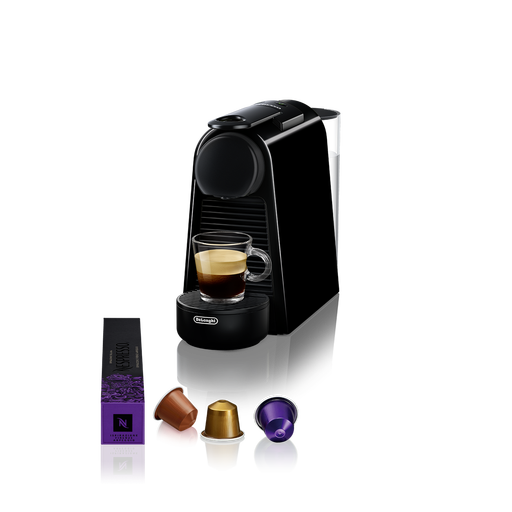
Why this product suits this profile: According to the product details, this slim capsule machine is 11 cm wide, has a 0.6-litre water tank and offers two programmable cup sizes for espresso and lungo.
The Original capsule system is clearly specified. This makes it easier to check the required capsule compatibility before buying.
A 25-second heat-up time according to the product details, automatic shut-off and a low weight of 2.3 kg.
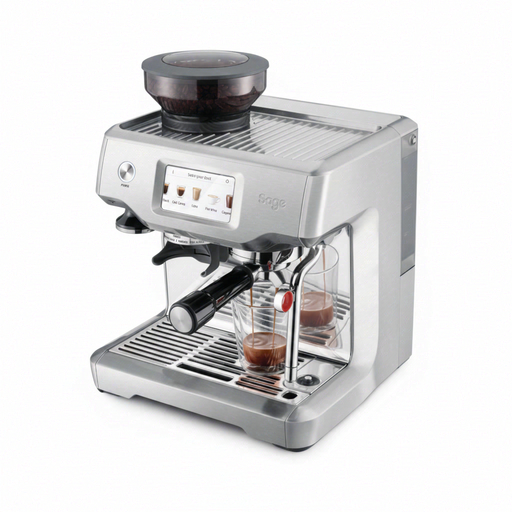
Why this product suits this profile: This portafilter machine combines an integrated conical burr grinder, touchscreen controls and an automatic milk-frothing function. It is aimed at users who want to actively adjust the settings.
The features go beyond a single pressure specification, covering the grinder, dosage, milk temperature and milk-froth texture.
Five pre-programmed recipes, up to eight customisable settings that can be saved and a 2-litre water tank according to the product description.
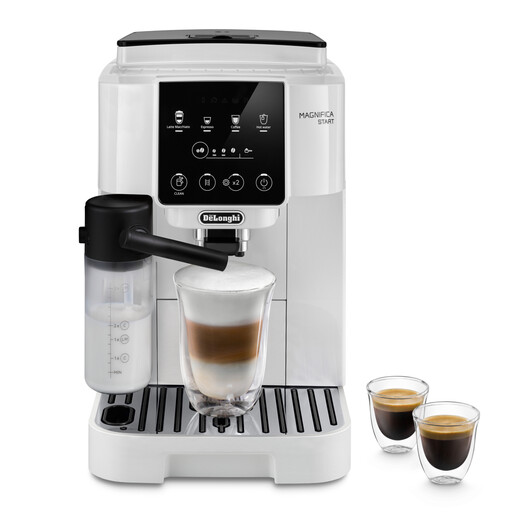
Why this product suits this profile: According to the product details, this fully automatic coffee machine with a milk system offers four direct-selection recipes, a 1.8-litre water tank and a 250 g bean hopper.
The milk system has an automatic cleaning function. Regular rinsing and care of the removable components are still necessary, however.
13 grind settings, a two-cup function and removable components according to the product description.
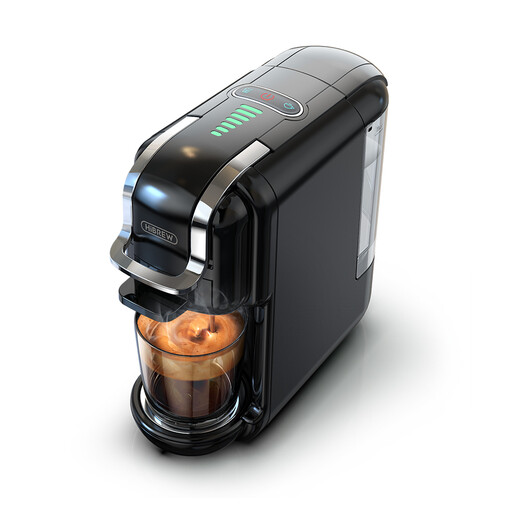
Why this product suits this profile: According to the product details, this multi-capsule coffee machine supports Nespresso, Dolce Gusto, K-Cup and ESE pods, as well as ground coffee.
The various adapters and brewing methods are listed explicitly. Before buying, you should still check that your preferred capsules are actually included.
20-bar pump, 600 ml water tank and hot and cold preparation according to the product details.
We have put together a complete, regularly updated list of products that fully meet these strict selection criteria and the safety regulations applicable in the EU.
Compact capsule machines, a Senseo coffee pad machine or a slim fully automatic coffee machine are suitable for single-person households and couples. The key considerations are the appliance’s width, the size of the water tank and your preferred brewing method. If you drink only one or two cups a day, you will generally not need a large bean hopper.
Its service life depends on usage, water hardness, maintenance and the availability of spare parts. Regular descaling, emptying the drip tray and cleaning the brewing system can make maintenance easier. On machines with a milk system, the milk lines should be rinsed after every use. The manufacturer’s instructions in the manual are the definitive guide.
In addition to the purchase price, you will need to budget for beans, capsules or pads, electricity, water filters, descaler and, where applicable, cleaning tablets. Capsule machines are often easy to use, but can have higher running costs with daily use. A fully automatic machine requires more care, but usually lets you choose your own coffee beans. A simple cost-per-cup overview can help you make a realistic comparison.