
Lieferung heute & morgen

Qualitätsgarantie

Willkommens-Angebote freischalten: KOSTENLOSE Lieferung | Bis zu 80 % RABATT | Kostenlose 30-Tage-JoyPlus-Testphase
App herunterladen
A coffee machine needs to work reliably day in, day out, take up minimal space and suit your personal coffee ritual. Yet eye-catching product claims don’t always lead you to the right choice. A high bar pressure number, lots of drink programmes or an integrated milk system on their own tell you little about ease of use, maintenance requirements or running costs.
This guide shows what households, singles, couples, families and small offices in the UK should look for when buying. It covers the differences between espresso machines, bean-to-cup machines, capsule machines and portafilter machines, along with specific product recommendations for different usage profiles.
A 20-bar espresso machine sounds powerful on paper. But when it comes to coffee brewing, the maximum pump rating isn’t the only factor that matters. Brew temperature, grind size, coffee dose, tamping pressure and the filters used are all crucial. The stated pump pressure is therefore a technical specification, but not a standalone guarantee of flavour quality.
A cappuccino machine with a milk container, steam wand or automatic milk system offers more preparation options. However, milk residue needs to be removed promptly. With a bean-to-cup machine, you also have the brew unit, drip tray, coffee grounds container and descaling programme to contend with. If you want as little maintenance as possible, you might be better off with a capsule machine or a simple espresso machine with a separate milk frother.
A compact coffee machine will fit into small kitchens or an office. But before you buy, you should also check whether the water tank is removed from the top or the side, and whether there is enough space for the portafilter, capsule container or milk frother. The width of the machine alone isn’t enough for planning where to put it.
For a single-person household, a tank of around 0.6 to 1.1 litres can be sufficient. In a family or small office, a tank of 1.5 to 1.8 litres reduces the need for frequent refills. However, a larger tank takes up more counter space and should be emptied and cleaned regularly.
Pay attention to the actual dimensions including clearance from the wall, and the height available for cups or glasses. A compact coffee machine like the Nespresso Essenza Mini, for example, measures 11 × 20.5 × 32.5 cm and has a 0.6-litre water tank. That can be practical for espresso and lungo in a small household.
Removable water tanks, drip trays and brew units make maintenance easier. With hard water in many parts of the UK, you should follow the manufacturer’s instructions on descaling intervals. A water hardness test can help you adjust the settings on some machines.
Also check:
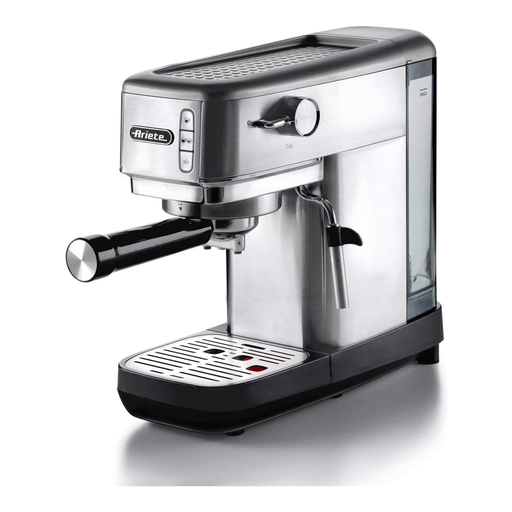
Why this product suits the profile: This espresso machine works with ground coffee or ESE pods and offers a 1.1-litre water capacity. It’s suitable for households that want to make espresso and cappuccino without an integrated grinder.
Compatibility with ESE pods and coffee powder reduces reliance on a single consumable system. The removable tank and automatic shut-off support everyday handling.
1,300 watts, 1.1-litre tank, Maxi-Cappuccino frother and filters for one or two cups.
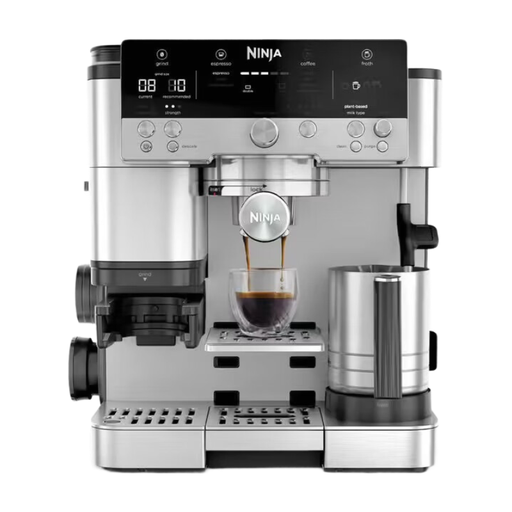
Why this product suits the profile: This model combines espresso, filter coffee and cold brew with an integrated conical burr grinder. Four milk froth programmes cover both hot and cold milk options.
The 25 grind settings allow for more precise adjustment than a machine with a fixed grind size. The water hardness test kit and cleaning accessories make maintenance more predictable.
1.5-litre tank, integrated grinder, 1,650 watts and four milk froth options.
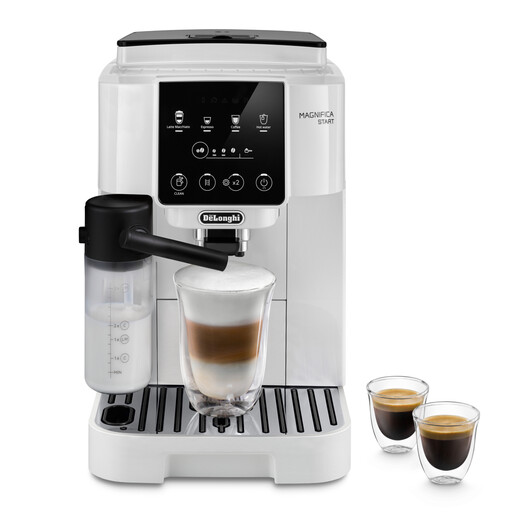
Why this product suits the profile: This bean-to-cup machine is designed for regular use and prepares four directly selectable drinks. The automatic milk system is ideal for households that frequently drink cappuccino or latte.
The removable brew unit and dishwasher-safe components make regular maintenance easier. According to the product description, the milk system features automatic cleaning after use.
250 g bean hopper, 1.8-litre water tank, 13 grind settings and four drink programmes.
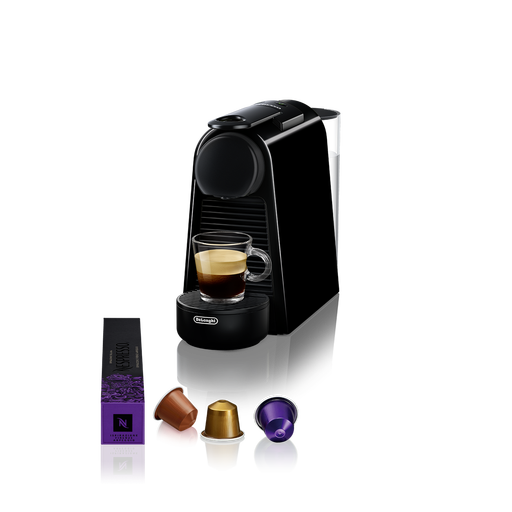
Why this product suits the profile: At just 11 cm wide, this capsule machine is ideal for cramped kitchen counters, guest rooms or individual office desks. It delivers espresso and lungo at the touch of a button.
The original capsule system is clearly stated. This means you can check before buying which ongoing capsule costs and flavour varieties suit your consumption.
0.6-litre tank, 19-bar pump, automatic shut-off and a stated heat-up time of 25 seconds.
We’ve put together a full, regularly updated list of products that fully meet these strict selection criteria and the safety regulations in force in the EU.
For a small office, a compact capsule machine, a coffee machine with a grinder or a bean-to-cup machine with a tank capacity of at least 1.2 litres is suitable. What matters is the number of cups per day, the desired drink selection and your willingness to clean. With multiple users, a larger water tank can reduce refill breaks.
The lifespan depends on how often it’s used, water hardness, cleaning and descaling. A removable tank, an accessible brew unit and regular maintenance can make upkeep easier. Always follow the instructions in the user manual and use only suitable cleaning and descaling products.
In addition to the purchase price, you’ll have capsule costs, electricity consumption and occasional descaling. With frequent consumption, beans or ground coffee can work out cheaper per cup. So before you buy, compare capsule prices, the cup size you want and your daily consumption.