
Lieferung heute & morgen

Qualitätsgarantie

Willkommens-Angebote freischalten: KOSTENLOSE Lieferung | Bis zu 80 % RABATT | Kostenlose 30-Tage-JoyPlus-Testphase
App herunterladen
A new coffee machine should work reliably, take up little space and match your coffee-drinking habits. Espresso machines, portafilter machines, bean-to-cup coffee machines, pod machines and coffee pad machines differ significantly in terms of operation, ongoing costs and cleaning requirements. Terms such as “20 bar”, “milk system” and “cold brew” should also be considered carefully before you buy.
A 20-bar espresso machine may initially sound particularly powerful. However, this figure usually describes the maximum possible pump pressure, rather than necessarily the pressure applied to the coffee grounds throughout the extraction process. Other specifications are therefore important when choosing a machine:
A machine with 15 or 19 bar may also be suitable for its intended use. Pump pressure alone is not a sufficient measure of quality.
For a pod machine, the product description should say more than simply “multi-pod”. The key question is which systems are actually supported. Depending on the model, Nespresso Original, Dolce Gusto, K-Cup-style pods, ESE pods or ground coffee may be compatible.
Before buying, check:
If you do not want to commit to a single system in the long term, consider a multifunctional coffee machine for home.
A coffee machine with a milk frother lets you prepare lattes and cappuccinos, but it needs cleaning after every use. Milk residue can build up in the hose, steam wand or milk container. A bean-to-cup coffee machine with an integrated milk system is convenient, but more complex to maintain than a simple filter, pad or pod machine.
A coffee machine with a grinder should also be emptied and cleaned regularly. Look for:
The tank capacity should suit your daily usage. A tank holding 0.6 to 0.9 litres is often suitable for individuals or small kitchens. For several people or a small office, 1.1 to 2.5 litres may be more practical. Also check the width, depth and height, as well as the space above the machine if the water tank is removed upwards.
A compact coffee machine is not automatically easy to access. The water tank, pod container and drip tray must still be removable despite the small footprint.
For lattes and cappuccinos, you can choose between manual steam wands, automatic milk containers and separate frothers. A steam wand takes some practice, but allows you to create a more personalised texture. An automatic system is more convenient, but requires consistent cleaning.
If you want to combine espresso, coffee, milk-based drinks and cold brew, check whether the functions can actually be used independently of one another. Depending on the model, “multifunction” may refer to different types of drinks and adapters.
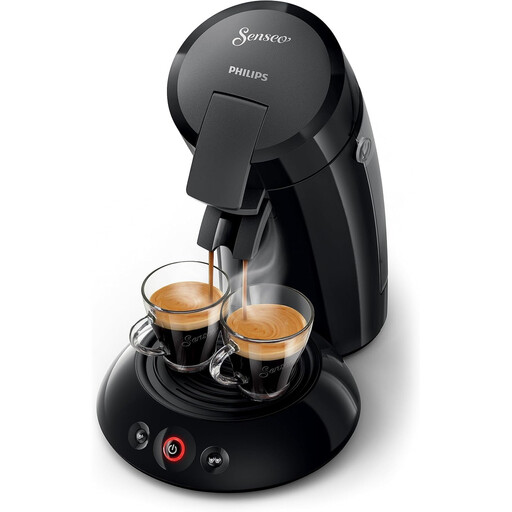
Why this product suits this profile: The coffee pad machine prepares one or two cups in under a minute and uses Senseo coffee pads. It is well suited to households that prefer simple operation without an integrated grinder.
The product details clearly state the pad format, 0.7-litre water tank and one- and two-cup operation. This makes it easier to assess your commitment to the system before buying.
Coffee Boost and Crema Plus functions according to the product description, automatic switch-off after 30 minutes and a compact design.
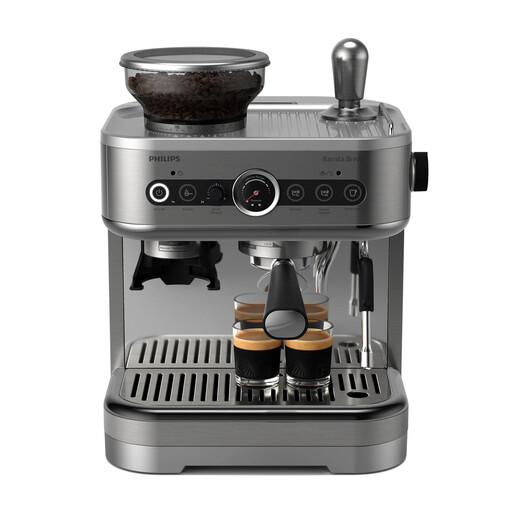
Why this product suits this profile: This portafilter machine combines an integrated metal grinder with five grind settings, PID temperature control and a 2.5-litre water tank.
In addition to the 15-bar pump pressure, the product description specifies temperature control, grind settings and a pressure gauge. This allows you to make a more informed choice.
Integrated conical grinder, milk frother, hot water function and removable parts that are dishwasher-safe according to the product details.

Why this product suits this profile: This machine combines espresso, filter coffee and cold brew with an integrated grinder and milk frother. It is designed for households that want to use several brewing methods in one machine.
The product details explicitly list the supported drinks, 25 grind settings and four frothing options. This makes it easier to compare the range of functions with your own needs.
Integrated scales according to the product description, 1.5-litre capacity, 1650 watts and the ability to froth milk and plant-based drinks.
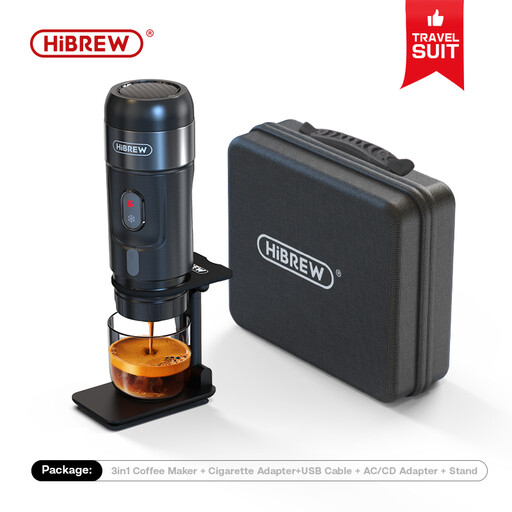
Why this product suits this profile: This portable coffee machine features a 12-volt connection, a 60-millilitre water tank and support for NS and DG pods as well as ground coffee.
The power supply and small tank are clearly specified. This allows you to check in advance whether your vehicle, camping equipment or workplace is suitable for the intended use.
Weight of approximately 0.575 kilograms, hot and cold preparation according to the product details, plus an adapter for up to 10 grams of ground coffee.
We have put together a complete, regularly updated list of products that fully meet these strict selection criteria and the safety regulations applicable in the EU.
For a small office, a coffee pad machine, pod machine or bean-to-cup coffee machine with a larger water tank can be practical. Look at the number of cups prepared per cycle, the size of the collection container and the cleaning requirements. If milk-based drinks are consumed regularly, the milk system should be easy to remove.
Its lifespan depends on the design, usage, water hardness and maintenance. Regular descaling in accordance with the manufacturer’s instructions, emptying the drip tray and keeping the brewing unit clean can help maintain the machine. With pod and pad machines, you should also check the seals, pump noise and condition of the pod mechanism.
In addition to the purchase price, you will need to budget for coffee, pods or pads, water filters, descaler and, where applicable, milk-system cleaner. Pods and pads are conveniently portioned, but the cost per cup may differ from that of beans or ground coffee. Compare the price per cup over the expected period of use.