
Lieferung heute & morgen

Qualitätsgarantie

Willkommens-Angebote freischalten: KOSTENLOSE Lieferung | Bis zu 80 % RABATT | Kostenlose 30-Tage-JoyPlus-Testphase
App herunterladen
A coffee machine should be reliable, suit your kitchen and be easy to clean as part of everyday life. However, glossy marketing claims often lead to disappointing purchases. A high bar rating does not automatically mean better coffee, a large capacity is often unnecessary for a single-person household, and extensive features can significantly increase the cleaning and maintenance involved.
This guide explains what to look for when buying a coffee machine and which type suits different usage profiles.
On a 20-bar coffee machine, the figure generally refers to the maximum pump pressure. Actual extraction also depends on the grind size, dosage, water temperature, brew group and tamping pressure applied to the coffee grounds. A machine with 19 or 20 bar is therefore not automatically more suitable than a model with 15 bar.
A 1.8- or 2.5-litre tank can be practical for families or small offices. However, when only a few cups are made, the water remains in the machine for longer and should be changed regularly. For a compact coffee machine or a single-person household, a smaller tank may be the more sensible choice.
A grinder, milk system and capsule holder make preparation easier, but each creates different maintenance requirements. Milk lines in particular must be cleaned after use. So look for removable components, rinsing programmes and clear descaling instructions. A machine with fewer functions may be a better fit for everyday use if quick cleaning is a priority.
For filter coffee, 1 to 1.25 litres is often enough for several people. According to the product specifications, the Aigostar filter machine with a 1.25-litre glass jug is designed for approximately five to seven standard cups. The Philips HD7461/00 has a capacity of 1.2 litres and a scale on the water tank. A smaller jug may be more practical for two people, while families and offices benefit from larger containers.
For individual portions, 0.6 litres, as with the Nespresso Essenza Mini, is sufficient. A bean-to-cup machine with a 1.8-litre water tank and 250-gram bean container is more suitable for preparing several drinks a day.
Look for:
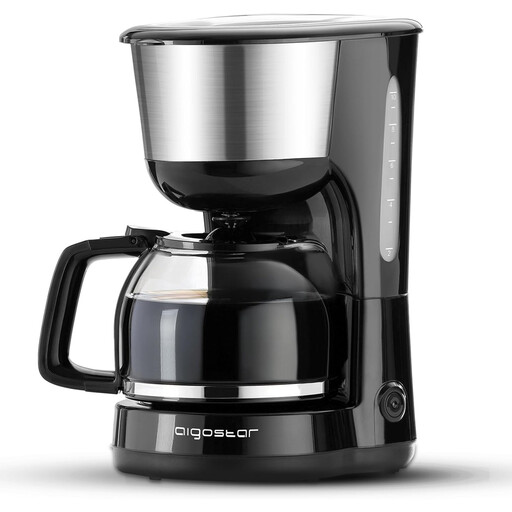
Why this product suits the profile: This filter coffee machine focuses on preparing several cups every day and does not require capsules or coffee beans.
The automatic switch-off after a total of 40 minutes and the reusable filter are clearly stated in the product details.
1.25-litre glass jug, drip stop, 30-minute keep-warm function, plus overheat and boil-dry protection.
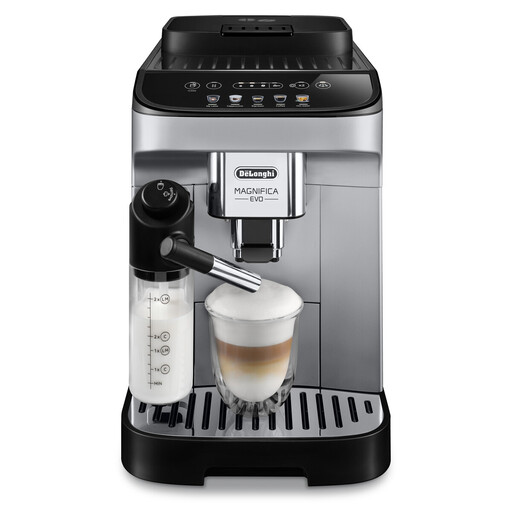
Why this product suits the profile: This bean-to-cup machine is designed for households that want to prepare bean-based drinks and milky coffee at the touch of a button.
The removable brew group and specified dishwasher-safe parts make the maintenance involved clear and manageable.
13 grind settings, a 250-gram bean container, a 1.8-litre water tank and seven selectable recipes according to the product details.
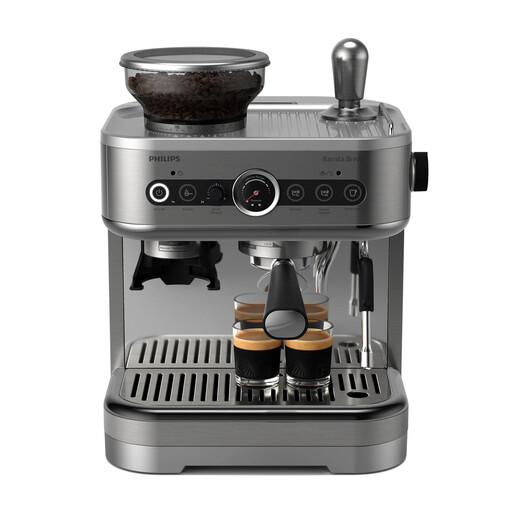
Why this product suits the profile: This semi-automatic espresso machine combines an integrated grinder, portafilter and steam wand for users who enjoy a variety of drinks.
The pressure can be monitored using a pressure gauge; five grind settings and three temperature settings are also specified.
2.5-litre water tank, 250-gram bean container, maximum operating pressure of 15 bar and PID temperature control.
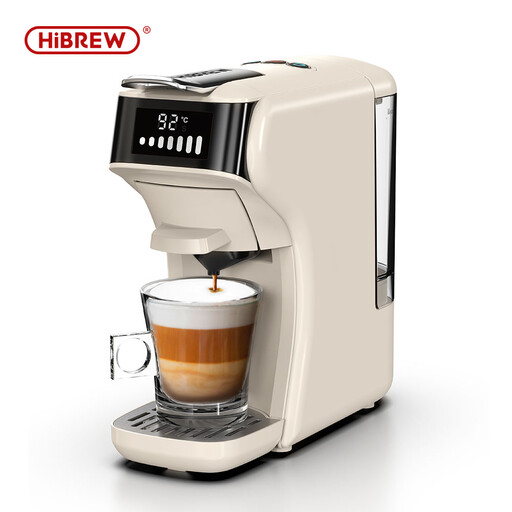
Why this product suits the profile: This compact machine supports several capsule types, ESE pods and ground coffee, making it suitable for small kitchens or offices.
Compatibility is clearly listed, so you can check before buying whether your preferred system is supported.
600-millilitre water tank, dimensions of 300 × 143 × 280 millimetres and a specified pump pressure of 20 bar.
With a filter coffee machine, the main costs are coffee grounds and, where applicable, paper filters. A reusable filter can reduce the need for disposable filters. With capsule machines, you should factor in the price per serving and the disposal of used capsules.
Bean-to-cup machines and coffee machines with grinders require beans, water filters depending on the model and descaling solution. A coffee machine with a milk frother also requires the milk system to be cleaned. Check whether replacement parts such as seals, jugs or filter baskets are available. Clear operating instructions are essential for descaling intervals and safe use.
We have put together a complete, regularly updated list of products that fully meet these strict selection criteria and the safety regulations applicable in the EU.
For one or two people, a compact capsule machine, a French press or a filter machine with a small jug are obvious choices. The key factors are the available space, the drinks you want to make and how willing you are to clean the machine. A large bean-to-cup machine is more worthwhile if you regularly prepare a variety of coffee and milk drinks.
There is no reliable, one-size-fits-all answer. It depends on how frequently the machine is used, water hardness, cleaning and the availability of replacement parts. Regular descaling according to the manufacturer's instructions, emptying residual water and cleaning the brew group or milk system can help maintain performance in everyday use. Safety-related faults involving the cable, plug or casing should not be repaired yourself.
Energy consumption depends on heating time, the keep-warm function and the switch-off time. A filter machine with a hotplate may continue using energy after brewing, while a thermal jug does not require active warming. Capsule machines generally prepare only one portion at a time, whereas bean-to-cup machines also run the grinder and rinsing functions. For a fair comparison, look at the power consumption, automatic switch-off and the number of cups you actually need.