
Lieferung heute & morgen

Qualitätsgarantie

Willkommens-Angebote freischalten: KOSTENLOSE Lieferung | Bis zu 80 % RABATT | Kostenlose 30-Tage-JoyPlus-Testphase
App herunterladen
A coffee machine should reliably match your own drinking habits. Yet shiny casings, high bar numbers and numerous programmes don’t automatically lead to a sensible buying decision. What really matters are clear technical specifications, the daily effort involved, and the availability of suitable consumables.
A coffee machine with a grinder, milk system, cold-brew function and multiple recipe programmes can be versatile. However, if you only make a pot of filter coffee in the morning, you could end up paying for features that create extra cleaning work. Before you buy, you should be clear about whether you regularly want espresso, milk froth, capsule coffee or cold brew.
With an espresso machine or portafilter machine, 15 or 20 bar is often advertised. This figure describes the maximum possible pump pressure. For brewing, the grind size, dosage, water temperature and even distribution of the coffee grounds also matter. A high pressure rating alone is therefore not a sufficient selection criterion.
Milk lines, brew units, grinders and water pathways need regular maintenance. With a coffee capsule machine, there are also ongoing capsule costs and the question of compatibility. For a filter coffee machine, paper filters, descaling solution and possibly a replacement carafe are relevant. A machine with easily removable parts can be more practical in daily use than a model with many fixed components.
A water tank of 1.1 to 1.8 litres can be suitable for a household with several coffee drinkers. For a single person or an office with limited counter space, a smaller machine is often enough. When it comes to a carafe, you should distinguish between small and large cups: manufacturer claims such as “ten cups” don’t always refer to standard mug sizes.
For the UK, machines with 220–240 V and the correct plug are relevant. Before buying, check the width, height and depth including removable tanks. Hot surfaces, steam and pressurised brew chambers pose a burn risk. Safety features such as automatic shut-off, overheat protection and dry-boil protection are practical additions, but they don’t replace following the operating instructions.
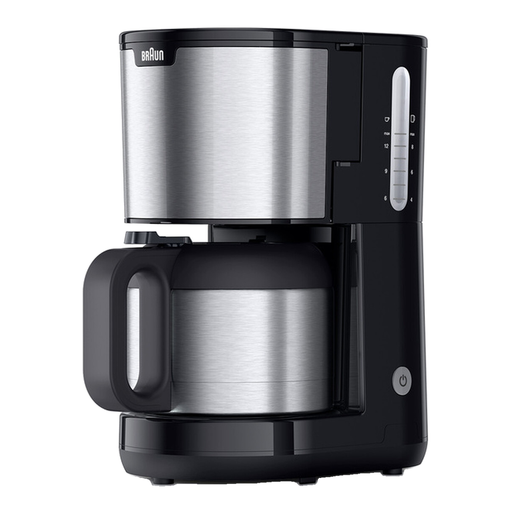
Why this product fits the profile: This filter coffee machine works with ground coffee, has a 1.2-litre thermal carafe and comes without a grinder or capsule system. That suits households wanting several cups with minimal effort.
The features focus on filter coffee. The carafe, lid and filter basket are dishwasher-safe according to the product details; an automatic shut-off after 40 minutes is specified.
1,000 W power, anti-drip function and thermal carafe for up to 9 large or 13 small cups according to the manufacturer.
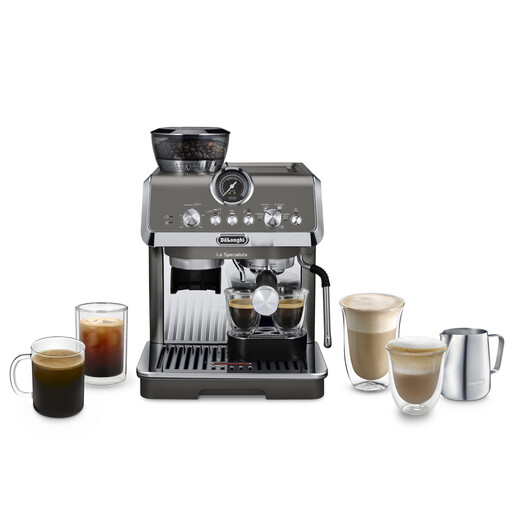
Why this product fits the profile: This portafilter machine is aimed at users who want to control grind size, dosage and milk froth themselves, and are prepared to allow more space and learning time.
The specification lists eight grind settings, a 1.7-litre water tank and a barista kit. This makes the key variables clear, rather than relying solely on a pressure rating.
Integrated grinder, My-LatteArt steam wand and cold extraction function according to the manufacturer; two filters for one or two cups are included.
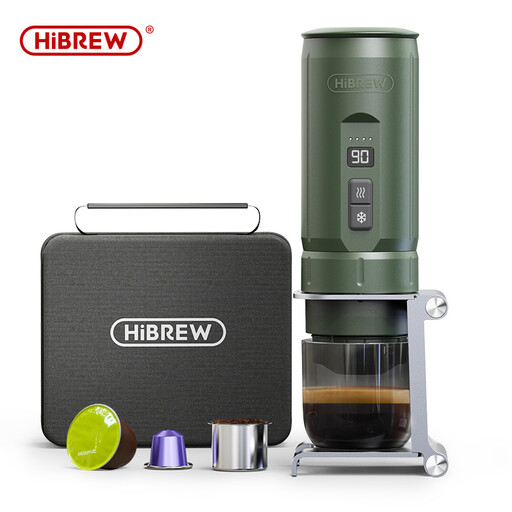
Why this product fits the profile: This portable coffee machine is designed for travel, the office and camping. The weight of 1.5 kg and the removable battery should be checked against your planned transport and charging setup before buying.
The stainless steel water tank is marked at 50, 75 and 100 ml. This helps you control the water amount for individual portions and avoid overfilling.
20-bar pump, digital display and 50/75/100 ml markings according to the product details. For battery operation, only the specified original lithium batteries should be used.
We’ve put together a complete, regularly updated list of products that fully meet these strict selection criteria and the safety regulations in force in the EU.
For several cups per morning, a filter coffee machine with a thermal carafe is often the simplest option. If different drinks are wanted at the touch of a button, a bean-to-cup machine may be more suitable. In either case, you should consider the cleaning programmes, tank size and noise level.
The lifespan depends on usage, water hardness, cleaning and the availability of spare parts. Regular descaling according to the operating instructions, emptying drip trays and cleaning milk systems can help maintain reliable performance. It’s not possible to give a general lifespan for every type of machine.
In addition to electricity consumption, there are costs for beans or ground coffee, capsules, paper filters and descaling solution. With a coffee machine with a milk frother, additional cleaning products may be needed. For a realistic comparison, you should look at both the purchase price and the ongoing costs over your expected usage pattern.