
Lieferung heute & morgen

Qualitätsgarantie

Willkommens-Angebote freischalten: KOSTENLOSE Lieferung | Bis zu 80 % RABATT | Kostenlose 30-Tage-JoyPlus-Testphase
App herunterladen
A coffee machine should work quickly, reliably and suit the space available in your everyday routine. However, eye-catching advertising claims do not always lead to a sensible purchasing decision. Compact appliances in particular are worth examining more closely in terms of brewing method, dimensions, cleaning and ongoing costs.
Figures such as 15 or 19 bar sound convincing. However, this value primarily describes the pump’s maximum pressure and does not automatically determine the flavour in the cup. The type of coffee used, the amount of water, the temperature and the brewing time are also important when choosing a machine.
A capsule machine with 19 bar is mainly suitable for pre-dosed espresso portions. A bean-to-cup machine, on the other hand, uses freshly ground beans and usually offers more adjustment options. A pod machine often has a significantly lower stated pressure because the system works differently.
A coffee machine for a small kitchen must do more than simply fit on the worktop. You should also check:
A machine with a small width can still be relatively deep. For example, the Melitta Caffeo Solo E950 Slim is 20 cm wide but requires around 45.5 cm of depth according to the product details. This is an important difference if you have a narrow worktop.
With a capsule machine, you incur ongoing capsule costs in addition to the purchase price. Users should also check in advance which capsules are compatible. The Nespresso models in this selection are designed for Nespresso Original capsules; Dolce-Gusto capsules do not fit.
A pod machine uses coffee pods and can be practical for preparing several cups at home. A bean-to-cup machine requires beans, regular cleaning programmes and more thorough care of the brewing unit. The decision therefore depends not only on the appliance price, but also on how much coffee you drink and the maintenance involved.
If you mainly drink espresso or lungo, a capsule machine can provide a straightforward solution. For larger cups of coffee or freshly ground beans, a bean-to-cup machine is often more suitable.
A tank with 0.6 to 0.7 litres is sufficient for singles, couples or a small office, but will need refilling more often when preparing several drinks. The Nespresso Essenza Mini has a 0.6-litre tank, while the Inissia holds 0.7 litres. The Melitta Caffeo Solo has a capacity of 1.2 litres, making it suitable for preparing several drinks one after another.
Look for a removable tank, clearly visible fill markings and an opening that can be reached comfortably beneath your existing kitchen units.
Practical features include:
For all machines, remember to unplug them before cleaning, avoid hot surfaces and liquids, and never immerse the machine in water. Descaling intervals depend on water hardness and usage; always follow the relevant instruction manual.
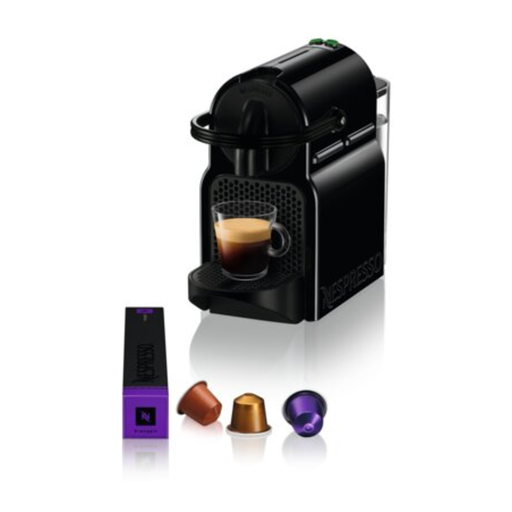
Why this product suits the profile: This compact capsule machine is designed for users who want to prepare espresso or lungo at the touch of a button. It is 12 cm wide, has a 0.7-litre water tank and heats up in 25 seconds according to the product details.
The product details specify the dimensions, tank capacity and automatic switch-off after 9 minutes. This makes it easier to assess the space and energy requirements before buying.
19-bar pump, two programmable cup sizes and foldable drip tray for larger cups.
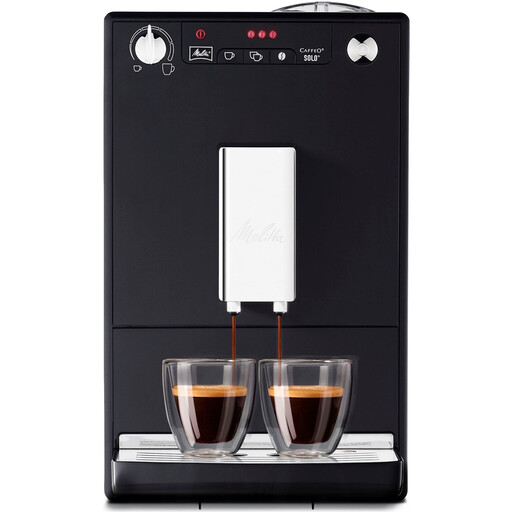
Why this product suits the profile: This bean-to-cup machine is aimed at users who prefer bean-to-cup coffee and want to adjust the aroma and water volume. According to the datasheet, it is 20 cm wide.
The removable brewing unit and automatic cleaning and descaling programmes make the maintenance required clear before you buy.
Three aroma levels, programmable water volume from 30 to 220 ml and height-adjustable spout.
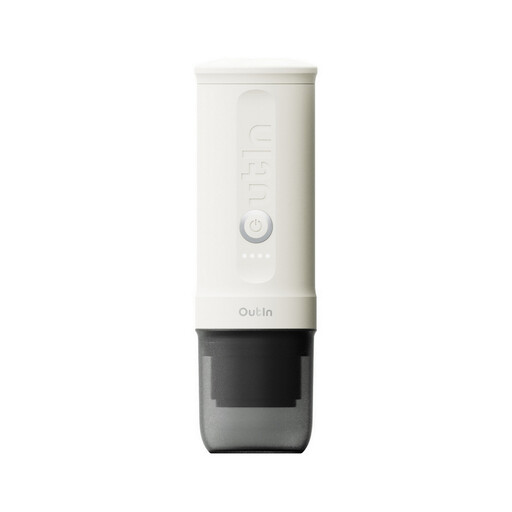
Why this product suits the profile: This portable espresso machine is designed for travel, camping, commuting and offices without a conventional coffee machine. It works with ground coffee or Nespresso Original capsules.
The specifications explicitly state the limited water volume of 50 to 80 ml and the charging requirement of at least 10 W. This helps ensure that the limitations of mobile use are not overlooked.
20-bar pump, integrated heating to around 92 °C and USB-C charging option; with cold water, up to around five servings per charge are possible according to the product details.
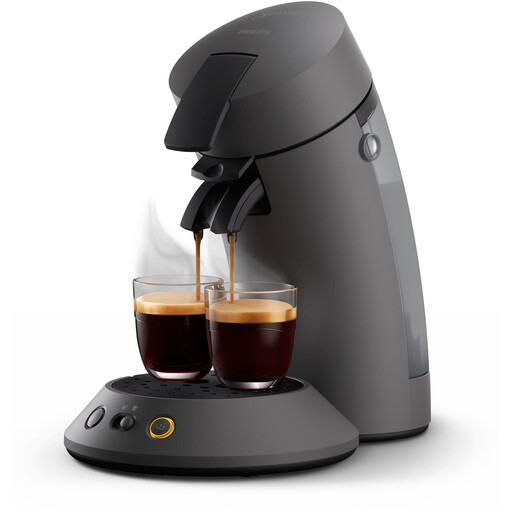
Why this product suits the profile: This pod machine can prepare one or two cups and is suitable for singles, couples and short coffee breaks in the office. The 0.7-litre tank is removable.
The product details state preparation times of 21 seconds for one cup and 60 seconds for two cups, as well as dishwasher-safe parts.
Two spouts, touchscreen, strength adjustment and automatic switch-off.
We have put together a complete, regularly updated list of products that fully meet these strict selection criteria and the safety regulations applicable in the EU.
Width, depth, height and access to the water tank are the key considerations. A compact capsule machine such as the Nespresso Essenza Mini is 11 cm wide. Despite its narrow design, a bean-to-cup machine can be considerably deeper and also needs space for the bean container and brewing unit.
There is no single lifespan that applies to every machine. It depends on usage, water hardness, cleaning and the availability of spare parts. Regular descaling, emptying the drip tray and caring for removable components can help keep the machine running. Always follow the manufacturer’s instructions.
In addition to electricity consumption, the main factors are the type of coffee and how much you use. Capsules create ongoing individual costs, while pod prices vary depending on the blend and pack size. Bean-to-cup machines require beans as well as cleaning and descaling products. For a fair comparison, calculate the cost per cup over several months.