
Lieferung heute & morgen

Qualitätsgarantie

Willkommens-Angebote freischalten: KOSTENLOSE Lieferung | Bis zu 80 % RABATT | Kostenlose 30-Tage-JoyPlus-Testphase
App herunterladen
Choosing a new coffee machine can quickly become overwhelming. The market is vast, the technical specifications are complex, and the marketing promises often sound too good to be true. As a Joybuy Product Recommendation Officer, I see the most common and costly purchasing errors every day. Before you make a decision, it's crucial to understand the typical pitfalls that often only become apparent after a few months of use.
Many purchasing decisions are driven by marketing messages that overlook the realities of daily use. Pay attention to these three points to avoid a regrettable purchase.
Instead of being swayed by marketing buzzwords, focus on the technical fundamentals that determine the quality of your coffee and the machine's longevity.
The first and most important decision is choosing the system type. Each has distinct advantages and disadvantages that suit different lifestyles.
For fully automatic and portafilter machines, two components are crucial for quality:
Based on these objective criteria, we have identified several models that represent a well-thought-out solution for specific user profiles.
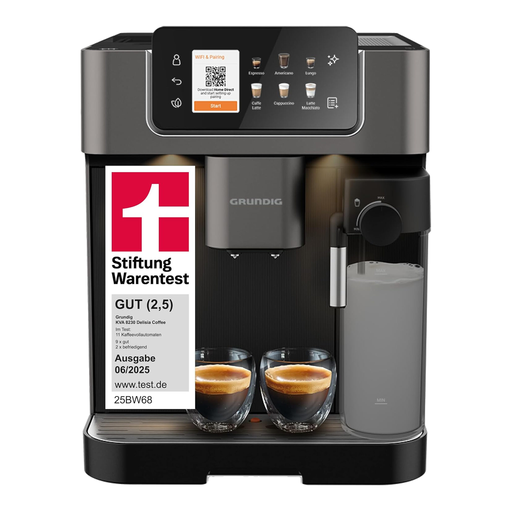
Why This Fits Their Persona: Ideal for users who want variety and convenience without manual effort. The touchscreen operation and the ability to prepare two drinks simultaneously fit perfectly into a busy daily routine.
Although the machine offers many features (Trap 1), they are easily accessible thanks to its intuitive operation. Automatic cleaning programs also address the maintenance effort (Trap 2).
Offers a high degree of automation and customisation with 13 grind settings and an integrated milk container. App connectivity is an added bonus for tech-savvy users.
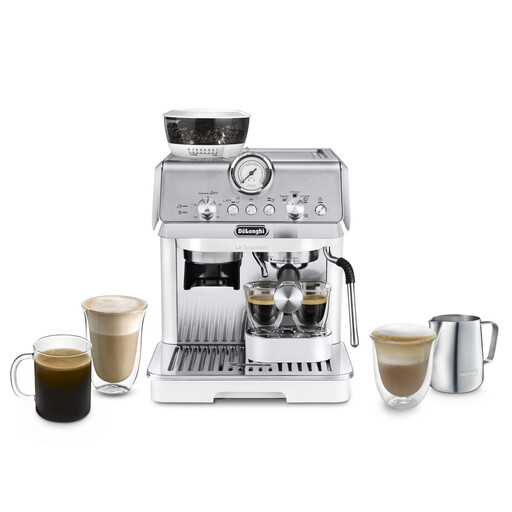
Why This Fits Their Persona: This portafilter machine is aimed at coffee lovers who want to take control of the brewing process and achieve perfect results. It provides the necessary tools and settings to enter the world of the home barista.
It focuses on the core functions of espresso preparation, avoiding superfluous automatic programs (Trap 1). The manual steam wand is robust and easy to clean, which minimises hidden maintenance issues (Trap 2).
Comes with a complete barista kit (tamper, dosing funnel, milk pitcher). Eight grind settings and three temperature levels allow for precise calibration to the coffee bean.
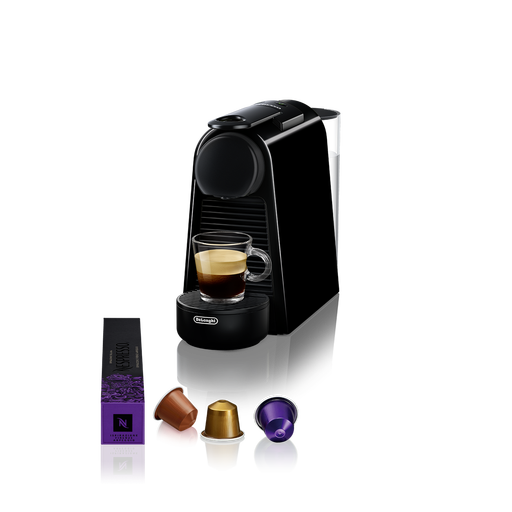
Why This Fits Their Persona: Perfect for anyone who values a minimal footprint, speed, and consistent quality. Its ultra-compact design fits into the smallest kitchen or home office.
This machine is the epitome of focusing on the essentials, completely bypassing the feature trap (Trap 1). The cleaning effort is minimal as there is no complex milk system (Trap 2).
Extremely fast 25-second heat-up time and a very small footprint. The 19-bar pump pressure, optimised for the capsule system, ensures consistent extraction and crema.
We have compiled a complete, up-to-date list of products that fully meet these strict selection criteria and German safety regulations.
1. How often does a coffee machine need to be descaled? The frequency depends on the water hardness in your area and your usage. Most modern machines have an automatic indicator that reminds you. As a general rule, with average use and medium water hardness, descaling every two to three months is a good guideline to maintain the machine's performance and lifespan.
2. Is higher pump pressure always better? Not necessarily. While the pump needs to generate high pressure (e.g., 15–19 bars) to force water through the coffee grounds, the ideal pressure directly at the brew head for a balanced espresso is around 9 bars. Too much pressure can lead to over-extraction, making the coffee taste bitter. The stated value is the maximum pump pressure, not the constant brewing pressure.
3. Can I use any type of coffee bean in a fully automatic machine? Technically yes, but it is recommended to avoid very oily or caramelised beans (often found in very dark roasts). These can clog the grinder and lead to malfunctions in the long run. A medium roast is a safe and flavour-balanced choice for most fully automatic machines.